Humans
 PUBLISHED


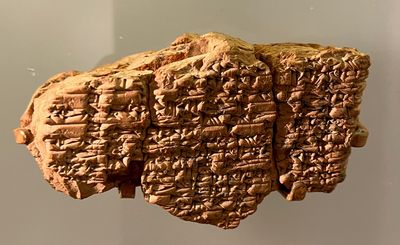


The hot, arid landscape of Mesopotamia gave rise to the world’s first urban centers, with the ancient site of Eridu in southern Iraq widely considered to be the world’s earliest city.
However, supporting a large metropolitan population requires extensive infrastructure, and new research suggests that a massive network of irrigation channels may have facilitated Eridu’s growth for thousands of years.
Established in the sixth millennium BCE, Eridu thrived for roughly 6,000 years before eventually being abandoned in roughly 500 CE. According to ancient Sumerian texts, the first kings descended from heaven to take up residence in Eridu, which is credited with being the birthplace of urban civilization.
However, as the authors of a new study point out, rainfall in Mesopotamia throughout the Holocene has been too low to support agriculture, which means irrigation is essential for the existence of human settlements in the region.
Previous research has indicated that date palm cultivation in the area around Eridu began some 7,000 years ago, and while the presence of irrigation canals has been noted throughout the surrounding countryside, a date for these waterways has never been established.
The researchers therefore scanned satellite imagery in search of ancient canals and fan-like systems of channels called crevasse sprays close to Eridu. These typically connected to a now dried-up branch of the Euphrates river, which passed by the ancient city.
Visiting some of these channels on the ground, the study authors were able to collect shells from small excavation trenches, which were then radiocarbon dated in order to ascertain the age of the irrigation system. The oldest of these was dated to roughly 4540 BCE, suggesting that widescale water management projects were in place more than 6,000 years ago.
From the third millennium BCE onwards, the canal system became more extensive and was arranged in a grid-like pattern that effectively divided the countryside up into a series of fields. According to the study authors, this arrangement may have supported “sprawls of palm gardens” during Eridu’s heyday.
Other researchers have previously discovered evidence for cereal crop cultivation in and around Eridu, and the authors of the new study therefore suggest that this ancient irrigation system may have underpinned a sophisticated agricultural economy that lasted for thousands of years.
“[T]his area could have been part of a very long-active agricultural zone supporting the city,” write the researchers. “The irrigated land could have provided Eridu with the required wheat, barley, palm trees and other land herbs and vegetables,” they conclude.
The study is published in the journal Iraq.