Humans
 PUBLISHED





What you'll discover in this article...
- We call the Stone Age the Stone Age because stone tools tend to be all that is left behind, but Neanderthals and other ancient humans were probably equally familiar with making tools from wood.
- Since wood degrades, evidence of these tools is rare, and that's why this site in Barcelona, where traces of wooden tools are preserved as mineral casts, is so important.
- Study author Dr Palmira Saladié said: “Abric Romaní gives us reason to think that wooden technology was important, diverse and flexible, adapted to the needs people had… from hunting to preparing food.”
The Stone Age is named for the kinds of tools that dominate the period's archaeological sites, and yet humans over 40,000 years ago clearly had more in their toolkits than just stone. At a Neanderthal site in Spain, researchers have now recovered traces of almost 600 wooden items, indicating this extinct hominin was as comfortable with carpentry as with knapping.
Unlike stone, wood decomposes, which means it almost never survives long enough for archaeologists to find it. At Abric Romaní in Barcelona, however, wooden objects crafted by Neanderthals became encrusted in calcium carbonate, which meant that as the tools rotted away, they left behind remarkably detailed imprints in mineral deposits.
Researchers have now analyzed 597 wooden imprints and remains at the site, revealing a side of Neanderthal life that is usually absent from the archaeological record.
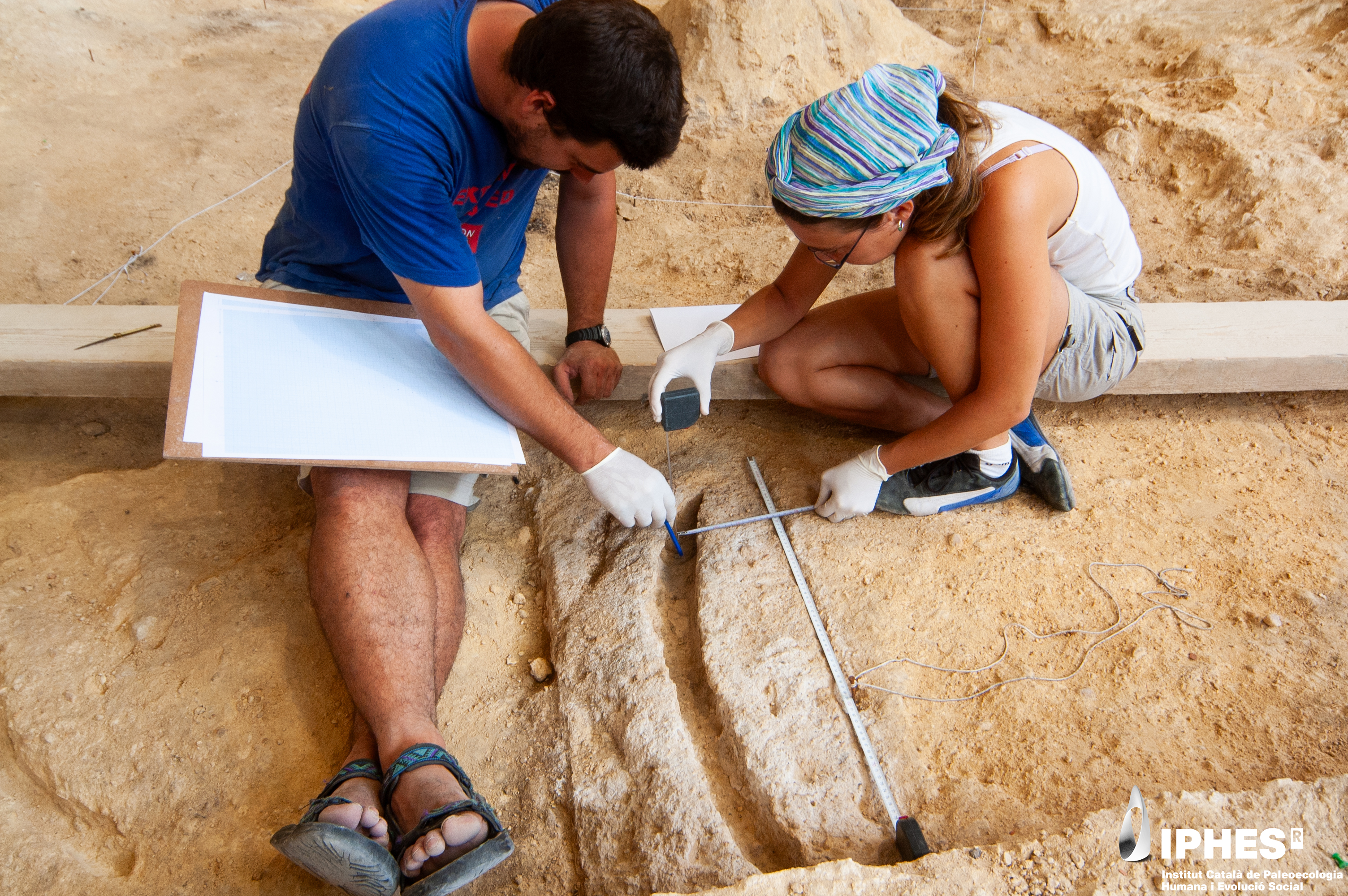
“What is extraordinary about Abric Romaní is that we can see things that usually disappear,” said study author Dr Palmira Saladié at the Catalan Institute of Human Paleoecology and Social Evolution in a statement.
“We have the hearths, the stone tools, the animals they processed, and also the wood. When we bring all of this together, we can understand not only what Neanderthals were doing, but also how they organised the spaces they lived in, managed fire and other resources, and carried out their everyday activities.”
Among these remains, the researchers found 13 examples of wooden technologies, including tools, weapons, domestic utensils and structural elements. Dated to between 62,000 and 40,000 years ago, these rarely seen objects indicate that woodworking was an integral component of Neanderthal behavior and survival strategies.
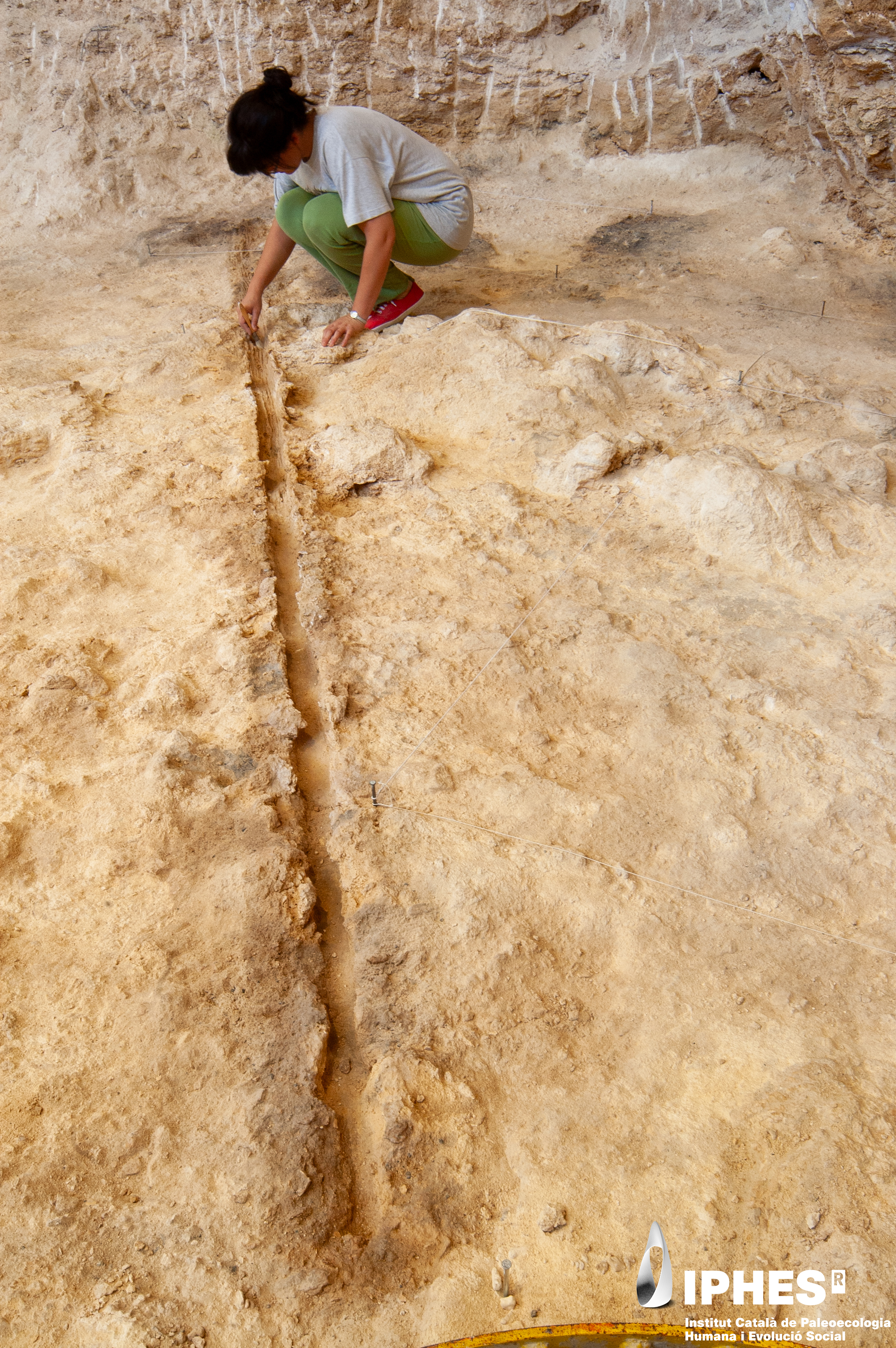
Made predominantly of Scots pine, the extraordinary collection contains two hunting spears, measuring 1.99 meters and 2.45 meters (6.5 feet and 8 feet) in length, as well as crossed wooden poles that may have been used as a tripod for cooking over a fire. Other items include a 5.1-metre-long (16.7-foot-long) wooden piece that may have been a structural component of a living space, along with containers and trays made of bark.
That practical versatility and adaptability are qualities we can readily recognise in ourselves
Dr Palmira Saladié
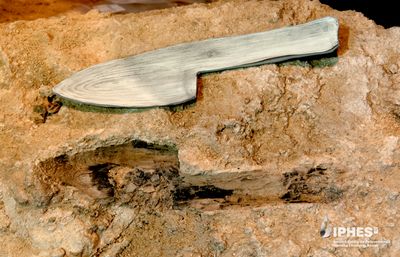
The study authors also report the discovery of an unusual wooden item with a handle and an enlarged head, which is unlike any other artifact in the prehistoric record (pictured at the top of this article).
“It could have been used as a hammer or striking tool, as a secondary weapon for hunting, or in interpersonal violence,” Saladié told IFLScience. “We could even consider a symbolic role, perhaps as an object indicating someone’s status within the group. These are possibilities, however, rather than uses we can demonstrate,” she said.

Summarizing the importance of these discoveries, Saladié said: “Abric Romaní gives us reason to think that wooden technology was important, diverse and flexible, adapted to the needs people had… from hunting to preparing food.”
“That practical versatility and adaptability are qualities we can readily recognise in ourselves. It gives us a fuller picture of Neanderthal technology, a large part of which is usually missing from the archaeological record.”
The study has been published in the journal Science Advances.

 1
1