Humans
 PUBLISHED
 1
1




What you'll discover in this article
- Despite their travels across Europe, Asia, North Africa, and North America, there are incredibly few Viking helmets in the archaeological record.
- Speaking to IFLScience, Marianne Moen, Head of Archaeology at the Historical Museum and the Museum of the Viking Age, explained the misconceptions around Viking helmets.
- Moen also revealed the reason behind the popular myth that Viking helmets had horns.
Vikings left a hell of a legacy on the world, despite only being around for a few centuries. Yet for all their wanderlust and propensity for pillaging, archaeologists have been left with a surprising lack of helmets from their time.
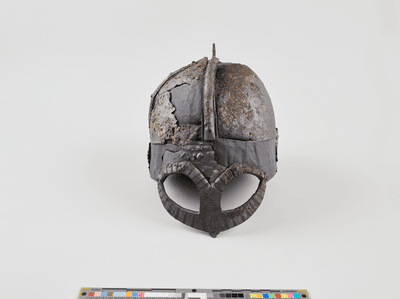
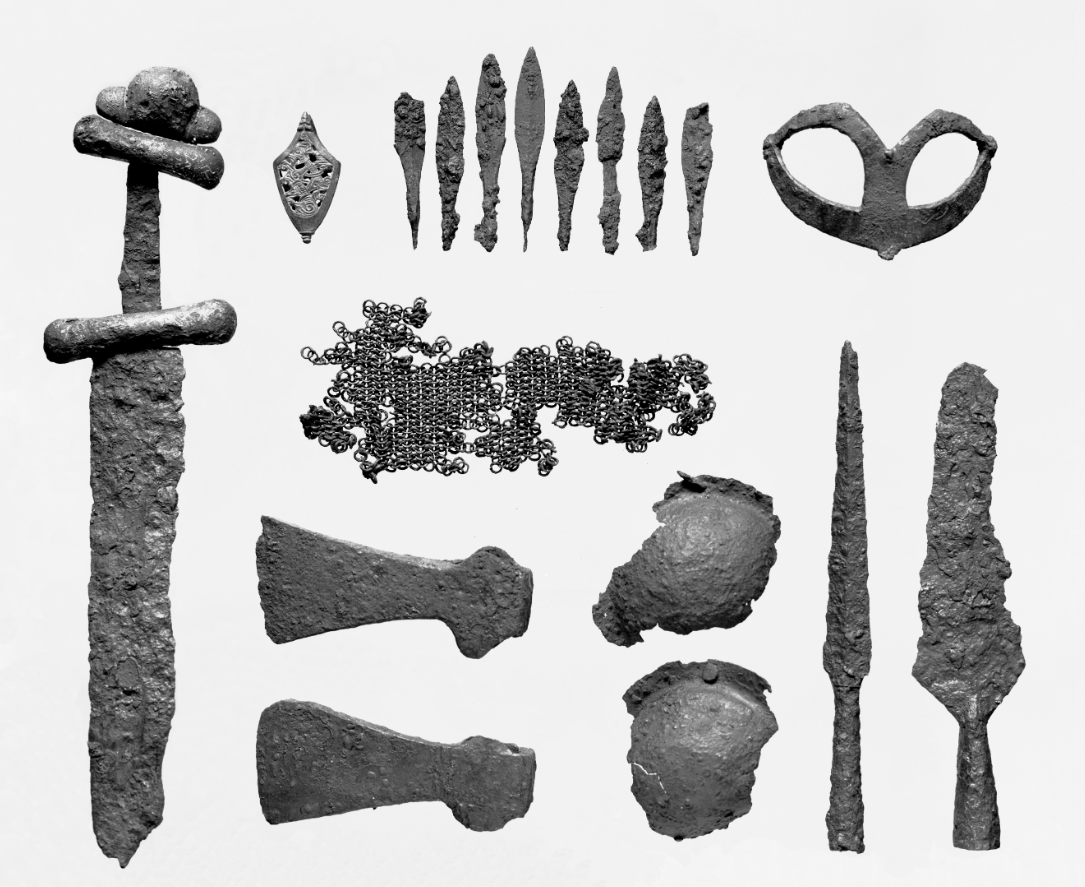
The only known near-complete Viking helmet in the world is called the Gjermundbu helmet. Discovered at a farm within Norway’s Ringerike Municipality in 1943, it was unearthed from a large earth mound containing several burials from the Viking Age.
One of these individuals appears to be a powerful male warrior who died sometime between 950 and 975 CE, buried alongside a stash of weapons, riding equipment, and this impressive iron helmet.
It fits our idea of the Vikings that they should have cool helmets.
Marianne Moen
It actually consists of nine excavated fragments that were later pieced together by researchers. However, those pieces collectively give archaeologists a fairly solid picture of what a Viking-era helmet looked like.
Nothing else like this has been found in Scandinavia. The only thing that comes close are a handful of isolated helmet fragments that were recovered from Denmark and Sweden.
The helmet is currently on display at the Historical Museum in Oslo until the end of 2026 and will later move to the Museum of the Viking Age, part of the University of Oslo, when it reopens next year.
Where are all the Viking helmets?
This lack of protective headgear is surprising. The Vikings were notorious raiders, known for their far-flung ventures in Europe, across the Mediterranean, North Africa, the Middle East, Central Asia, and even North America.
Where, then, is the archaeological record of all their warrior clobber?
Perhaps we don't find any because there weren't any.
Marianne Moen
“Why so few helmets? Well, there are theories, of course. The one I tend to prefer is that most helmets may have been made of organic materials and thus haven't preserved well,” Marianne Moen, Head of Archaeology at the Historical Museum and the Museum of the Viking Age, told IFLScience.
“In pictorial representations, little conical hat-type helmets are quite common, very likely made of organic materials.”
“Another explanation that I do like to offer is that perhaps we don't find any because there weren't any. It fits our idea of the Vikings that they should have cool helmets, but the archaeological evidence tends towards telling us they didn't, which I think is quite fun in a way,” she added.
Wait, no horns?
"But what about those horned Viking helmets you so often see in cartoons and Halloween costumes?" we hear you ask. Unfortunately, these are a relatively modern misimagining.
It’s not certain where the myth came from, but Moen believes it might stem from illustrations of the time before the Vikings, the Vendel Period, depicting strange horned figures.
Are these helmets, though, or horned beings?
Marianne Moen
Instead of depicting horn-topped helmets, however, it’s possible these illustrations show a mythological creature with horns, which are a common motif in Norse mythology.
“And yes, the horns! I think this list likely comes from decorative elements on known helmets and other objects from the Vendel period, showing so-called weapon dancers, some of which are horned,” Moen commented.
“Are these helmets, though, or horned beings? That is quite an interesting question and one that I don't think has been debated quite enough,” she added.
One of the earliest known depictions of Viking horned helmets appeared in a 19th-century opera costume design for a performance of Wagner’s classic Norse saga Der Ring des Nibelungen. Its powerful iconography stuck around in the modern imagination, although there's very little evidence that horned headwear was ever a fashion fad in the Viking Age.
The other Viking helmet
The only other known near-complete Viking helmet comes from Britain, a land that became well-versed in marauding Norsemen between 793 CE, when the raid on Lindisfarne monastery in England kickstarted the Viking Age, until 1066 CE, when the defeat of Norwegian king Harald Hardrada at the Battle of Stamford Bridge brought it to a close.
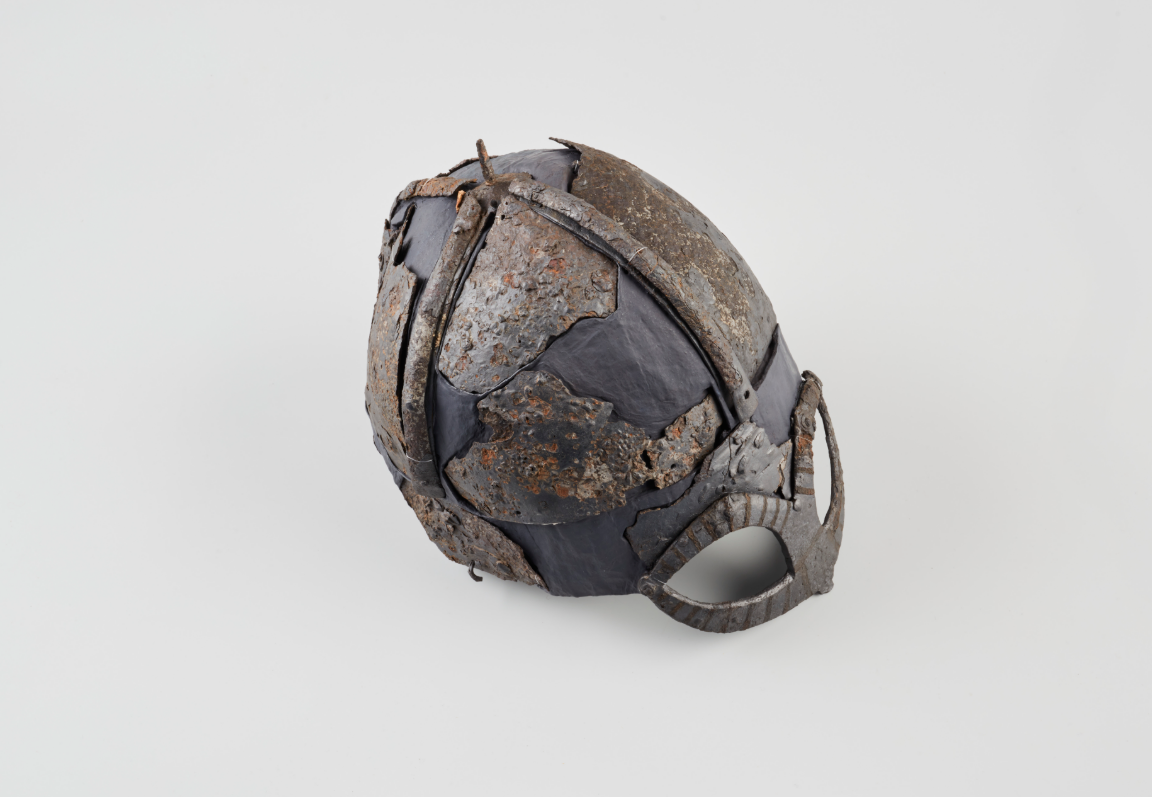
Known as the Yarm helmet, it was unearthed in the 1950s in North Yorkshire by workers digging a trench for a new sewer. It’s not as complete as the Gjermundbu helmet, but it’s still possible to see the shape of its rounded dome and its eyeguards.
And once again, no animal horns included.