Nature
 PUBLISHED




How many legs do creepy crawlies have? Well, if you’re looking at arachnids the answer might be eight, for a millipede the answer could take you from 34 to 1,300... and if you’ve got your typical average bug, you’re probably looking at around six.
Researchers looking at a fossil from Texas, however, have discovered their ancient insect beastie had a rather unusual 24.
The discovery is a big one – it could help explain why ancient insect ancestors tried out so many different leg patterns before settling on six.
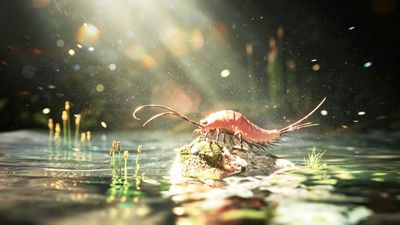
The fossil is a new species named Chosha praecursor that had a body length of around 49 millimeters and dates back approximately 324 million years.
“The generic name was derived from ch’osh, Navajo language for 'insect', in reference to the Navajo creation myth, wherein the first landmass was occupied by ancient insect-like creatures whose descendants populated the Earth, give the antiquity of the fossil and its implications for our understanding of hexapod terrestrialization,” explain the authors.
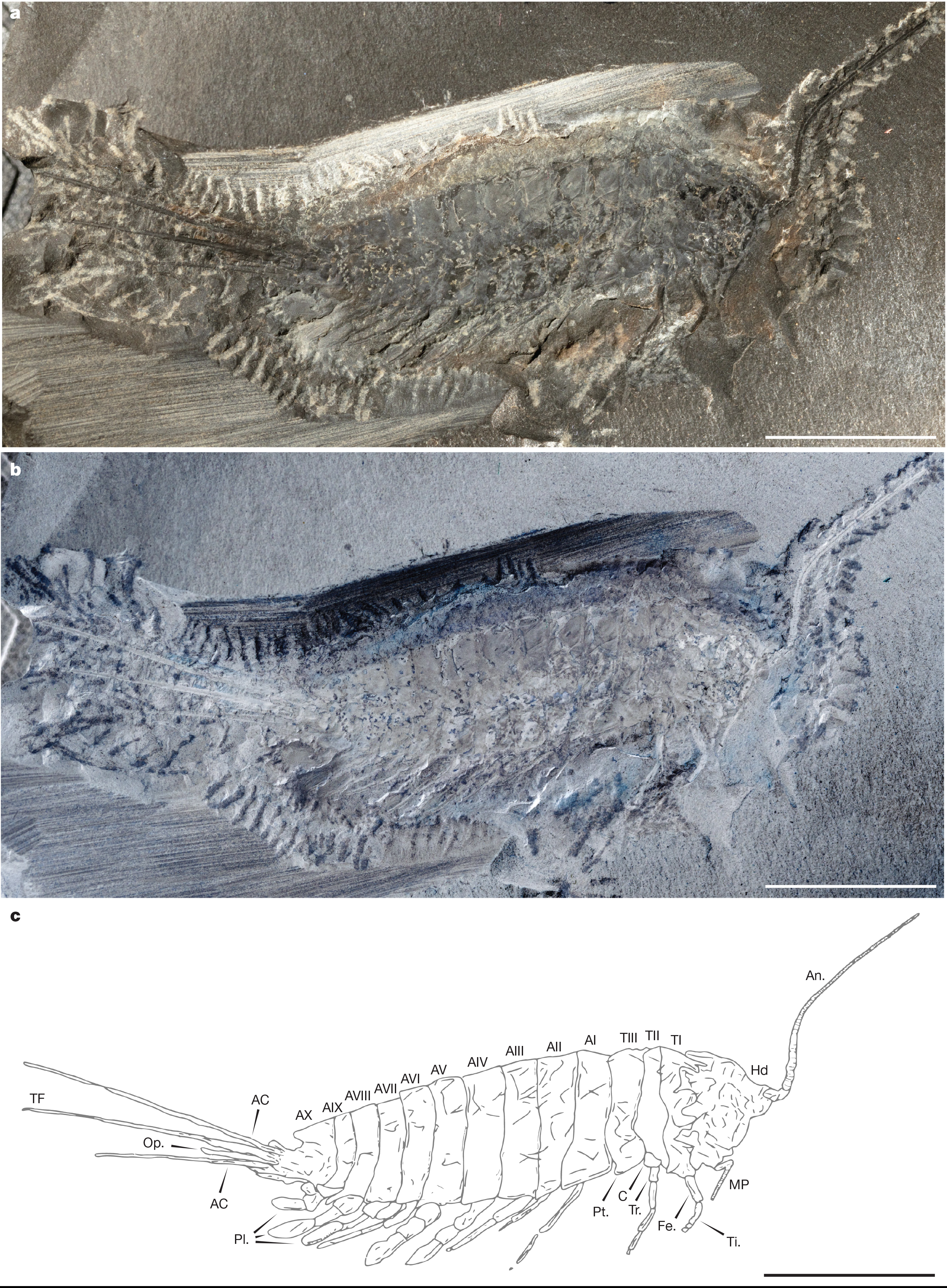
Of its many legs, six of them seem to be the walking legs. It even has an ovipositor, representing the basic body plan of most modern day insects. All modern hexapod insects have six walking legs attached to the thorax and none on the abdomen.
However, on C. praecursor, segments 1-9 of its abdomen also have limbs, with modifications on the ends to be more like paddles than for walking. These adaptations suggest that C. praecursor had a semi-aquatic amphibious lifestyle and might have lived on the edge between land and water.
“It’s a funny thing,” first author Erik Tihelka told Science News. “We call insects ‘hexapods,’ meaning six legs. But it turns out that the original ones had many more.”
The team looked at two other fossils in addition to C. praecursor and found them all to be members of a primitive insect stem clade that helps fill in a gap in the early evolutionary history of insects. Since modern insects don't have limbs on their abdomens, it's suggested that losing these abdominal appendages was one of the key innovations for adapting to a more land-based life.
Exceptionally well-preserved fossils can tell us a lot about an insect's way of life, even millions of years ago. They can even be so good to as to preserve organs, which researchers can then use to recreate the sounds these insects made back in the Jurassic period.
The study suggests the insect ancestors were pancrustaceans that had these extra limbs, before they became simplified and were eventually lost completely in the land-based insects with six thoracic limbs we see today.
The study is published in Nature.