Nature
 PUBLISHED





What you'll discover in this article
- The krill-fishing season in Antarctica has met its quota months early for a second year running, something that had never happened before 2025.
- In late 2024, a conservation measure was lifted that meant fishing no longer had to be spread out across management areas and could instead focus on the most productive areas – depleting regions favored by local wildlife.
- Experts say it's a wake-up call for everyone who cares about the future of Antarctica. "This is alarming because Antarctic krill is a keystone species and the foundation of the Antarctic food web," conservationist Holly Curry told IFLScience.
When we think of Antarctica, images spring to mind of penguins, whales, and seals, but there is another animal that's arguably more important than them all: krill. These tiny crustaceans exist in swarms that can be tens-of-thousands strong in just a single cubic meter. A dense food source, but one that is facing a new kind of competition.
Krill has been fished commercially in Antarctica since 1961, primarily for its uses in food supplements, pharmaceuticals, and animal feed, but the intensity of that fishing has varied over the decades.
In 2009, the Commission for the Conservation of Antarctic Marine Living Resources (CCAMLR) agreed Conservation Measure 51-07, which distributed the catch limit of 620,000 tonnes (683,433 tons) across four management zones, spreading the catch burden.
However, this safety net lapsed when Conservation Measure 51-07 wasn’t renewed in late 2024. Despite the overall limit still being in place, the krill-fishing season has since repeatedly broken records with speedier and more intense catch seasons.
In 2025, the fishery hit its limit of 620,000 tonnes for the first time ever, closing the fishery more than three months early. Now, 2026 has followed suit, hitting the quota on August 12 and potentially marking the start of a worrying new trend.
“Without adequate regulations in place to spread out the catch, the fishery has become increasingly concentrated, leading to these early closures,” said Holly Curry, the Antarctic and Southern Ocean Coalition (ASOC) Marine Protected Area (MPA) Campaign Director.
“This is alarming because Antarctic krill is a keystone species and the foundation of the Antarctic food web. Put another way, nearly everything in Antarctica and the Southern Ocean eats krill or eats something that eats krill!”
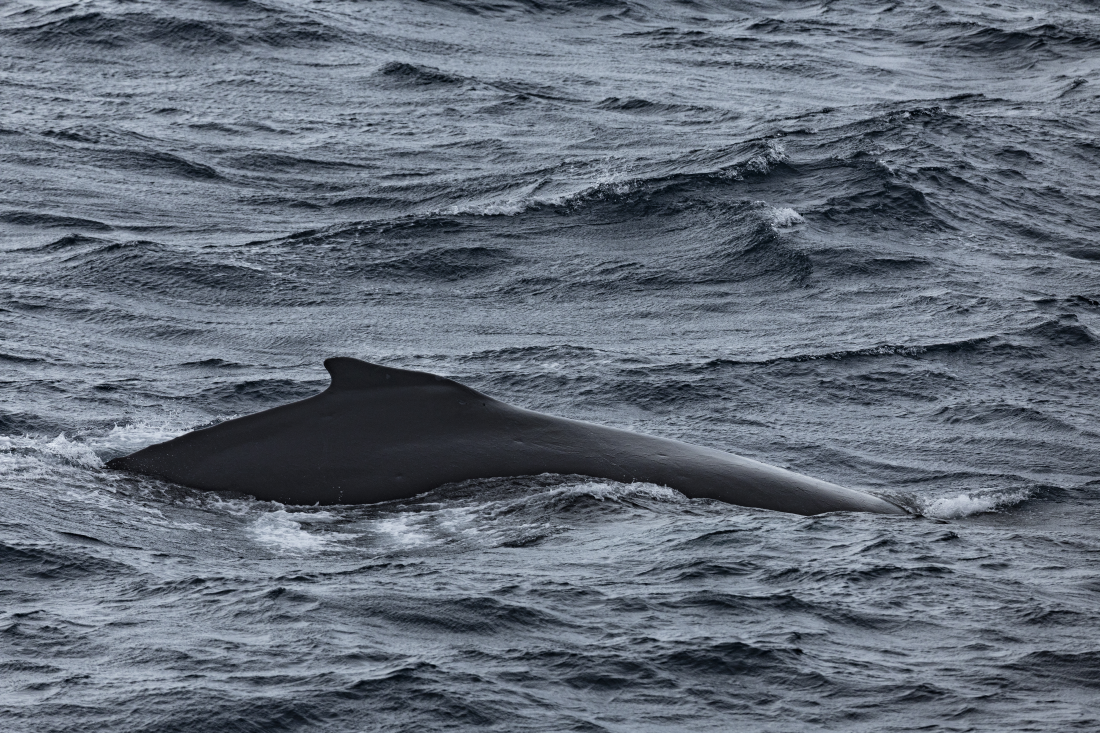
The area where they're fishing is highly productive, which of course means that they're overlapping with whales and other animals.
Grant Humphries
The catch limits mean that the overall biomass captured represents a relatively low percentage of all krill in Antarctica, but the issue, experts say, lies in its intensity. Without the 51-07 regulation, fishing vessels are free to focus their efforts on the most productive areas for krill.
Unfortunately, these are the same areas wildlife depends on.
“The area where they're fishing is highly productive, which of course means that they're overlapping with whales and other animals,” data scientist Dr Grant Humphries at non-profit organization Oceanites told IFLScience. “And there's concern about what impact that will have on the ecosystem."
Focusing fishing efforts in these foraging areas means there’s less food available to wildlife, which relies on specific locations having an abundance of krill and not just on the overall krill biomass of the Southern Ocean.
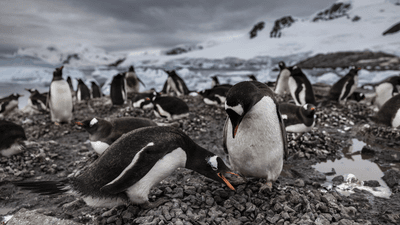
As such, if krill numbers are depleted in these productive areas, animals like whales, penguins, and seals will have to travel further to get enough food. This is a concerning prospect for an ecosystem whose main food source is already threatened by climate change.
While the exact consequences are a matter of speculation, conservationists fear we’ll soon start to see knock-on effects.
“If we're going to see an impact, it'll be in the next couple of years - among penguins, anyway," said Humphries.
The MPA would protect roughly 460,000 square kilometers of some of the most biologically rich and ecologically vulnerable habitat on the planet.
Holly Curry
News of the fishing season’s premature end two years running has intensified calls for a fresh look at the protections afforded to Antarctica and the Southern Ocean. This includes a long-pending request to establish a Marine Protected Area (MPA) in the Antarctic Peninsula, where krill fishing is now most concentrated.
“The MPA would protect roughly 460,000 square kilometers of some of the most biologically rich and ecologically vulnerable habitat on the planet, including krill spawning and nursery grounds and important foraging habitat for penguins, whales, and seals,” said Curry.
“In addition to adopting new MPAs, CCAMLR also needs to adopt an improved fishery management framework to spread out the krill catch spatially and temporally. The good news is that both the Antarctic Peninsula MPA and a revised krill fishery management approach have been discussed extensively by CCAMLR.”
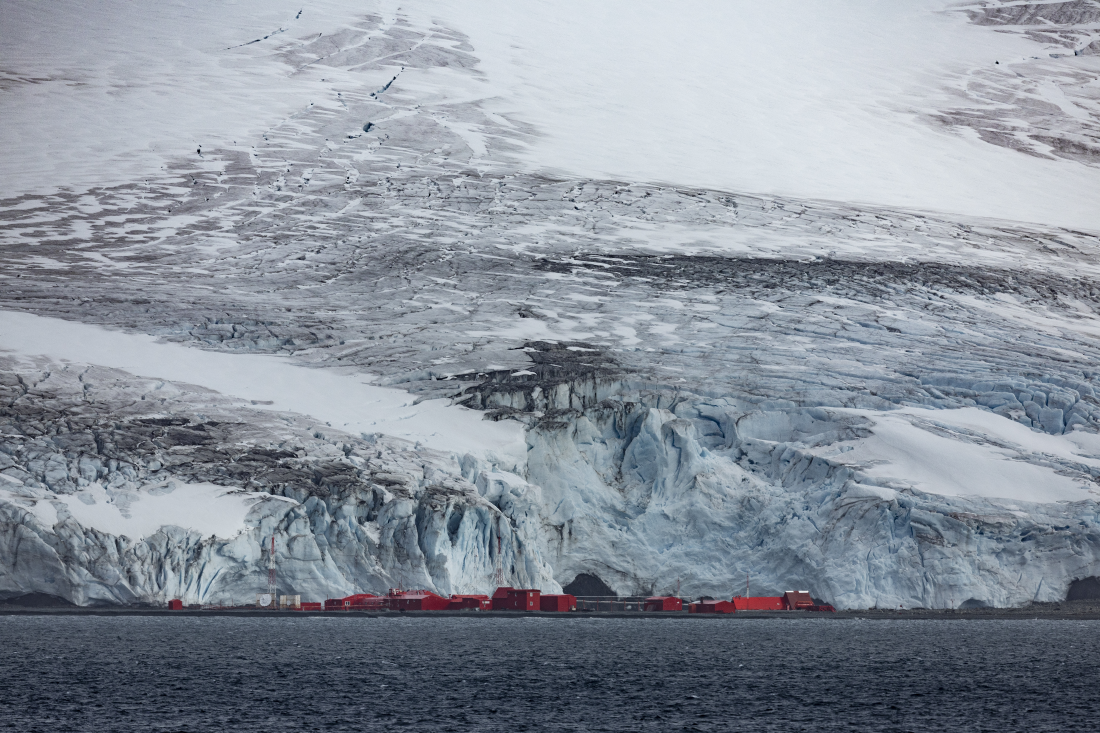
It’s a conversation under a time crunch, as earlier this year the International Union for Conservation of Nature (IUCN) delivered some concerning news for Antarctic wildlife. Both emperor penguins and Antarctic fur seals are now considered Endangered, with declining krill availability linked to climate change highlighted as a significant contributing factor.
What is needed now is the political will to get these key measures approved
Holly Curry
It’s not too late to turn things around for our crustacean-loving Antarctic pals, but it could be important to get on top of fishing regulations sooner rather than later if we’re to avoid inadvertently pushing them to the brink.
“What is needed now is the political will to get these key measures approved,” said Curry. “Hopefully this second consecutive early closure of the krill fishery is the wake-up call CCAMLR Members need to take action.”