


 Nature
 PUBLISHED


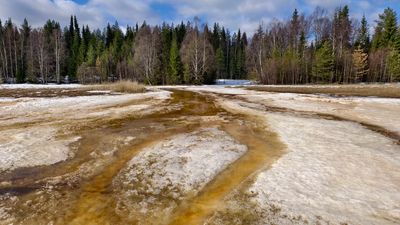


It's getting pretty hot in the Arctic right now.
Over the course of last month, more than 70 percent of the land and sea north of 60°N was warmer than the 1991-2020 baseline, and 12 percent of the region had one of its top three warmest Julys, according to the ERA5 dataset produced by the European Centre for Medium-Range Weather Forecasts.
The highest temperatures were in Russia, with the middle Lena Valley in eastern Siberia topping 35°C (95°F) on July 9 and 10, as did Troitsko-Pechorsk in Western Russia later in the month. That's according to an analysis of the data posted to Substack by Rick Thoman at the Alaska Center for Climate Assessment and Policy (ACCAP), University of Alaska Fairbanks.
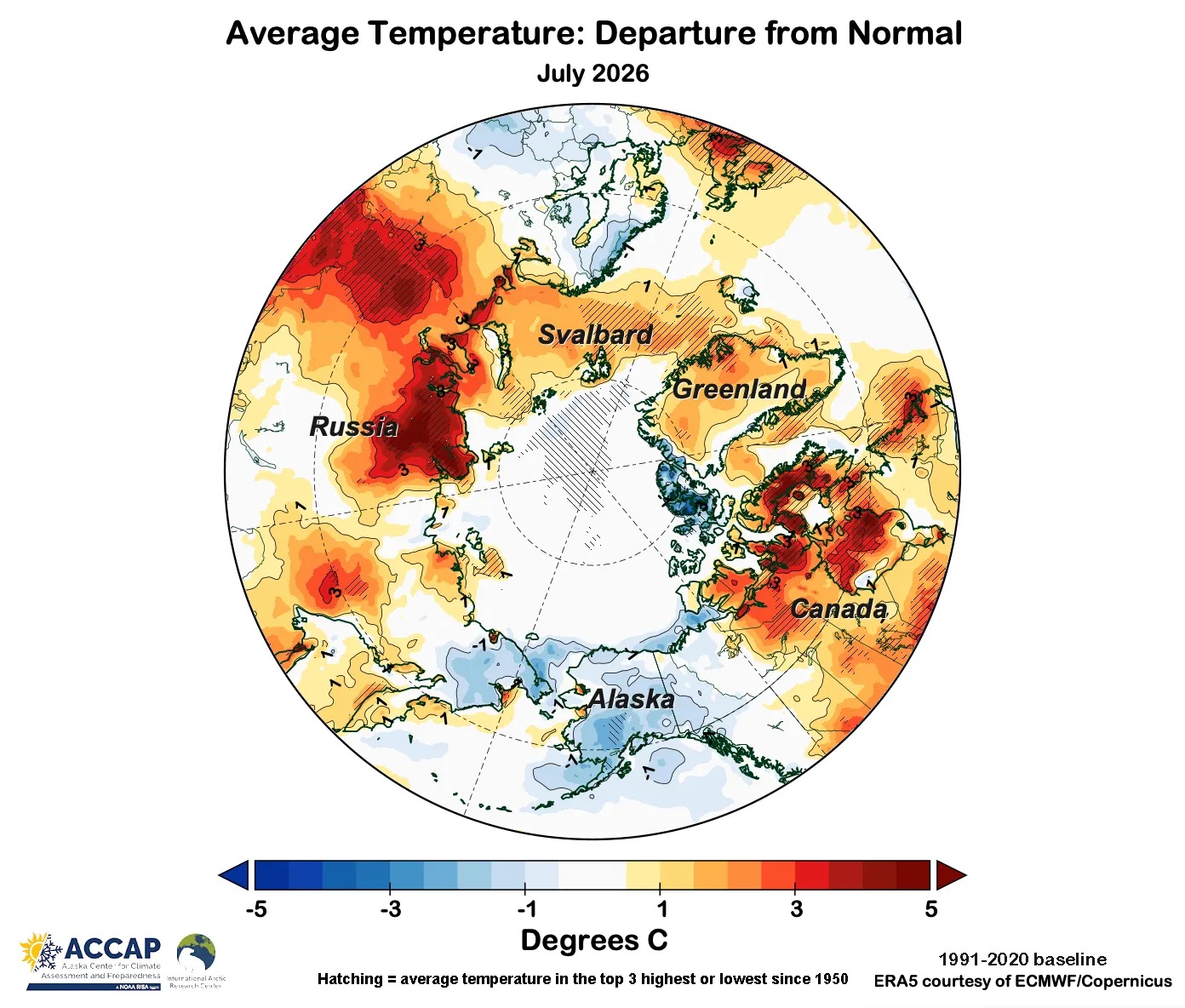
On top of all that, the Krasnoyarsk Krai region of central Siberia has had its warmest July since 1969, and Selagoncy in the neighbouring Sakha region recorded a high of over 32°C (90°F) according to separate data collected by weather information service Ogimet and posted to Bluesky by climatologist Maximiliano Herrera.
In other parts of the Arctic Circle, the story is a little less stark, with northern Nunavut in Canada being cooler than normal, for example, and Alaska actually experiencing its coolest July since 2011. The Arctic Ocean north of Svalbard was also chillier than the average, though both Hudson Bay and the Greenland Sea had their hottest July since satellite records began in 1979.
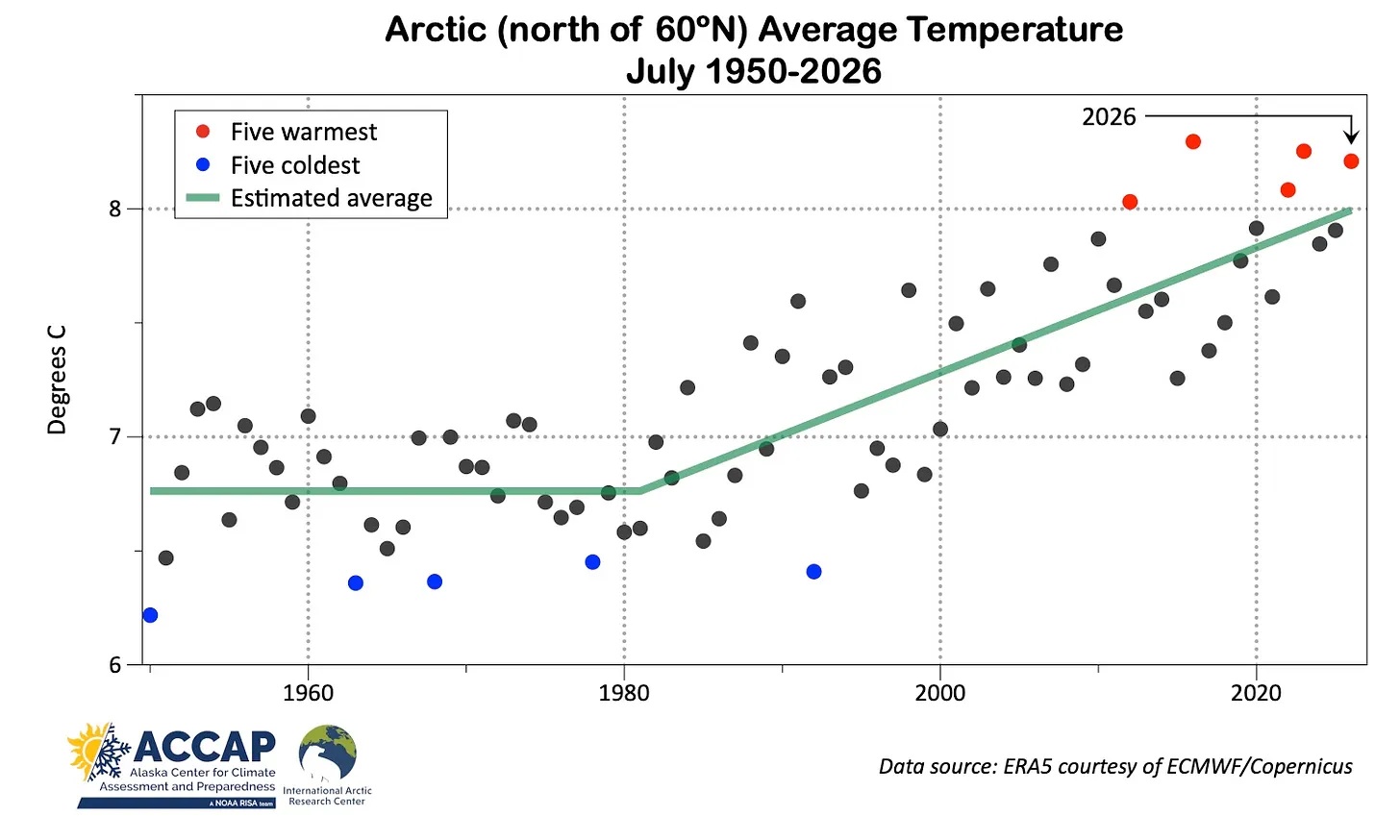
The overall trend, however, is clear, with this July ranking as the third highest overall for Arctic surface temperatures since 1950. The top five warmest years have all taken place since 2010.
That trend is also evident in the American Meteorological Society's State of the Climate report, released Monday, which found 2025 was the second warmest Arctic year in its 126-year record and that surface air temperatures in the region have been increasing at roughly three times the global average rate.
“Studies in recent years have shown that the Arctic is warming much more rapidly than the rest of the planet due to feedback from the loss of sea ice – so it is not surprising that we are seeing these all-time record temperatures at high latitudes,” meteorologist Alan Gerard told Scientific American last week.
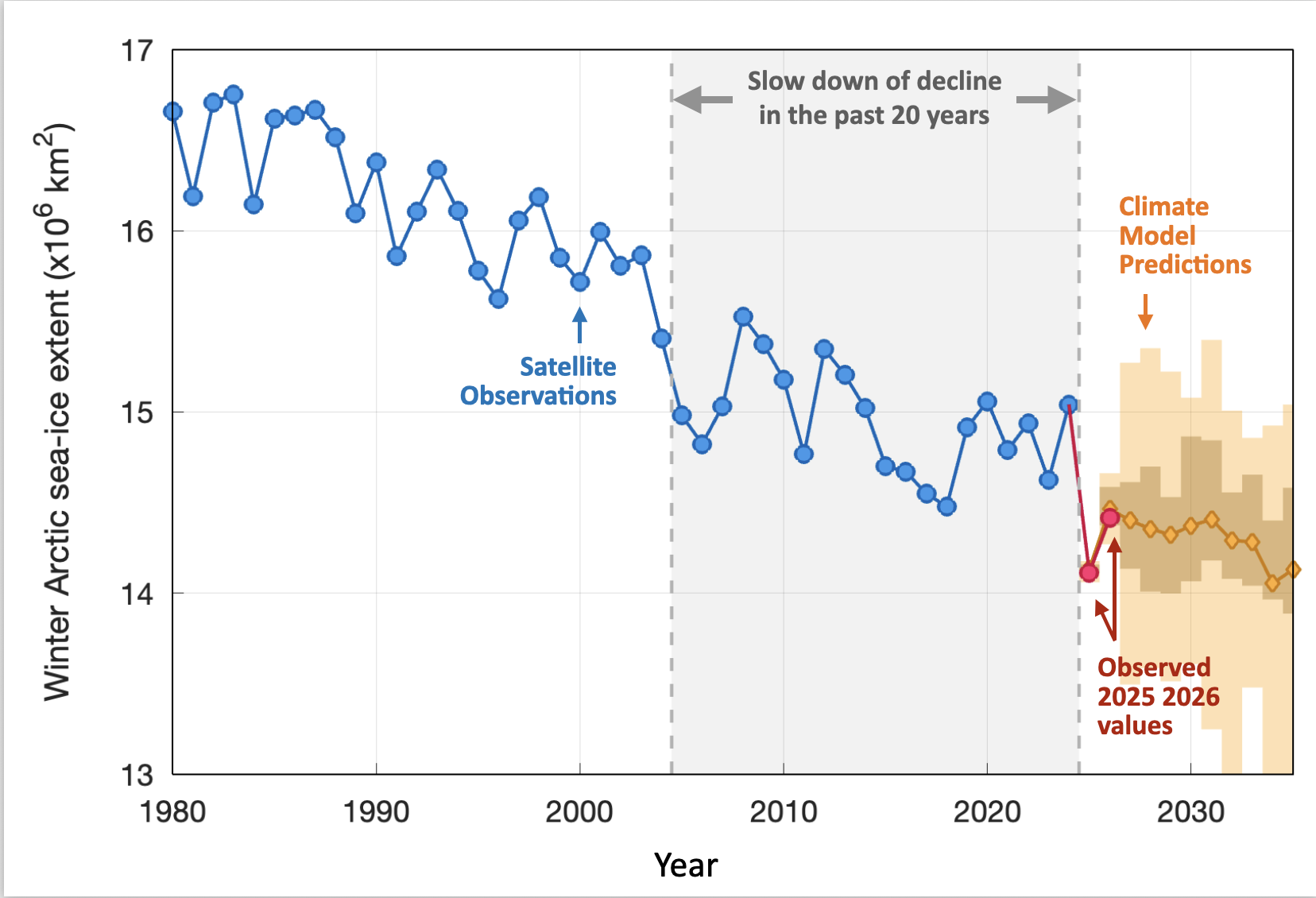
Sea ice is highly reflective and helps cool the Arctic, similar to how putting a foil cover under your car windshield also staves off the heat. As more ice melts, this effect becomes less prominent and ocean temperatures increase, leading to more melting.
These recent record temperatures have also coincided with the release of new research on Siberian methane emissions led by scientists at the University of Edinburgh and the Chinese Academy of Sciences.
Their work found that increasing wildfires, shifting wetland activity, and rapid warming are driving increasing methane emissions from melting permafrost, resulting in a doubling of the amount of methane released from Siberia over the period between 2010 and 2023.
Arctic permafrost is one of the largest natural reservoirs of carbon in the world, and once it thaws, soil microbes convert the stored material into carbon dioxide and methane – which is an even more potent, if shorter-lived, greenhouse gas.
In a press release, the researchers behind the new study note specifically that hotter, drier summers – such as the one we are currently experiencing – are creating ideal conditions for longer-lasting fires, which both release methane directly and accelerate permafrost thaw.
While existing emissions from Siberia are currently small on a global scale, they write, future warming may cause that to change.
As was noted in the recent State of the Climate report, precipitation is also increasing across the Arctic, leading to more plant growth, which has complex and contradictory effects on the rate of permafrost thaw. This makes it difficult to say with certainty whether the process is a true climate "tipping point".
Still, what we are seeing right now is clearly unprecedented, and the tenor among climate scientists is one of worried uncertainty.
"We are at last beginning to halt the growth in fossil fuel methane emissions but natural system feedbacks are growing unexpectedly, pushing towards the failure of the Paris Agreement," Dr Euan Nisbet at Royal Holloway University of London told the UK Science Media Centre. "It’s a dangerous time for the climate."
Amendment (August 11, 2026): This article was updated to include some graphics provided by Rick Thoman of the ACCAP.


 1
1