Nature
 PUBLISHED



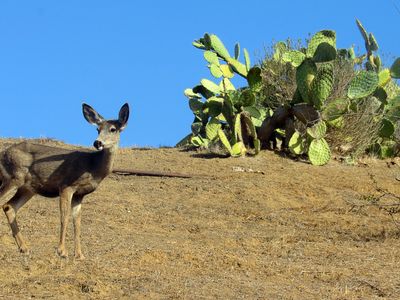


Catalina Island's mule deer are beloved icons to many and an environmental nuisance to others, but nearly all 2,000 of them are set to be killed in a cull proponents say will protect the island's native ecosystems.
Located off the coast of southern California, Catalina Island is an idyllic resort featuring beautiful beaches, turquoise waters, and rugged mountains. Seasonal flocks of tourists are in abundance, but the island also has some more divisive visitors: deer.
Island-bound and very hungry
Mule deer (Odocoileus hemionus) were brought to the island from the mainland in the 1920s and '30s for sport hunting. Over the past century, the population has exploded as the invasive species has no natural predators, nor can the deer migrate off the island.
The animals have a voracious appetite that has decimated the island’s native shrubs and grasses. As a result, over one-third of the island’s ecosystem has become dominated by dry invasive grasses, which some argue increase the risk of wildfires.
The animals' grazing also reduces the habitat and food sources for several native species, including the Santa Catalina Island ground squirrel, Santa Catalina Island shrew, Catalina California quail, and the Catalina Island fox.
The Catalina Island Conservancy, a private land trust controlling 88 percent of the island, has been attempting to launch a cull of the mule deer for several years, but it’s proven deeply controversial with residents, tourists, wildlife advocates, and even some hunters.
Opposition to the cull
An online petition against the move has amassed more than 33,000 signatures, arguing the “deer are part of the island’s cultural and scenic heritage.” Signatories also believe the plan is unnecessarily cruel and that alternative options, like sterilization and relocation, have not received the attention they deserve.
"Science doesn’t justify this slaughter. Independent ecologists reviewing the Conservancy’s own data found no credible evidence that deer eradication is the only path to ecological recovery," the petition reads. "Catalina Island’s deer belong to all Californians. We will not stand by while this precious wildlife resource is destroyed behind closed doors."
Despite this, the California Department of Fish and Wildlife approved the organization’s permit in January, which includes a strategy to “remove” the entire deer population over five years using contracted hunters.
As part of the plan, the meat from the deer carcasses will be used to feed endangered California condors, North America's biggest bird.
Activists attempted to halt the initial phase of the cull with an injunction, while Los Angeles County Supervisor Janice Hahn made a last-ditch appeal to Governor Gavin Newsom at the end of August to suspend or revoke the state permit.
The cull has commenced, but how far will it go?
However, earlier this month, a Los Angeles Superior Court judge denied their requests. The initial phase of the plan is already underway, with around 200 deer expected to be killed throughout September and October.
“The evidence of the severity of the threat the deer pose is overwhelming, and all other alternatives have been exhausted,” Scott Morrison, director of conservation and science for The Nature Conservancy in California, said in a statement at the start of this year.
“Catalina Island can have either a functional, biodiverse and resilient ecosystem or it can have deer. It cannot have both,” he added.