Nature
 PUBLISHED
 1
1


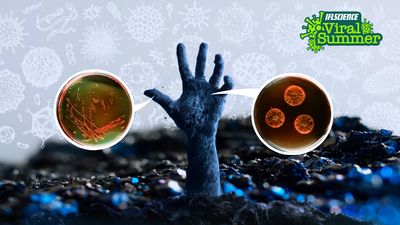


It usually starts in the run-up towards Halloween, says Dr Arwyn Edwards, an environmental microbiologist at Aberystwyth University. As media outlets roll out their stories for spooky season, newsfeeds become filled with stories of “zombie viruses” threatening to be “unleashed from thawing permafrost.”
The tales make for very clickable headlines, as IFLScience is all too aware, but is this a genuine threat that fills the nightmares of scientists?
The return of the 48,500-year-old virus
An especially noisy paper was published in 2024, in which a team from Aix-Marseille University in France managed to “revive” a virus that had been frozen in permafrost for 48,500 years and coaxed it into infecting a single-celled amoeba.
“The next pandemic may come from a virus that emerged from this frozen Arctic soil, permafrost," the leader of the project, Jean-Michel Claverie, boldly told the media.
The level of potential devastation, he said, could be even worse than a pandemic caused by influenza, a coronavirus, or any known virus family, since the germ could come from a completely novel lineage that modern Homo sapiens have never encountered.
If that's the case, it could make the epidemics that struck down Native American populations after the arrival of Europeans look like a sniffly nose.
I've seen no evidence that this is a real problem. And very bluntly, if it were, I would be patient zero.
Dr Arwyn Edwards
Sounds terrifying, right? Dr Edwards, who studies microbial communities in Arctic environments, isn’t convinced one bit.
“Having worked on Arctic microbiology for 20 years now, I've seen no evidence that this is a real problem. And very bluntly, if it were, I would be patient zero, because I would be right there on the firing line,” he told IFLScience.
“All the claims are really, really on thin ice. They don't stand up to scrutiny when examined. Nobody I know who's active in the world of Arctic microbiology gives this a second thought,” Edwards continued.
Never say never
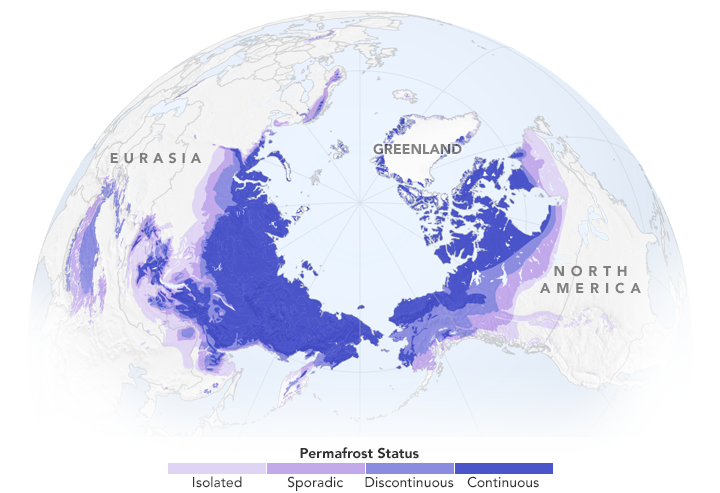
The risk is reassuringly low, he believes, but not zero. Microorganisms inhabit virtually every natural environment on Earth, even among some of the harshest conditions the planet has to offer. Ice sheets, glaciers, and permafrost are no different, despite their low temperatures and scarce nutrients.
Certainly, some microbes living within the frozen environments will be pathogenic, perhaps even capable of infecting humans. However, it’s a question of relative risk; the soil in your backyard is likely teeming with potentially pathogenic microbes too, but you're not going to don a full HAZMAT suit to do some gardening.
“There are pathogens in permafrost soil, and that's simply because there are pathogens in every kind of soil all over the world. But they’re not going to cause the next pandemic,” Edwards added.
Frozen victims of past pandemics
With that said, there are some parts of Earth's cryosphere that might be riskier than others. Take, for example, the frozen graveyards of past pandemics.
Back in the 1990s, there was a big search for genetic material from the influenza virus that caused the 1918 pandemic, AKA the "Spanish flu", an especially nasty strain that killed some 50 million people, likely more. The hope was that sequencing the virus could help to design vaccines and treatments should a similar strain ever return.
Victims buried and preserved in frozen environments became a promising target. One project, led by Kirsty Duncan, a medical geographer who later became Canada’s Minister of Science and Sport, focused on a cemetery in the old mining town of Longyearbyen in Svalbard, where several Norwegian miners who died of the 1918 flu had been laid to rest. The team was understandably wary.
“They had huge amounts of precautions. They spent about $4 million on this entire project. International team of scientists, pathologists, microbiologists, virologists, geoscientists – the works,” explained Edwards.
But despite the high hopes, the project ultimately came back with very little. The team located the bodies, but was unable to recover any usable viral material.
It turned out the miners had been buried in shallow graves, within the "active" layer of permafrost that's prone to movement. Over the past eight decades, the bodies had continually risen and sunk, freezing and thawing with the seasons, and the flu virus within their tissues had degraded along with them.
Finding the 1918 influenza virus
Another similar effort, this time in the US, eventually had more luck, although it took two attempts, decades apart.
In 1951, a young Swedish-born pathologist named Johan Hultin travelled to Brevig Mission in Alaska, a village that had been ravaged by the 1918 flu outbreak. Hultin exhumed several bodies from the permafrost and took lung tissue samples, hoping to isolate the live virus.
Somewhat shockingly, he dealt with some of the samples using mouth pipetting, an outdated method where scientists draw fluids into a pipette by sucking on a tube.
The good news: he somehow wasn't infected. The bad news: the samples yielded nothing of any use.
Decades later, in 1997, around the time of Duncan’s work in Svalbard, Hultin became aware of new efforts to sequence the infamous influenza virus by a team led by virologist Jeffery Taubenberger. Now retired and in his 70s, Hultin got in contact with Taubenberger and asked whether he wanted to return to Brevig Mission.
One week later, Hultin departed for the remote Alaskan village once again armed with a team and his wife’s gardening shears to help him excavate.
Remarkably, the project managed to get its hands on infected tissue samples taken from an Iñupiat woman who had died in the pandemic around 80 years earlier. The sample, together with others, was used to reconstruct a complete genetic sequence of the 1918 virus, an outstanding result published in 2005.
There's much to learn from these episodes, but for the purposes of this article, one could argue that even the most formidable virus of the 20th century will heavily resist attempts to be brought back from its icy hideouts to wreak havoc.
Frozen deer cause outbreak in Siberia
Some tougher germs might be more of a realistic threat, though. Bacillus anthracis, the bacterium behind the disease anthrax, can make spores that are “super, super tough,” Edwards notes. The bacteria are also ubiquitous, found in around one-third of all soils around the world, including permafrost, he added.
The thought of these frozen bacteria coming back to life isn’t science fiction; it actually happened just a decade ago.
In the summer of 2016, the Yamal Peninsula in northwest Siberia was hit by a heatwave, causing significant amounts of permafrost to thaw. In doing so, anthrax spores that had lain hidden in frozen reindeer carcasses were also stirred back to life.
The infection somehow spread, killing thousands of reindeer and hospitalizing dozens of nomadic herders, one of whom passed away.
It was a tragic outbreak, but even so, Edwards is careful not to overstate the danger.
“The thing with anthrax is it's not a virus, it's bacterial. It’s not communicable from person to person or animal to animal. It's pretty much a one-way kind of thing once somebody becomes infected with anthrax,” he explained.
“There are good antibiotics and good vaccines against anthrax. So, if it did start to spread for whatever reason, we could contain it,” the microbiologist said.
Plant problems
Human disease isn’t the only anxiety at play.
Plant pathogens have the capacity to starve economies and millions and billions of people. You have to be careful about those kinds of things.
Dr Arwyn Edwards
In 2014, scientists at the University of California, San Francisco, went to a patch of ice in the Yukon and they discovered a piece of frozen poop left behind by a caribou 700 years ago. Back in the lab, they analyzed the sample and identified a complete DNA and a partial RNA viral genome.
The team found it was distantly related to modern-day geminiviruses, which infect plants. In experiments that followed, they successfully infected tobacco plants with the virus.
It's not far-fetched to imagine something like this reaching the world's crops one day, triggering serious disruptions to agriculture and the global food system.
“A plant virus isn't going to cause a pandemic, but… plant pathogens have the capacity to starve economies and millions and billions of people. You have to be careful about those kinds of things,” explained Edwards.
The real threat
The real biological peril of thawing permafrost might manifest in much more subtle, but no less worrying, ways. As the Arctic comes under more pressure from increasing temperatures, the relationship between pathogens and wildlife can change, increasing the likelihood of new zoonotic diseases jumping from animals into humans.
A 2024 review in the journal mSystems directly compared the two risk pathways and concluded that disease outbreaks from viruses of animal origin are much more likely to stem from contact with existing wildlife in the Arctic and subarctic than from emergence out of permafrost itself.
This problem is playing out in real time across the North American Arctic and boreal biomes, where humans are increasingly encroaching on a natural world that’s already struggling.
A 2021 paper on the topic explains how the Arctic and boreal ecosystems are undergoing rapid change from warming, habitat encroachment, and development, and the strained relationships between hosts and pathogens.
This shift can raise the odds of new diseases emerging, or old ones resurfacing, and jumping into human populations, especially Indigenous communities.
“In terms of disease emergence, we really need to be thinking about countries where there's a high level of biodiversity, but that biodiversity is being encroached upon by human activities through things like deforestation and illegal trade in wildlife and endangered species – things that bring us into contact with disrupted ecologies that are full of viruses,” Edwards added.
The big issue
Last but not least, there is a much more likely, albeit slightly less sexy, danger that frozen microbes threaten to release. With warming temperatures, hordes of bacteria will become more active in the Arctic and other iced-up region. As they stir, they will respire and, en masse, burp out huge quantities of greenhouse gases, like carbon dioxide and methane.
The amount of greenhouse gas set to be released is debatable, but a 2024 study out of Colorado State University, published in Nature Microbiology, suggests that the carbon dioxide and methane released from thawing permafrost could rival the emissions from large industrial countries by 2100.
This will warm Earth's climate even further, reawakening deeper layers of ice and their microbial inhabitants, spiraling into a feedback loop of doom.
For Edwards, this is the issue that should be snatching headlines.
“That's the hazard,” he stressed. “The real dangers from the permafrost are the greenhouse gases that have been preserved for millennia coming out in a short, big burst – particularly methane, but also carbon dioxide.”
It's a convoluted process that's difficult to rein into a punchy news article, but if permafrost microbes are going to screw over humankind, this is how it will happen.