Nature
 PUBLISHED
 2
2





What you’ll discover in this article
- Thylacine jaws were suited to catching small prey, not subduing larger ones.
- Consequently, they couldn't have been the sheep-killers they were portrayed as, a label that led to their eventual extinction.
- Their specialization made them well-suited to an island that offered few large animals, Professor Vera Weisbecker told IFLScience, even though their famous association with Tasmania was recent for a species that once had a much wider range.
The extinction of the thylacine, often known as the Tasmanian tiger, is now generally recognized as a tragedy.
New evidence now shows even their alleged sheep-killing was probably almost non-existent, as the thylacine’s jaws were unsuited to consuming prey that large. In fact, the thylacine’s bite has no living mammalian counterpart.
Rapid eradication
This was a rare animal already when the bounty was put on, and even if attacks happened occasionally, it was not the threat that was claimed.
Professor Vera Weisbecker
By the time European botanists reached Australia, the thylacine was the largest surviving marsupial predator. Having once roamed widely across the continent, the thylacine was now restricted to the island of Tasmania, which dingoes never reached.
Settlers labeled the thylacine as a pest and accused it of killing the sheep that were one of the island’s main industries in the 19th and early 20th centuries. This gave rise to bounties on their pelts on and off from 1830 to 1908.
By the time the mood shifted, and value was seen in the apex predator’s preservation, it was too late.
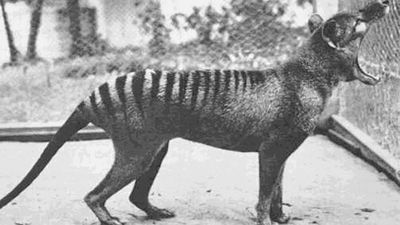
The last known thylacine died at Tasmania's Beaumaris Zoo in 1936. Even though reports have frequently resurfaced of their survival in wild parts of the island, there has been no evidence in the form of bones, droppings or DNA.
Thylacines were few in number even before the hunting started, and their limited genetic diversity put them in further danger. Nevertheless, it was the perception of the marsupials as sheep killers that sealed their fate.
But was this even true? After all, with so few thylacines in the whole state, it’s long been argued they couldn't have posed much threat to livelihoods.

Falsely accused
Professor Vera Weisbecker of Flinders University goes further. Even if they were more abundant, thylacines were unsuited to hunting adult sheep anyway.
“Our latest findings on their feeding adaptations counter the myths that drove the thylacine to extinction,” Weisbecker said in a statement.
“Thylacines were often compared to Northern Hemisphere predators such as wolves, jackals and foxes from the dog family Canidae. This resemblance gave them their species name ‘cynocephalus’, meaning ‘dog-head.’”
However, there is 160 million years of separation between wolves and thylacines. Any resemblance is purely a response to similar ecological conditions, if not pure coincidence.
“Even though the average thylacine may have weighed only half as much as the average wolf, its vastly oversized skull is about as large as a grey wolf’s skull,” said Dr Douglass Rovinsky, a coauthor of the latest research.
“But while it was big, it wasn’t really shaped like the skull of a big predator. Instead, the thylacine’s snout was long and slender, almost delicate – not robust like the snout of a grey wolf. It very much looks like the snout of a fox or jackal, which can be much smaller than thylacines.”
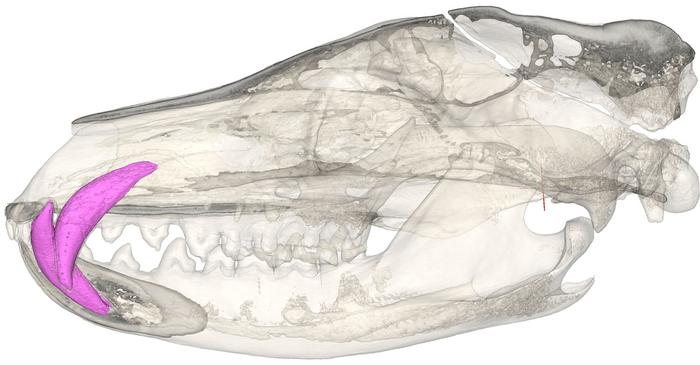
Long jaws like that are good for hunting small prey, rather than bigger animals such as sheep.
“The longer a jaw is, the faster its tip moves when an animal bites,” Weisbecker said. “This increases the impact of the strike. We think that the thylacine’s huge skull size allowed it to withstand these bite forces.”
These adaptations are different to those needed when holding down prey too large to kill with a single bite, something the thylacine was probably quite bad at. Instead, the closest comparison to a thylacine’s jaw might be a small crocodile, rather than any living mammal.
While adult sheep were likely off the menu, Weisbecker told IFLScience that thylacines probably did pose a threat to lambs, at least those that were unguarded by their parents.
“Sometimes when an animal is desperate, it will eat things it normally would not tackle,” she said. “But this was a rare animal already when bounty was put on, and even if attacks happened occasionally, it was not the threat that was claimed.”
Sadly, the thylacine’s combination of resemblance to familiar predators and the unnerving sounds it made were enough to seal its fate.
Small prey niche
In the days when thylacines roamed mainland Australia, evolving to focus on smaller prey probably represented a division of labor with the more fearsome Thylacoleo, or the marsupial 'lion'.
Although not that much larger than thylacines, the jaws of Thylacoleo were very different, and are thought to have enabled the animal to take down prey many times their size.
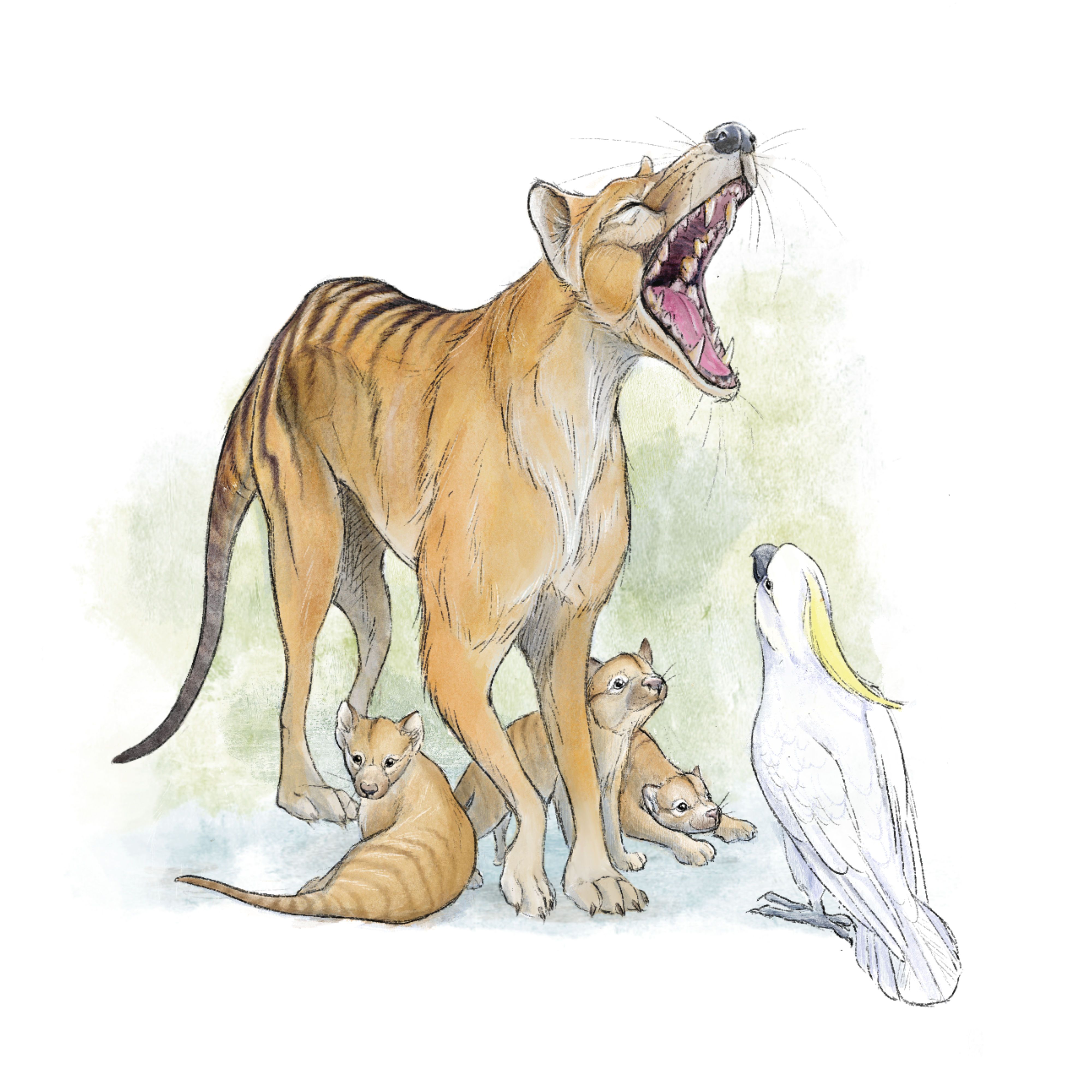
On Tasmania, however, Weisbecker doubts there would have been much point in evolving the capacity to hunt larger prey, even if thylacines had time. Only emus and perhaps the biggest kangaroos would have been beyond their capacity, making it best to specialize in the widely available and smaller bandicoots, possums, and wallabies.
Weisbecker regrets that Beaumaris Zoo did not keep better records or higher resolution film of their captive thylacines feeding. However, she doubts they died because they were fed meat too large for them to handle, noting they survived in captivity for a substantial period of time.
Over the last two centuries, Australia has the worst record of mammal extinction in the world, but none of the lost species have caught the imagination like the thylacine.
The animal that once drew a bounty is now the mascot of sports teams, used for tourist promotions, and a common subject of art. If there is a silver lining to its death, it's in the increased environmental awareness its extinction belatedly brought, something that might be boosted further by knowing it was wrongfully accused.
The study is open access in Nature Communications