Nature
 PUBLISHED


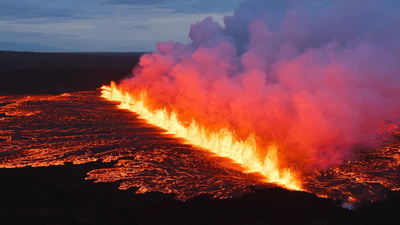


Iceland has experienced the latest volcanic eruption in a string of similar events that started in 2021. The volcano is spewing streams of molten lava that are accumulating east of the new and extensive fissure.
The eruption took place on the Sundhnúksgígaröð crater, located in the eastern extreme of Iceland on the Reykjanes Peninsula. According to the Icelandic Meteorological Office (IMO), it started just before 4 am local time on July 16, 2025, and created an eruptive fissure that is now extended further north than any of the previous fissures that have appeared since December 2023.
Drone footage shows the fissure extending across the crater in a line of bubbling, spewing lava. It’s an epic sight as a blanket of gas is sent into the sky.
Latest estimates put the fissure at around 2.4 kilometers (1.5 miles) long. In addition, a smaller fissure has opened west of Fagradalsfjall, another volcano that started to erupt in March 2021. This fissure has been estimated to be around 500 meters (1,640 feet) in length.
Despite this, the current data indicates that the seismic activity at the site is already starting to decrease, with only a few small earthquakes occurring per hour. However, lava flow has continued through the night and is moving both east and west.
Some people have reported seeing so-called “witch’s hair” drifting in the air. These are fine, sharp, glassy needles that are formed in volcanic eruptions when lava droplets rapidly cool and stretch. Because they are light, these glassy fibers can travel long distances and can cause skin and eye irritations.
At present, wildfires are thought to be the largest threat to local communities, but residents have been advised to stay indoors due to high levels of toxic gas being released by the eruption.
This is the twelfth eruption to occur since seismic activity resumed in 2021. Prior to this, the Fagradalsfjall volcano area had been dormant for around 815 years. The new activity marks the start of a new decades-long volcanic era for the region, which was practically made by volcanoes; Iceland is positioned on the Mid-Atlantic Ridge in the North Atlantic Ocean, which is a fault line in the ocean floor extending between the Eurasian and the North American tectonic plates.