Space and Physics
 PUBLISHED
 1
1


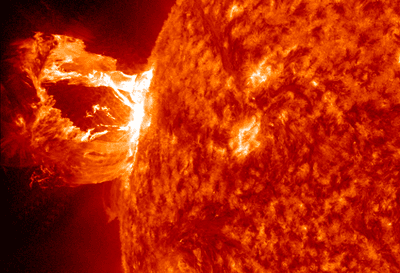


A team of scientists has called for the Artemis II mission to be delayed until 2026, but their proposal may have bigger implications for the future of solar physics than spaceflight.
Solar flares give us beautiful auroral displays and radio interference, but they also carry great danger. Large, but relatively common, flares pose a threat to astronauts, particularly those beyond the Earth’s shielding magnetic field, but the largest flares may be a much larger threat. We don’t know how a world dependent on electricity and linked together by telephone lines would come with a repeat of the 19th-century Carrington Event, but many experts fear the answer is: not well.
Being able to predict flares in advance would help address both problems, but currently, our capacity to do that is poor. Past attempts to predict the timing of solar flares make pre-satellite weather forecasts look reliable. However, an international team claim they have changed that, and they’re touting events they weren’t aware of when they were doing their research as support.
A team led by Dr Victor M. Velasco Herrera of the National Autonomous University of Mexico studied 50 years of satellite observations of the Sun’s X-ray production and identified two cycles that have been overshadowed by the powerful 11-year cycle of solar activity.
These cycles last 1.7 and 7 years, respectively. On their own, the peaks of these don’t stick out that much from the general solar behavior, which is presumably why no one has noticed them before. However, when the cycles combine, superflares (X10 and higher) become much more common. Although this work does not allow the authors to predict the exact timing of a superflare, they believe they can forecast months-long periods when very powerful flares are most likely, and which part of the Sun will release them.
It’s easy to stare too long at complex data and see patterns the way Hamlet saw shapes in clouds; the real test is whether these patterns can produce accurate predictions.
The authors predicted that superflares would be most common from mid-2025 to mid-2026, coming from the Sun’s southern hemisphere. Then, after a pause of about six months, the northern hemisphere would undergo a shorter flaring period.
“Traditional solar forecasting struggles with these extreme events because they happen so quickly and unpredictably,” Herrera said in a statement. “Our method gives space weather operators and satellite managers one to two years of advance warning about when conditions are most dangerous. This critical lead time allows them to prepare and protect communications systems, power grids, and astronaut safety.”
When the predictions were made, and NASA was aiming for an Artemis II launch at the start of 2026, a delay to take advantage of the safe window seemed unlikely. Not only would it be based on very untested research, but it looked likely to set Artemis back a long way.
However, subsequent events have bolstered the case. On the one hand, the same day the team submitted their paper, another team announced a series of enormous X-class flares in May 2024. These were not reported previously because they were on the other side of the Sun from Earth, but they were detected by spacecraft such as the Solar Orbiter and Parker Solar Probe. The timing fit well with what Herrera’s team thought should have been another peak, as did some Earth-directed super flares not long before the paper came out.
“This was pure luck, but also very revealing,” Herrera said. The announcement validated the team’s conclusions, giving them more confidence that they’re right about when it is safe for Artemis II to fly. Meanwhile, technical issues have caused the launch to be postponed several times, to the point where a delay until the anticipated non-flare window wouldn’t mess with the timing as drastically.
“NASA is right to postpone the Artemis II mission to the Moon until March,” Herrera said, before that became April. “But given how active the Sun is right now, our forecasts suggest that delaying the launch until the end of 2026 may be a much safer decision.”
Although NASA has so far not indicated it will take Herrera’s advice, if launch problems persist, it could be a handy way to save face and buy time to fix their issues. Instead of acknowledging that the SLS isn’t ready, blame it on space weather.
Moreover, with Starship running much further behind schedule than SLS, and prospects for Artemis III moving ever further into the future, the team’s longer-term predictions may come into play. Herrera and co-authors think mid-2030 to early 2031 will be another high-risk period, as will be most of 2032 and early 2033.
The study is published in the Journal of Geophysical Research Space Physics.