Space and Physics
 PUBLISHED
 1
1



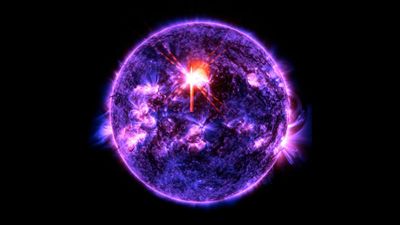


Oh, the Sun is active, alright! While we are past the solar maximum, the peak of activity of the Sun in its 11-year cycle, we are still getting fireworks from our little star – fireworks that have caused several radio blackouts and one of the strongest flares in the last 30 years.
They are all coming from the same sunspot complex, a region known as 4366. Since Sunday, it has released six X-class flares. The X-class is the category to which the most powerful solar flares belong; multiple occurrences from the same region indicates that a lot is happening there.
Sunspots are cooler regions of the Sun’s surface where intense magnetic fields penetrate deep into the Sun. These magnetic field lines can snap and reconnect as the sunspots move, accelerating electrically charged particles to extremely high-speeds. This produces the flashes of intense light.
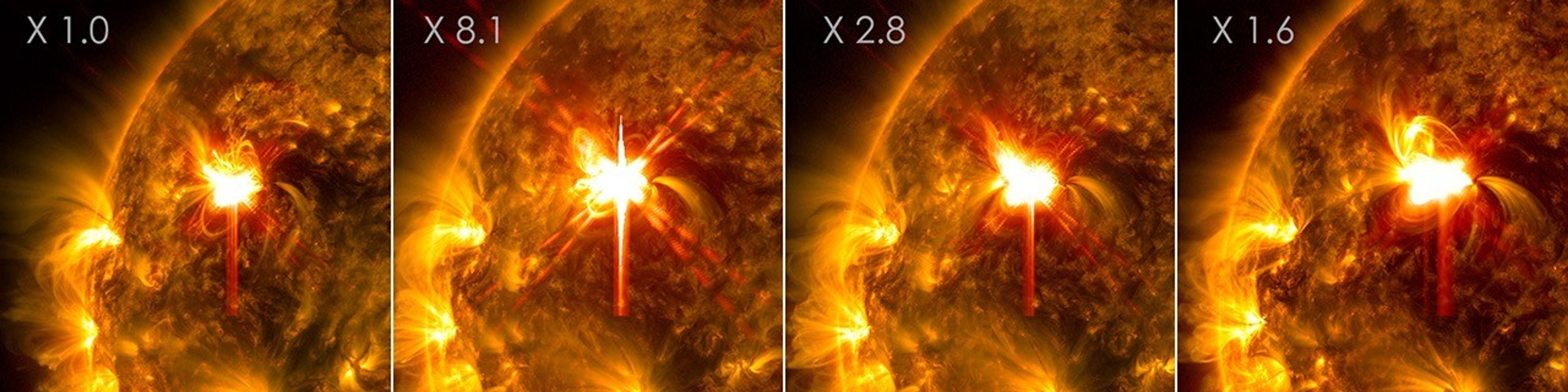
Region 4366 is doing that on steroids. Between February 1 and 2, the region emitted four X-class flares: first an X-1.0, then an X-8.1, followed by an X-2.8 and an X-1.6. The second flare has been classified by other sources as an 8.3. Either number places it in the top 20 flares since 1996, at either position 19 or 20. This makes it the most powerful flare since May 2024. That flare and the associated coronal mass ejection were responsible for the stunning auroral display visible at much lower latitudes than usual.
The flares have continued since the beginning of the month, with an X-1.5 flare on February 3 and then an X-4.2 flare on February 4. The six flares have been responsible for radio blackouts, depending on the sunlit side of the Earth at the time of release. In many cases, this just means degradation of a high-frequency signal, although it is possible to have lost radio contact for about an hour following the flares.
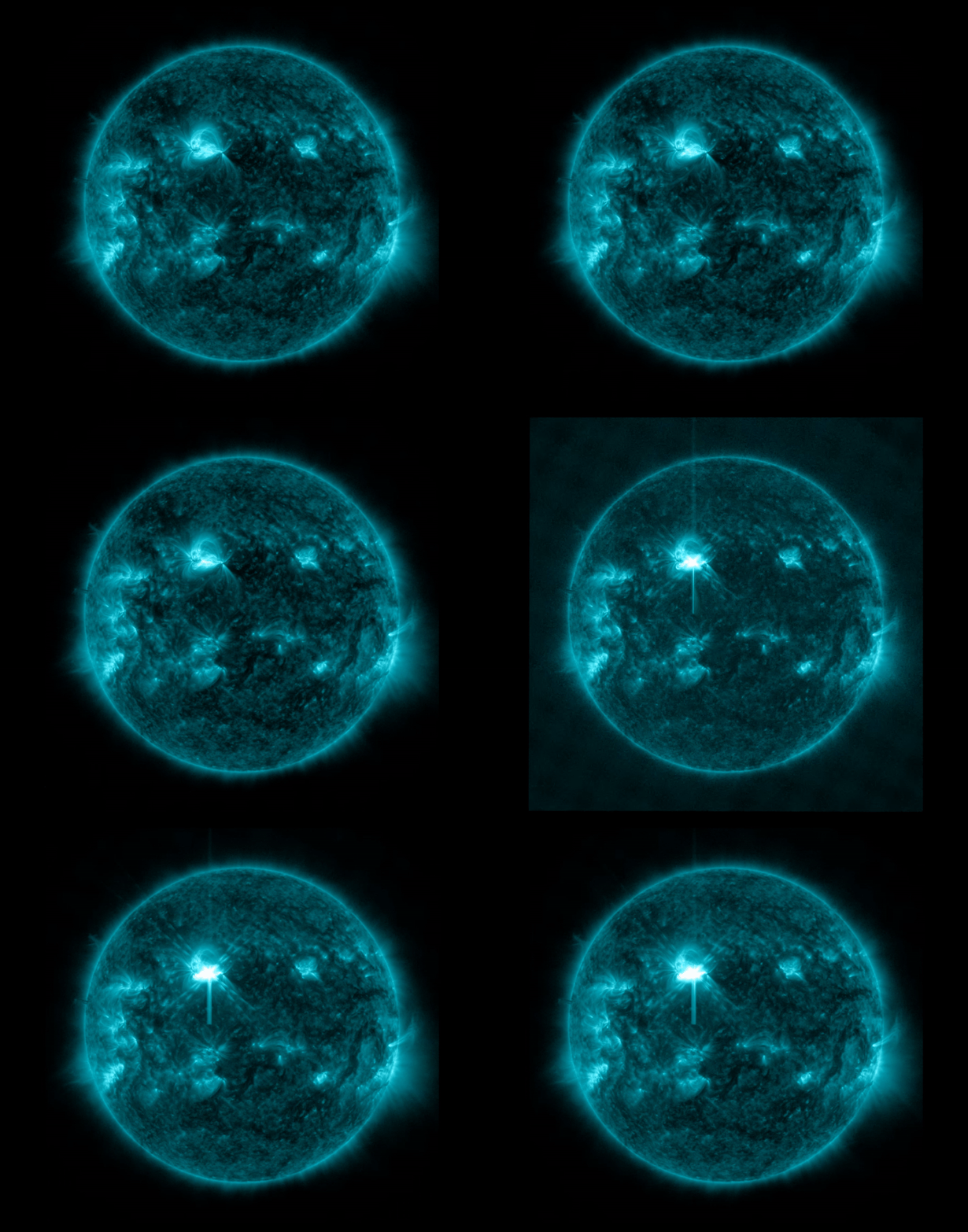
The flares might have also been responsible for minor power grid fluctuations, some effects on satellites, and some migratory birds might be affected, but only in a minor way. Observations of the Sun do not suggest that a coronal mass ejection has been released together with the flare, so the chance of spectacular aurorae is unfortunately very slim.
While that is indeed the case, we still have several more days of sunspot region 4366 pointing at Earth. It might still provide some very energetic surprises and maybe lead to some northern and southern lights, right above our heads.