Space and Physics
 PUBLISHED



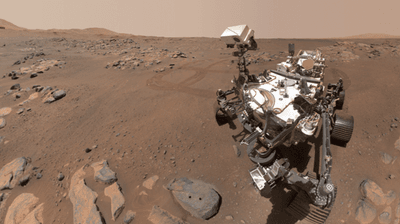


NASA’s Perseverance rover has turned its cameras from the rocks over which it rolls to look back towards home, and captured the moment Phobos briefly blocked its view of Earth.
It’s the first time we've ever seen Earth hidden by another astronomical object from the surface of another world.
Astronomical events where one object passes in front of another go by different names depending on the circumstances. We’re excited by eclipses, but there are similar, smaller events that needed different names.
When a planet passes between us and its star, but blocks only a fraction of the light, it’s called a transit. But when the object being blocked out is a planet or distant star, it’s known as an occultation.
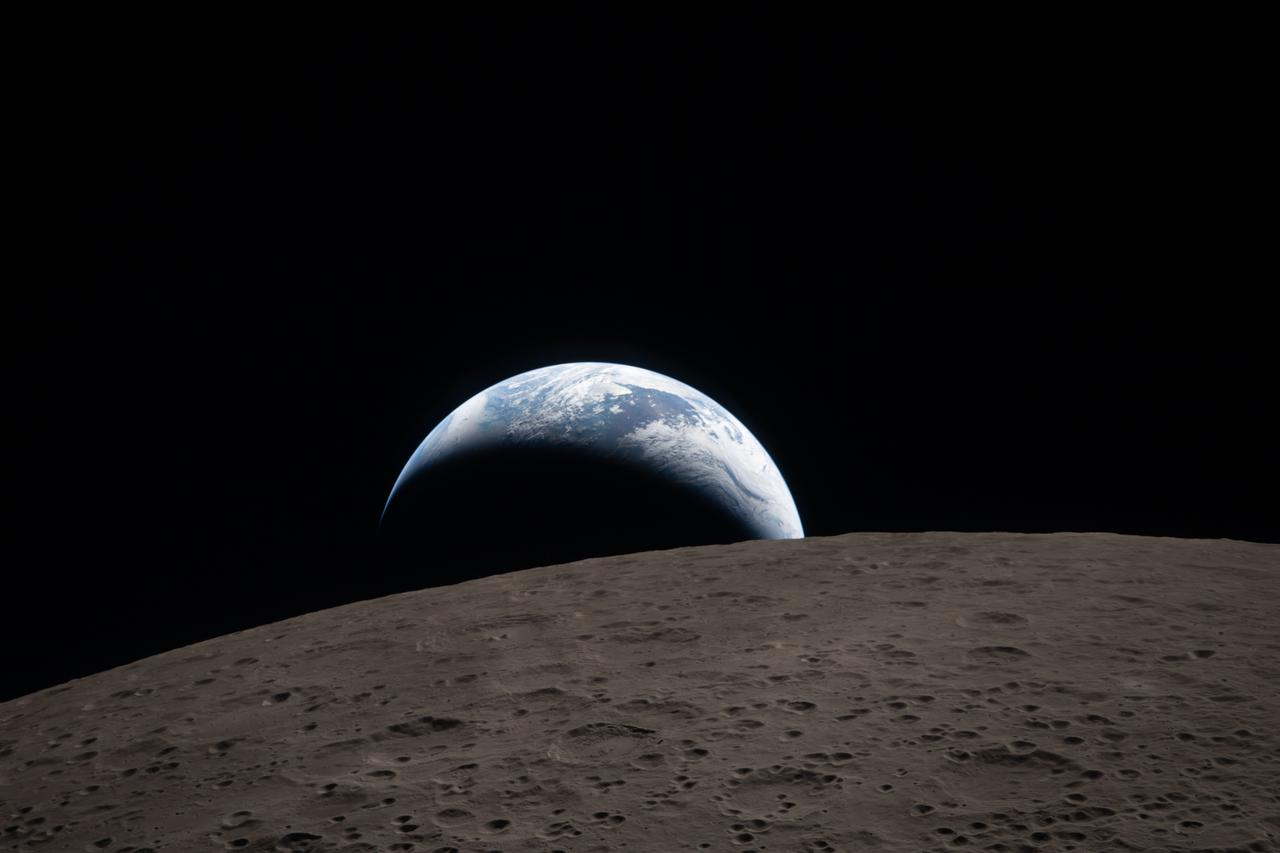
Artemis II filmed the Earth setting behind the Moon, but it was seen from space rather than the surface of another world.
We see the Moon occulting stars as it moves across the night sky so often we barely pay any attention. Even occultations of planets are not particularly rare.
But witnessing an occultation from Mars is considerably more difficult. This is because Phobos and Deimos take up smaller areas of the night sky, particularly when rising and setting. This means that they’re less likely to hide something of interest as they transit.
However, on the evening of July 2, Perseverance not only witnessed an occultation, but the object in the sky briefly hidden was the planet from which it came, and to which its messages are returned.
NASA's Jet Propulsion Laboratory (JPL) has released a sequence of images showing the occultation.
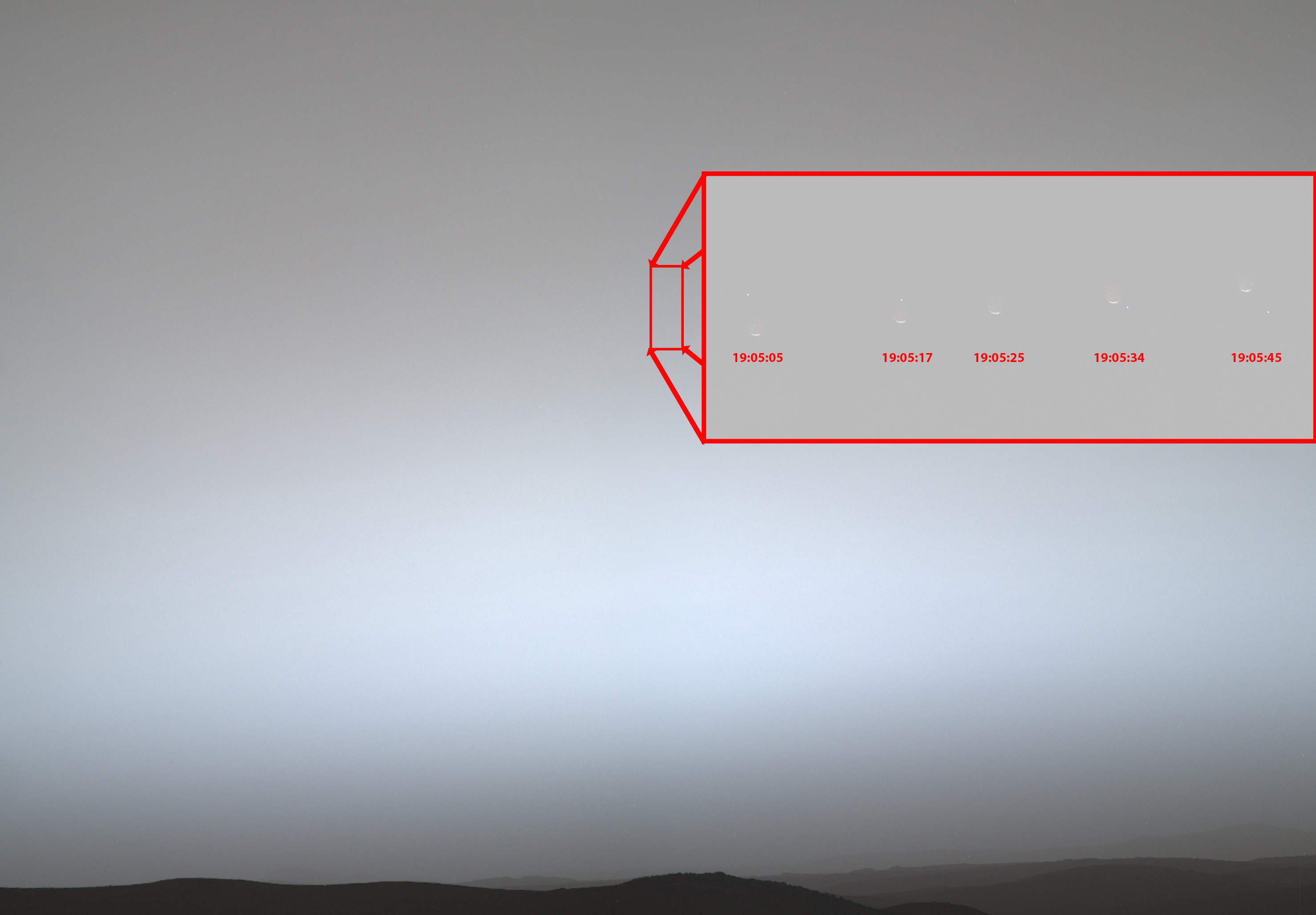
“The composite image makes for a unique Earth self-portrait, taken from the surface of another planet, with a Phobos photobomb,” Dr Justin Maki of the JPL said in a statement.
Perseverance was designed primarily to dig rocks, not look upwards. This means that the Mastcam-Z instrument with which it took the images was not even state-of-the-art when it was built.
Now, more than six years after it was launched and 1,907 days after landing, the camera is rather dated. So you’ll have to forgive the low image quality.
To improve things a little, JPL released a second version of images in which they removed the background light reflected off the thin Martian atmosphere, turning the sky behind Phobos and the Earth black.
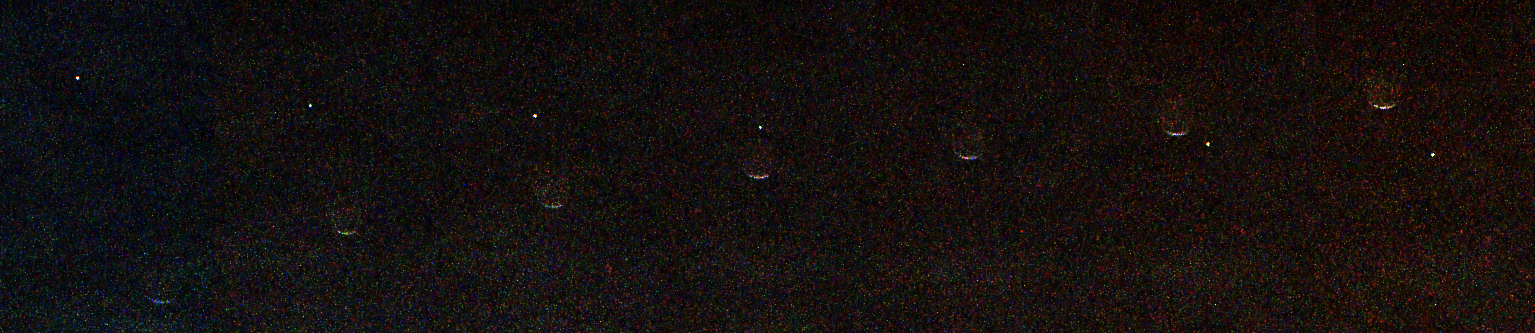
This view was only possible because of the wide angle in the sky between the Sun and the Earth from the Martian perspective at this point in time. Consequently, Perseverance got to see a substantial portion of the Earth illuminated.
On the other hand, Phobos is in its crescent phase, which is also fortunate. If more of the moon was lit up, it would have been bright enough to outshine the Earth.
The event took place about 7pm local time on Mars. It’s currently winter in the Martian Northern Hemisphere, which means the Sun had set a fair while before allowing for the occultation to be so clear.
Perseverance was lucky to witness the event at all.
“Phobos crosses the Martian sky three times a day, and Earth is visible for months at a stretch, but catching one directly behind the other takes planning and a little luck,” said Dr Mark Lemmon of the Space Science Institute.
Moreover, because Phobos orbits so close to the Martian surface, any occultation is only visible from a small area of Mars. It just so happened that Jezero was the exact right location for this.
For future astronauts who get to walk in Perseverance’s tracks, witnessing the passage of its moons across the Sun will probably be a highlight, but will anything match watching one dance with Earth across the sky?
Well, maybe one thing: seeing the Earth itself transit the Sun, which will next occur in 2084. We'd better blast off soon, then.