Space and Physics
 PUBLISHED




This week’s Antarctic solar eclipse and the lunar eclipse in a fortnight are punctuated by the Moon passing in front of Mercury tonight (February 18). Only about 2 percent of the world’s population will actually be able to see Mercury wink out behind the Moon and return. However, for many more people, the close approach between the two objects will still be an unusually eye-catching event.
If the planes of the orbits of the planets and the Moon were exactly aligned, every month the Moon would pass in front of each planet, at least as seen from the tropics. We’d probably get bored with it. However, while the planes are close to aligned, the match is not perfect. Consequently, from our perspective, when the Moon approaches a planet, it usually appears to pass above or below it in the sky, and that makes the exceptions exciting.
One of these will occur tonight, Wednesday, February 18, in parts of North America, and on Thursday in Australia, New Zealand, and parts of the Pacific. For some people, this will be one of the best such events of their lifetime.
The Moon is so close to the Earth, relative to the distance to the planets, that our location matters a great deal in how the two objects line up. People in Mexico, parts of several American states, and Central American countries will be able to see Mercury disappear behind the Moon’s dark side and appear again later. Depending on location, the event might last anything from seconds to slightly longer than an hour. Western Florida, Georgia, and Alabama will be able to see the disappearance, but the Moon and Mercury will set before the planet reappears.
The event will technically be visible from New Zealand, South-Eastern Australia, and parts of the Pacific, but with a twist. It will still be daylight when it happens, making it very hard to see with the naked eye. However, binoculars or a telescope may show you Mercury just visible against the blue sky.
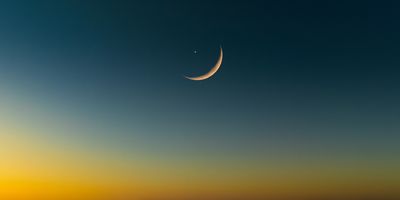
Moreover, all this is happening when about 2 percent of the Moon is lit, creating a beautiful thin crescent, and offering an opportunity to see the effect of Earthshine on the rest, also known as the new Moon with the old Moon in its arms.
These events, technically known as occultations, but sometimes also called eclipses, happen a lot less often than once a month, but they’re not super-rare. However, not all occultations are equal. Inevitably, half of them happen during daylight. For Mercury and Venus in particular, even when the Sun has set, occultations usually take place when the planet is so close to the Sun that it is very hard to see, whether the Moon is blocking it or not.
That makes this event unusual. Mercury reaches its furthest distance from the Sun on February 19, so for those in the right spot, this is about as perfect an alignment as you will ever get for an occultation of the innermost planet. Sadly, the best view is over water, but there are still millions of people in north-west Mexico and Arizona in prime position, and many more who can see it with some effort, although they’ll need an excellent view west, and may only witness part of the event.
That still means a lot more people will get a chance to see this event than the next occultation when Mercury is high, which will occur in 2030, but will only be visible from northern Russia.
Even if you’re outside the zone where this occultation can be seen, it may still be worth taking a look, particularly for most North Americans. Mercury bright next to the crescent Moon makes a beautiful sight.
If you take your eyes off the Moon and Mercury show during the event, you will see Saturn a handspan above the pair. Neptune is only about a degree away from Saturn, but you’ll need a telescope for that.
Tomorrow, the Moon will pass the Saturn/Neptune combination. It won’t get particularly close, but this will still be a chance to see the Moon and Saturn together when the Moon is still new enough not to overshadow the planet. If you have a small telescope and a view west, it's also a good time to look for Neptune, since they’re so close that Saturn can guide you there.