Space and Physics
 PUBLISHED




Mars doesn't have tectonic plates, the mountain-making force behind most of Earth's rocky peaks. But that doesn't mean the Red Planet lacks its own lumpy, bumpy landscape of peaks, troughs, and geological wonders. In fact, Mars has the largest known canyon and the largest known volcano in the Solar System.
NASA’s Curiosity rover has recently been traveling up a Martian valley nicknamed “Valle Grande”, and has come across some very intriguing geological features.
A "sea of polygons"
In a 360-degree panorama, the roaming robot captured the Martian surface covered in a honeycomb-like pattern, with each polygon measuring 4 to 8 centimeters (1.5 to 3 inches) across. On the very same day, it took an incredible panorama of a butte. But first, polygons.
Scientists at mission control don't yet have a clear explanation for what formed these so-called "polygonal fractures," but they suspect the cause is similar to mud cracks created by cycles of warm and cold temperatures that squeeze water out of the sediment.
This is the largest "sea of polygons" Curiosity has come across yet.
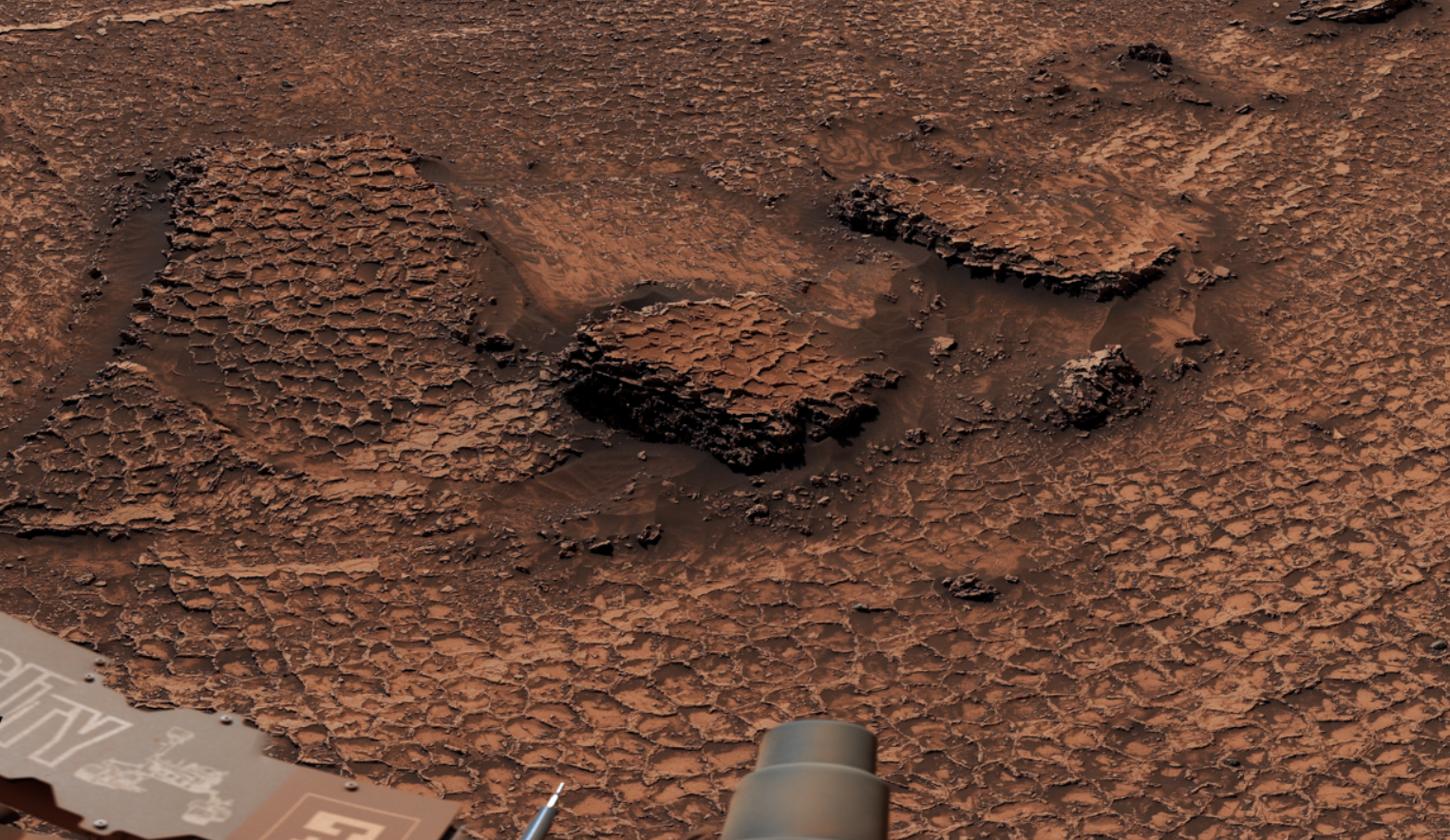
To find out for certain, the team carried out some scientific snooping around the site.
“We’ve seen a lot of fascinating landscapes through Curiosity’s eyes, but this sea of polygons took our breath away,” Ashwin Vasavada, the mission’s project scientist from NASA’s Jet Propulsion Laboratory in Southern California, said in a statement.
“We measured their shapes and chemistry carefully and are hopeful there are clues in the data as to how these features formed,” he continued.
I like big buttes, and I cannot lie
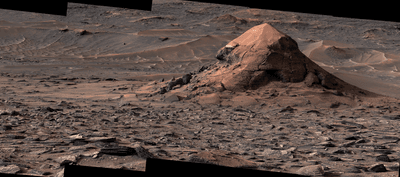
Some of the polygonal fractures were documented wrapping around the sides of a nearby butte, a steep-sided hill with a flat top, like those seen in Monument Valley.
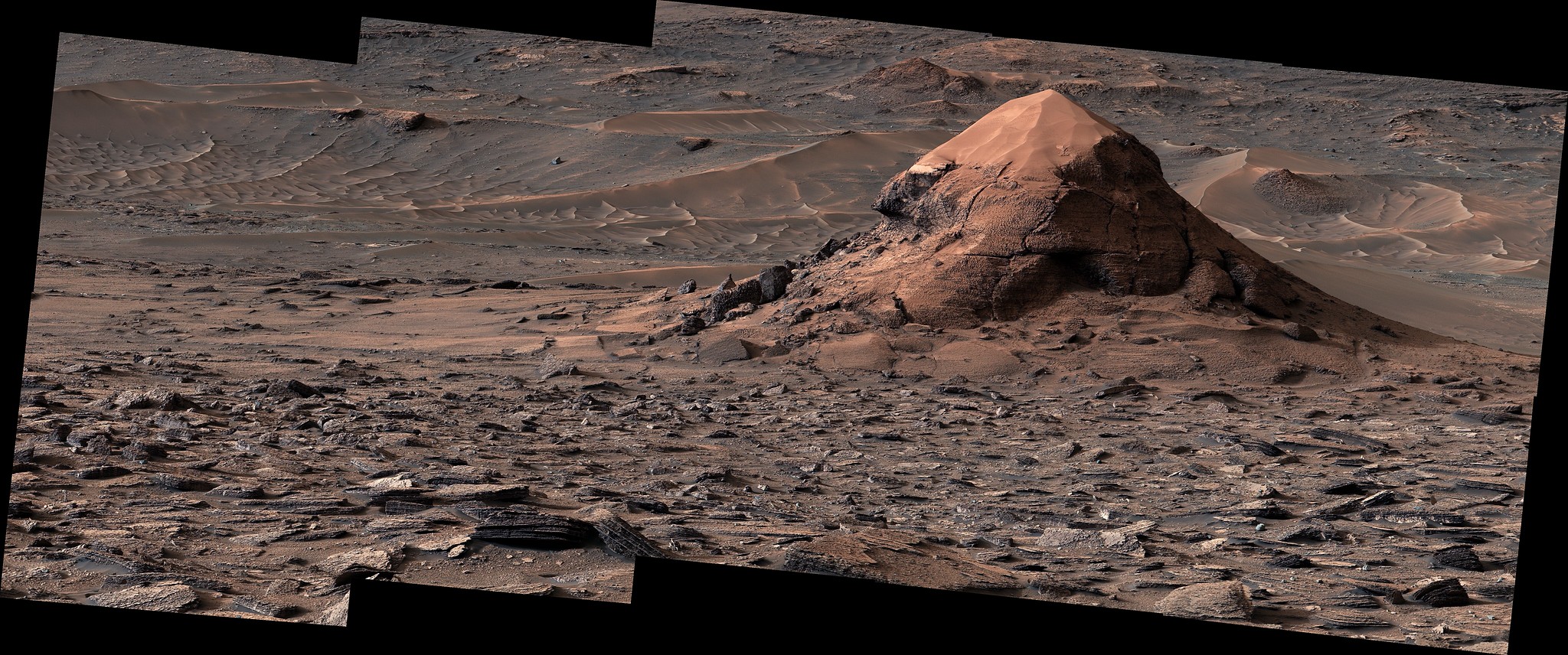
On Earth, buttes are formed by erosion and physical weathering that strip away softer surrounding rock over time, leaving behind harder, more resistant layers standing as isolated, flat-topped hills.
On Mars, scientists suspect a similar erosion process happens mostly through wind and dust storms, though some researchers speculate that ancient water could have played a role in shaping these hilly structures before drying up.
Since Mars doesn't have plate tectonics like Earth, most of its mountains are volcanic, built up by lava eruptions over long periods without plates shifting to disturb them. That's why Olympus Mons – the largest volcano in the Solar System – was able to grow so massive by just piling up in one spot without any disruption.
Curiosity has been exploring the Red Planet for nearly 5,000 Mars days. It landed on Mars in August 2012 in the Gale Crater, a basin 154 kilometers (96 miles) across that was created when an asteroid or comet hit the planet 3.6 billion years ago.
The mission has helped to verify the theory that Gale Crater was a lake billions of years ago, raising the tantalizing possibility that it was once a hospitable environment for microbial life.