Space and Physics
 PUBLISHED
 6
6



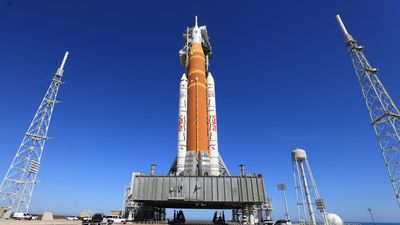


Artemis II is going back to the Vehicle Assembly Building (VAB), and the astronauts are out of quarantine, quashing our hopes of seeing the launch next week or the one after. Friday morning, we thought the March launch was locked in, but now it looks like the first human trip to deep space is likely to be in April.
The first wet dress rehearsal for Artemis II took place on February 2, with the hopes of seeing the launch a few days later – but several fueling issues and a loose valve pushed the launch to at least March. A second wet dress rehearsal took place on February 19, and it was seen as a great success. In fact, the four astronauts of the crew – NASA’s Reid Wiseman, Victor Glover, and Christina Koch, and Canadian Space Agency’s Jeremy Hansen – even went into quarantine.
Things took a turn for the worse between Friday and Saturday. Overnight on February 21, the team observed an interruption in the flow of helium, which is used to keep the correct environmental conditions for the upper stage engine. Artemis I also had a helium-related delay, so the team will also review the data from the previous uncrewed launch. The four astronauts left quarantine Saturday night, when NASA decided to send the rocket back to the VAB for a fix.
“The quick work to begin preparations for rolling the rocket and spacecraft back to the VAB potentially preserves the April launch window, pending the outcome of data findings, repair efforts, and how the schedule comes to fruition in the coming days and weeks,” a NASA press release stated.
Artemis II is a 10-day mission around the Moon. The four astronauts are expected to travel farther and faster than any human before, in a spacecraft that's smaller than you might expect: Orion. They will see an area of the far side of the Moon that no human has seen before, so it is a requirement that they launch and travel to the Moon when our natural satellite is in the right phase.
The possible launch dates for April are 1, 3, 4, 5, and 6. NASA has not shared launch windows for the following months. It’s likely that it will announce those before the next wet dress rehearsal, but we hope they won’t be necessary.
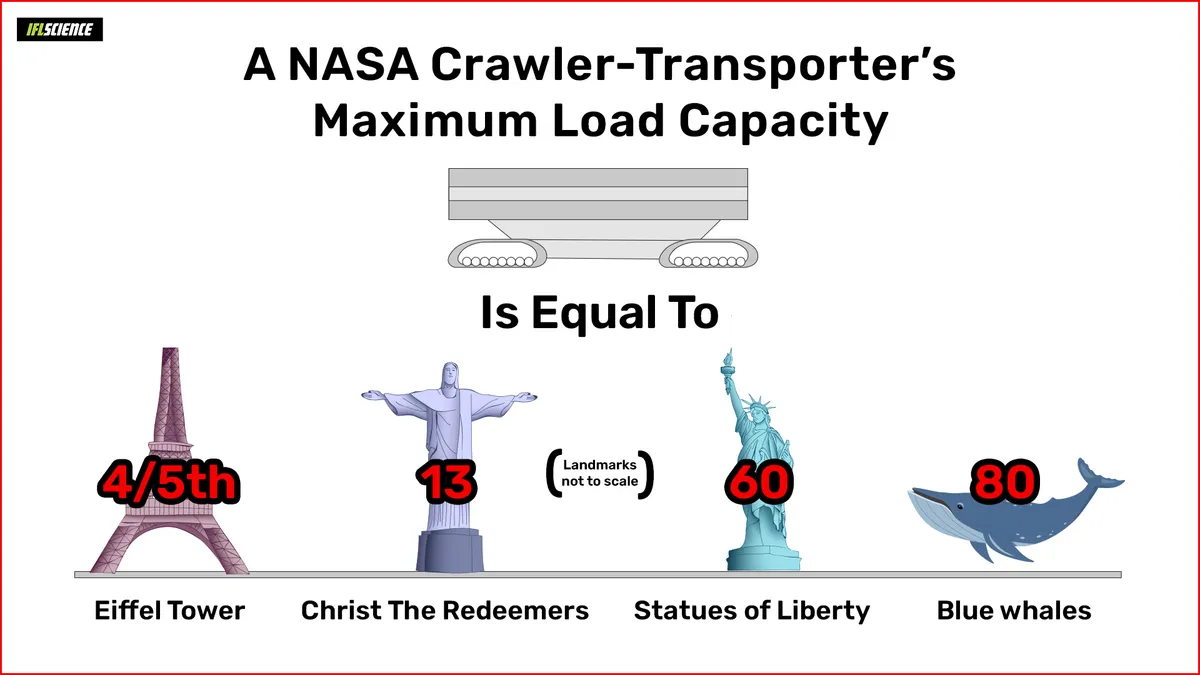
The Space Launch System (SLS) is expected to travel back to the VAB on February 24, weather permitting. It will be moved over the 6.4 kilometers (4 miles) to the site by one of NASA's Crawler-Transporters (CTs). These are the world’s heaviest self-powered vehicles, and can carry a total load of up to 8.2 million kilograms (18 million pounds). That's like moving four-fifths of the weight of the Eiffel Tower, 13 Christ the Redeemers, 20 fully-loaded Boeing 777 airplanes, 60 Statues Of Liberty (without the plinth), or 80 blue whales.