Space and Physics
 PUBLISHED


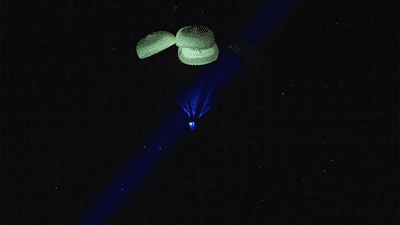


Astronaut Mike Fincke, who returned early from a stay on the International Space Station (ISS) after a medical episode in January, has told reporters that doctors still don't know what caused the incident, which struck him "like a very, very fast lightning bolt". According to Fincke, the issue is thought to be space-related.
In January, Fincke and fellow NASA astronaut Zena Cardman were set to perform a spacewalk to add an array to provide additional power to the orbiting laboratory, preparing the space station for eventual deorbit. But that spacewalk – which would have been Cardman's first – was cancelled following "medical concerns" on board.
"The agency is monitoring a medical concern with a crew member that arose Wednesday afternoon aboard the orbital complex," NASA said at the time. "Due to medical privacy, it is not appropriate for NASA to share more details about the crew member. The situation is stable. NASA will share additional details, including a new date for the upcoming spacewalk, later."
At the time, NASA did not reveal which astronaut was taken ill, but following the return of Fincke and three colleagues – and plenty of press speculation – retired Air Force colonel Fincke revealed that it was him.
“On Jan. 7, while aboard the International Space Station, I experienced a medical event that required immediate attention from my incredible crewmates. Thanks to their quick response and the guidance of our NASA flight surgeons, my status quickly stabilized,” Fincke said in a statement.
“After further evaluation, NASA determined the safest course was an early return for Crew-11 – not an emergency, but a carefully coordinated plan to be able to take advantage of advanced medical imaging not available on the space station.”
In a new interview with AP News on Friday, Fincke, 59, revealed that he was eating dinner when the incident took place, lasting roughly 20 minutes, and credits crewmates for their quick action.
"It was completely out of the blue. It was just amazingly quick," he told reporters. "My crewmates definitely saw that I was in distress," he added. "It was all hands on deck within just a matter of seconds."
Though he has not experienced anything like it before or since, during the medical setback, Fincke was unable to talk. Despite extensive medical tests once Fincke arrived back on Earth, and ultrasound on board the ISS, it isn't clear yet what happened to the astronaut.
"It's one of those things that doctors are still scratching their heads over. The good news is that we got a lot of good data to show that it wasn't anything bad. I didn't have a stroke. I didn't have a heart attack," Fincke told NBC News.
According to Fincke – who has spent a total of 549 days in microgravity, and was five and a half months into his latest stay on the ISS – the issue is likely related to space. NASA is currently looking through the medical records of other astronauts to see if that can shed light on what happened to Fincke, or if any other related incidents have occurred in the past.
"Now it's just trying to figure out what exactly is going on. We're almost 100 percent sure that this is a space-related thing," he told NBC. "And as we explore space more and spend time in zero gravity, it's really good to know the things that can get us, and come up with countermeasures."
While we're all pretty curious as to what exactly happened, for now investigations continue. As well as this, NASA and Fincke are keeping details vague, in an attempt to ensure that other astronauts in future will feel that their medical privacy is protected, should they have a similar emergency in space.