Space and Physics
 PUBLISHED


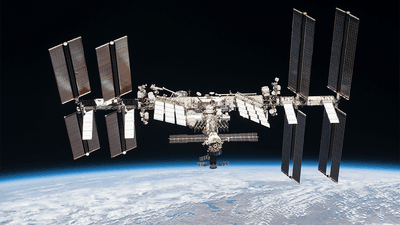


The International Space Station (ISS) may get to orbit the Earth for a few more years than planned, as a NASA Authorization bill passes through the Senate Committee on Commerce, Science, and Transportation.
The initial pieces of the ISS, a collaboration between NASA and four other space agencies, were launched way back in 1998. Originally, the space station was only meant to be in operation for 15 years, but with continuous maintenance it has survived well beyond that. But over the last few years, NASA has been planning for the end of its lifespan, including commissioning a vehicle to deorbit the ISS, safely bringing it down to a watery grave at Point Nemo in the South Pacific ocean.
That final, spectacular crash into the ocean was planned for 2030. By that time, parts of the space station will have been in space for two years longer than their planned lifespan. It was these parts, forming the structure of the space station, that prompted NASA and its partners to prepare for a 2030 finale.
"Much of the space station can be repaired or replaced in orbit, while other parts can be returned to the ground for repair and relaunched. These parts include the solar arrays, communications equipment, life support equipment, and science hardware," NASA explains. "However, the primary structure of the station, such as the crewed modules and the truss structures, cannot be repaired or replaced practically."
So why is the US, with Senator Ted Cruz leading the charge, now pushing back the end of the ISS? While the ISS was never meant to last forever, the plan was to pivot to private space stations, with NASA and others able to conduct experiments on board. While there are private companies planning just this, it is looking likely that none of them will be operational by 2030. The authorization bill hopes to fill in potential gaps, requiring NASA to keep the ISS operational until September 30, 2032.
"Once a commercial space station has demonstrated for a full year that it has the capabilities sufficient to support scientific research, technology development, national laboratory functions and commercial activities previously conducted aboard the ISS, NASA will be authorized to transfer operations to this station and initiate procedures to deorbit the ISS," the bill states.
The bill is only at a preliminary stage, and will need to pass the Senate and House before it is signed into law, and even then NASA must collaborate with international partners on the project. Of course, if the ISS were to end before a private space station was in operation, humanity would still have a human presence in space, on board China's Tiangong space station.
On top of that (though don't get your hopes up too much about timelines, even if the bill gets through the next stages) the bill places further pressure on NASA to create a lunar base suitable for long-term habitation by humans and human-led industrial operations on the Moon.
“This comprehensive bipartisan bill sets the stage for decades of continued U.S. leadership in outer space,” Senator Maria Cantwell said in a statement.
"For the first time, it authorizes NASA to establish a permanent Moon base as part of sustained American presence on the lunar surface and defines a transition process to end operations on the ISS and shift to commercial space stations on the leading edge of a commercially-driven low Earth orbit economy. Our bill also rejects the President’s budget request that would have gutted NASA’s ability to accomplish its important aeronautics research and technology development missions in partnership with many companies in my home state, and saves fully functioning space and Earth science missions from the OMB chopping block."
While missions like a new Moon base sound pretty exciting, and the bill offers support for various ongoing missions, the Mars Sample Return mission – killed earlier this year – was not amongst them. Instead, the bill offers $8 billion for a new sample return program, though it's not clear yet what this would entail. For now, a lot of NASA's future is up in the air. Let's hope Artemis II is as well in April.