Space and Physics
 PUBLISHED
 7
7



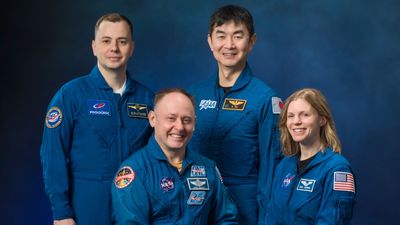


After announcing a member of Crew-11 had experienced an undisclosed medical situation, NASA yesterday made the decision to shorten the mission and bring home all four astronauts. This will be the first time in the history of the International Space Station (ISS) that a crew has had to come back down early for medical reasons.
The crew, which arrived at the ISS on August 1, 2025, for a six-month mission, is composed of NASA astronauts Zena Cardman and Michael Fincke, JAXA astronaut Kimiya Yui, and Roscosmos cosmonaut Oleg Platonov. It is not known at this time which crew member is affected or the severity of the condition but in a press conference yesterday, NASA Administrator Jared Isaacman stressed that the astronaut is in stable condition and that this was not an emergency.
“Yesterday, January 7th, a single crew member on board the station experienced a medical situation and is now stable. After discussions with Chief Health and Medical Officer Dr. J.D. Polk and leadership across the agency, I've come to the decision that it's in the best interest of our astronauts to return Crew-11 ahead of their planned departure.” Isaacman said.
NASA has not revealed the identity of the astronaut, citing the privacy of the individual, but it has been standard protocol not to reveal the identity of individuals in past medical cases. We do know it is not related to the spacewalk due to be carried out by Cardman and Fincke that was canceled yesterday.
"This is not an operational issue. This was not an injury that occurred in the pursuit of operations. It's mostly having a medical issue in the difficult areas of microgravity, and with the suite of hardware that we have at our avail to complete a diagnosis," Dr Polk said during the press conference.
“Any time we have a medical incident, we embark on looking at diagnoses and what we would call a workup to get a differential diagnosis on what's happening with that patient or astronaut on board."
Astronauts have experienced a variety of medical conditions in space, even more so in the long-term permanence that the ISS has allowed over the last 25 years. The ISS is equipped with medical instrumentation to monitor and intervene in case of an emergency. No one has ever been medically evacuated before but in 2019, an astronaut was diagnosed remotely with a blood clot developing in a neck vein and was treated with what was available on board, before a shipment of blood thinners could be sent up.
The astronauts are also trained in emergency interventions (you can see how they’d perform CPR in space), and there have been trials on the ground that saw a holographic doctor being sent to the ISS, as well as doctors using a remote-operated robot arm to simulate surgery on the space station. However, the setup and expertise do not allow for a complete evaluation of a patient. This particular incident was apparently sufficient to warrant an early return to Earth.
“The best way to complete that workup is on the ground with where we have the full suite of medical testing hardware. Now, again, because the astronaut is absolutely stable, this is not an emergency evacuation. We're not immediately disembarking and getting the astronaut down, but it leaves that lingering risk and lingering question as to what that diagnosis is,” Dr Polk explained.
Whatever happened seems serious, but it is clear that NASA does not believe the member of the crew to be in any immediate danger.
“Crew safety always remains our highest priority. And as it always is across the agency, we never take shortcuts. We never compromise when it comes to protecting our astronauts,” NASA associate administrator Amit Kshatriya added.
As for when the crew will be brought back down, a further update is expected either today or tomorrow to discuss the anticipated undocking and reentry timeline.
Traveling to the ISS sometimes involves changing spacecraft, so a crew travels up on one and comes back on another, but this is not the case for Crew-11, who traveled together on the SpaceX Crew Dragon Endeavour and will now come back down together in the coming days.
The mission was due to come to an end early next month, which has likely contributed to the decision to bring them all back now. Sending a Crew Dragon capsule to the ISS costs tens of millions of dollars per seat, so to bring one astronaut home and then return to bring three more in a few weeks is very expensive. While their sojourn in space has been reduced, they have likely already accomplished many of the goals set for the six-month mission.
Their replacement, Crew-12, was expected to launch not before February 15. Now, NASA and international partners are working to see if their timeline can be moved forward. When Crew-11 is brought home, that will leave three people as part of the MS-28 crew – NASA's Christopher Williams and cosmonauts Sergey Kud-Sverchkov and Sergei Mikayev – on the ISS.
The new crew has already been popular in the press for wildly different reasons. European Space Agency astronaut Sophie Adenot will bring a Michelin-starred restaurant menu to the ISS while original cosmonaut Oleg Artemyev was replaced last month after being accused of National Security violations by photographing SpaceX engines, documents, and other technologies with his phone and then "exporting" that information.