Space and Physics
 PUBLISHED
 6
6



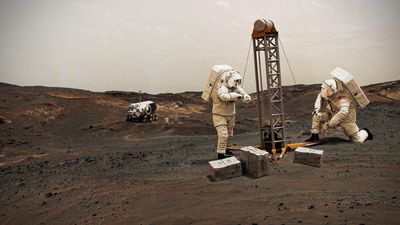


NASA is recruiting volunteers for a year-long space simulation where they will undergo all the experiences associated with traveling from Earth to Mars.
Space travel is, as you're probably aware, tough. As we consider more ambitious projects, the need for more understanding of how people cope with the very alien (no pun intended) experience of deep-space travel becomes more apparent.
To address this, NASA has been running immersive simulations designed to mimic the types of conditions and environments astronauts will face, as well as the tasks they will perform.
NASA's new Moon and Mars Exploration Analog mission, due to begin in August 2027, will see participants live and work under conditions that mirror interplanetary travel. And they need volunteers!
The mission will be the first to take place in a ground-based environment designed to simulate multiple parts of a Moon or Mars mission.
It fuses parts of NASA’s HERA (Human Exploration Research Analog) and the CHAPEA (Crew Health and Performance Exploration Analog) mission into a single campaign. Based at the HERA habitat at Johnson Space Center in Houston, participants will operate in isolation and a confined environment to simulate deep-space travel.
After this, they will move to the surface habitat phase, where scientists will study how the crew performs with limited resources and with mission demands that they could expect on another planet.
The belief is that, taken together, the two facilities offer a streamlined method to evaluate how astronauts adapt to the full range of potential Moon and Mars mission scenarios.
The mission will have multiple platforms to simulate different parts of the journey to Mars. They include the transit vehicle, which is a two-story, four-port habitat adapted from HERA to simulate what it would be like to travel from Earth to Mars. It includes a workspace, living area, sleeping quarters, and hygiene module.
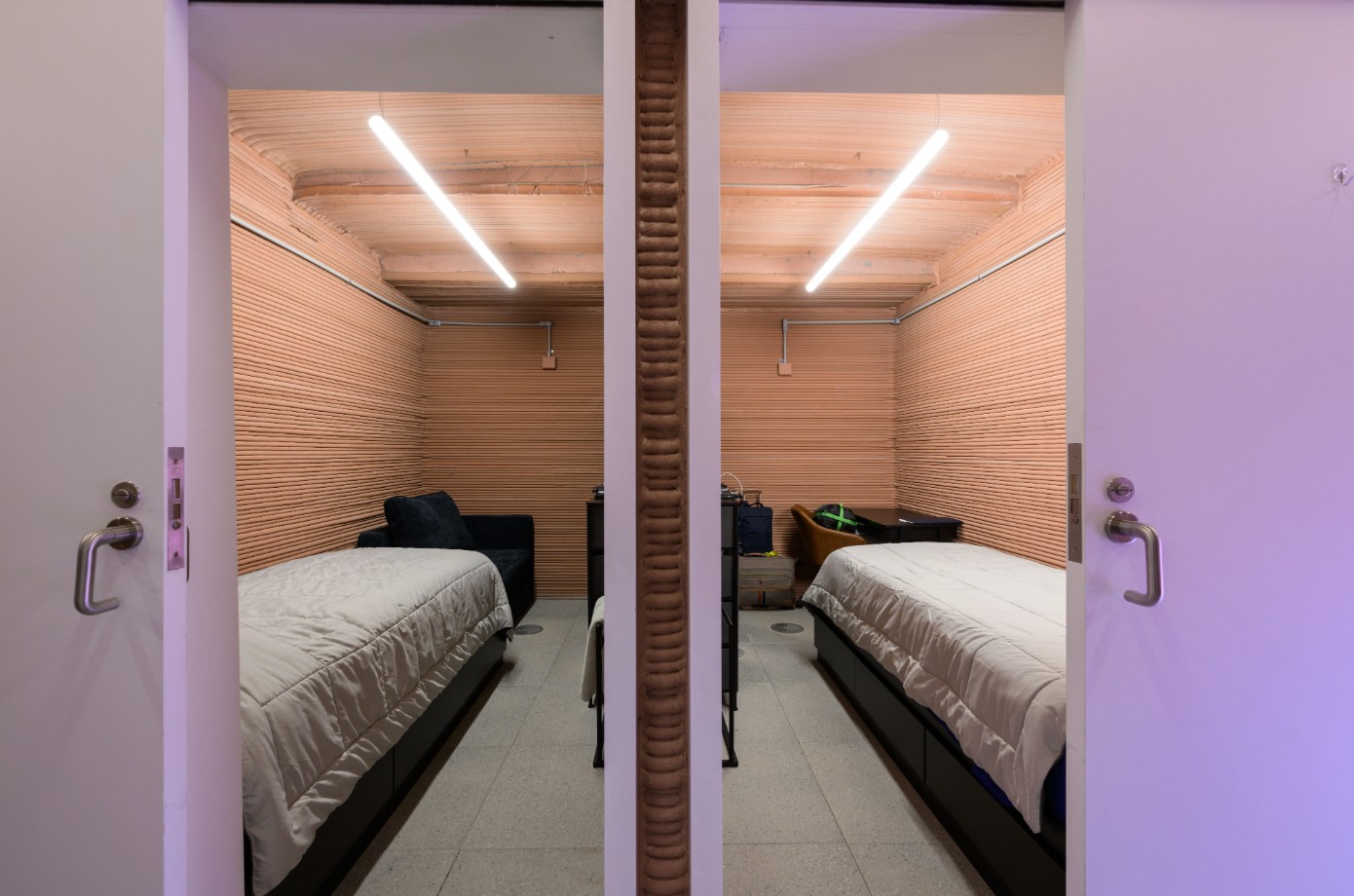
The surface habitat, in contrast, is only one-story. This 3D-printed facility is currently being used by the second CHAPEA mission - another simulation that has seen volunteers experiencing a mock-Mars mission - but will let participants experience what it’s like to live on another planet's surface.
It has private crew quarters, a communal workspace, recreation room, crop cultivation area, medical room, food preparation area, airlock, and two bathrooms. It also has an "outside" sandbox for simulating walks on alien surfaces.
“The selectees may also use a rover module to simulate travel to exploration sites located beyond the main habitat. It includes two driver seats, two beds, a non-flushable toilet, and a small "samples airlock", NASA explained in a statement.
It's hoped the mission will help NASA evaluate and validate hardware, technologies, protocols, requirements, and other systems that support crew health and work during long-duration space missions. The obvious benefit here is that all this can be achieved without having to leave the Earth.
The data will be used by NASA’s Human Research Program, designed to improve ways to keep astronauts healthy and performing at their best. This mission may also help inform a sustained lunar presence through NASA’s Moon Base, as well as future Artemis missions.
So do you think you’re up to the challenge?
NASA isn’t able to take just anyone who applies for the role. To qualify, potential participants need to be US citizens or hold a green card. They also need to be between 30 and 50 years of age (though there may be some wiggle room here), and no taller than 1.9 meters (74 inches).
In addition to willingly giving up 12 months to live in two different confined spaces, participants will also need to take part in two months of pre- and post-mission training and data collection. There will be a multi-day selection process, and potential crew members will need to demonstrate both physical and psychological fitness.
Participants must also have strong technical skills, no dietary requirements, and no history of sleepwalking or requiring sleeping aids.
Finally, as this is a simulated space mission, those who take part will also need to have astronaut-like qualifications. This could be a bachelor’s degree in engineering, biological science, physical science or mathematics, but preferably they will hold these qualifications at an Advanced level.