Space and Physics
 PUBLISHED



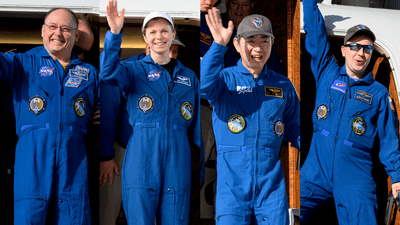


Crew-11 came down from the International Space Station (ISS) in the first-ever medical evacuation from space last week. The three astronauts and one cosmonaut had their first public appearance since their return to Earth in a press conference where they shared some details about the emergency while talking about the mission.
The four members of the crew are cosmonaut Oleg Platonov, NASA astronauts Mike Fincke and Zena Cardman, and JAXA (Japan Aerospace Exploration Agency) astronaut Kimiya Yui. They had been in space since August 1, 2025, and were supposed to come down in February. On January 8, Fincke and Cardman were supposed to perform a spacewalk, which was cancelled due to a medical emergency.
“We are back here a little earlier than we were expecting. And just to say it up front, we are not going to be identifying the crew member or talking through the differential or any of the details of the medical situation. Thank you so much for respecting our privacy,” Cardman said during the press conference.
“What I will say is, I'm deeply proud of the way that our crew came together, and incredibly grateful for all of our mission control, flight control team, our crew on orbit, the team on the ground, our doctors, and the way that NASA and SpaceX came together in a way that minimized risk to the crew, to our spacecraft, and to the ongoing mission of the International Space Station as a whole.”
“I just want to say that when we were getting ready for an EVA, something happened. The team came together. And it wasn't just this team, but the whole team, like Zena said, around the world,” Fincke added.
While the medical evacuation was a first, astronauts and cosmonauts have faced a series of medical conditions in space. After all, the ISS has had a permanent human presence for just over 25 years. The space station has a range of medical equipment and medicines that can be used to treat the crew members.
The astronauts are trained for emergency situations, and they have shared videos on how they’d perform CPR in space. There are medical teams on the ground that keep tabs on them and there have been trials that saw a holographic doctor being sent to the ISS, as well as doctors using a remote-operated robot arm to simulate surgery on the space station.
And there haven't only been trials. In 2019, an astronaut was diagnosed remotely with a blood clot developing in a neck vein and was treated with what was available on board, before a shipment of blood thinners could be sent up. In this latest example, it was the ultrasound machine that was praised.
“When we had this emergency, the ultrasound machine came in super handy. So I'd recommend a portable ultrasound machine in the future for sure,” Fincke said. NASA ground doctors assessed the situation as serious but stable, and the decision to bring the crew back early was due to the limitations of the equipment to deliver a full medical analysis.
"Of course, we didn't have other big machines that we have here on planet Earth," Fincke added. "We do try to make sure that everybody, before we fly are really, really not prone to surprises. But sometimes things happen and surprises happen, and the team was ready ... preparation was super important."
The sentiment about the importance of training was shared by the rest of the crew as well.
“Training actually works very well. We can handle any kind of difficult situation," Yui said. "This is actually a very, very good experience for the future of human spaceflight."
Ultimately, the situation showed that the procedures that have been set in place to keep astronauts safe are working, and despite the slightly concerning early return, the astronauts had a good and productive mission.
“I was fortunate enough to be there when the space station was tiny. We only went as far as the lab. It was 2004, so not quite 25 years ago. And then to come back aboard a space station that is so full with seven crew members, getting some world-class science done, something amazing is happening every day. What a joy to fly,” Fincke stated.