Nature
 PUBLISHED
 1
1


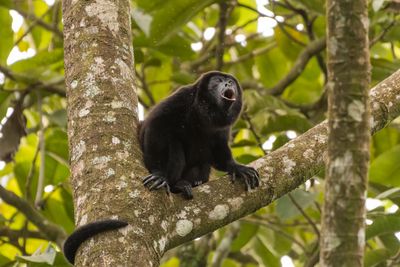


For the first time, scientists have recorded wild monkeys in the Amazon contracting human hepatitis B virus (HBV). The researchers warn that the situation could get much worse as deforestation brings more primates into direct contact with humans.
Globalization has significantly contributed to the spread and emergence of new diseases, especially those caused by viruses. The AIDS epidemic, SARS, and COVID-19 are key examples of this, having their origins in animal species before mutating and spreading to humans.
This process, known as “zoonotic spillover”, is also the driver behind other infections that are causing the World Health Organization concern, including Nipah, Ebola, and bird flu (e.g. H5N1).
But this transmission pathway – animals to humans – can also act in reverse. Anthroponotic transmission is the process whereby humans pass infections onto animals. It’s rare, but it happens. Polio and HBV have both been transmitted to animal species.
The latter has been recorded in African apes, and its presence is becoming increasingly concerning for scientists trying to conserve these animals.
This is why the presence of HBV-positive monkeys in the Amazon is so troublesome. In the new study, scientists at the University of Salford, UK, and the Federal University of Amazonas in Brazil, and colleagues found HBV in wild monkeys from areas impacted by human activity.
In humans, hepatitis B is a serious infection that affects the liver. Typically, it is spread from person-to-person through blood or other bodily fluids. Once contracted, the disease can cause jaundice (yellowing skin and eyes), weakness, fatigue, fever, nausea, vomiting, and abdominal pain.
The infection usually lasts between one to three months, but if it lingers for more than six months then it is considered chronic hepatitis B.
The team took blood and liver samples from 88 primates across 28 species in Rondônia and Mato Grosso states, where humans are more numerous, and the upper Japurá River, Amazonas state, which is much more remote.
They found HBV in 17 out of 49 primates from the human-impacted areas, while none of the 39 animals from the remote area showed any sign of the virus. This suggests that human population density is a significant factor for human HBV infection in wild primates.
It appears to be a strong case of human-to-primate transmission and is being driven by deforestation and the expansion of humans into habitats where the primates live.
Although the disease has been detected in these animals, it is currently unclear whether they are suffering any ill-effects from the virus or are just carrying it. Nor is it clear whether the virus is passing from monkey-to-monkey.
“We [...] don’t yet know if the virus is causing disease in infected monkeys. They don’t have clinical signs but we need to see if the monkeys are being affected. It is likely that they will be because it is such a serious disease for humans and also apes,” Professor Jean Boubli, the lead researcher at the University of Salford, explained in a statement.
As deforestation continues in the Amazon, as well as elsewhere, humans are encroaching into wildlife habitats in a way that is increasing the chances of cross-species disease transmission.
“This is a huge warning sign but there is still a lot we need to learn,” Boubli said.
“Our findings were clear that monkeys that are in much closer proximity to humans are much more likely to contract HBV. HBV is only known to be passed on through blood, saliva or other intimate contact. We don’t know the route of the infection for monkeys as yet, that is something we need to look into.”
“And if this is going on then what else is happening? We destroy their habitat, we hunt them and now it looks like we might be affecting then with diseases.”
In the Amazon, Indigenous people and local communities eat around 3 million primates each year, including howler monkeys (Alouatta species), spider monkeys (Ateles species), and Robust capuchin monkeys (Sapajus species).
In other contexts, species like squirrel monkeys (Samiri species) are often kept as pets. Both these activities – hunting and the pet trade – increase instances of human-primate interaction, adding the chances of viral spillover, in one direction or the other.
Chimpanzees that have contracted HBV in Africa have shown symptoms of lethargy, jaundice, and anorexia; however, there are no current clinical studies into the New World primates that have now acquired the infection.
The study is published in EcoHealth.