Nature
 PUBLISHED





What do you look for in a good babysitter? If enormous talons, a sharp beak, and proclivity for favoritism aren’t on your list, then congratulations! You have better parental instincts than a pair of Egyptian geese that laid their eggs in a crowned eagle nest.
The eagle returned and laid an egg of her own, raising the nail-biting question: what would happen next?
Remarkably, the unwitting foster parent incubated and successfully hatched both goslings. However, when the hatchlings started moving around, things got a little more complicated…
Nest usurpation is is when one species lays its eggs in, and sometimes takes over, another species' nest. This is common behavior among Egyptian geese (Alopochen aegyptiaca) who, rather than building their own nest, look for open cavities in trees or the nests of other birds – typically favoring nests that have been abandoned.
But not always.
This “extraordinary case of nest usurpation” was observed in South Africa and is believed to be the first documented case of its kind. While many bird species can be on the receiving end of nest usurpation, the geese don’t normally take on a species as formidable as the crowned eagle (Stephanoaetus coronatus).
Not only are the eagles powerful predators with talons built for piercing skulls, but they’re pretty harsh parents, too. They can lay up to two eggs per brood, but they fledge a maximum of one nestling.
Eagle hatchlings compete for resources and things can get brutal. If the older of the two doesn’t kill the younger, then the parent will favor its strongest chick until the weaker one dies.
A harsh but efficient means of resource management. One that certainly doesn’t leave much room for a gosling sleepover.
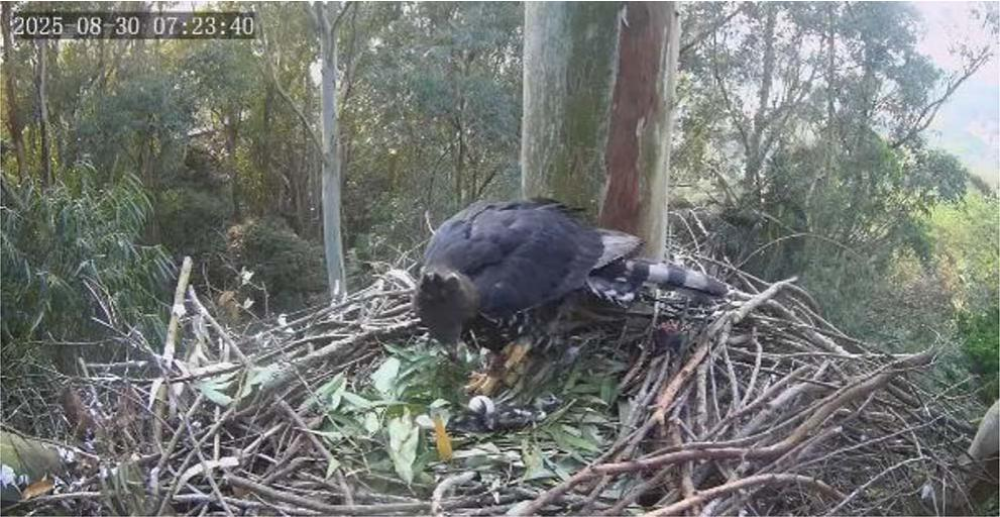
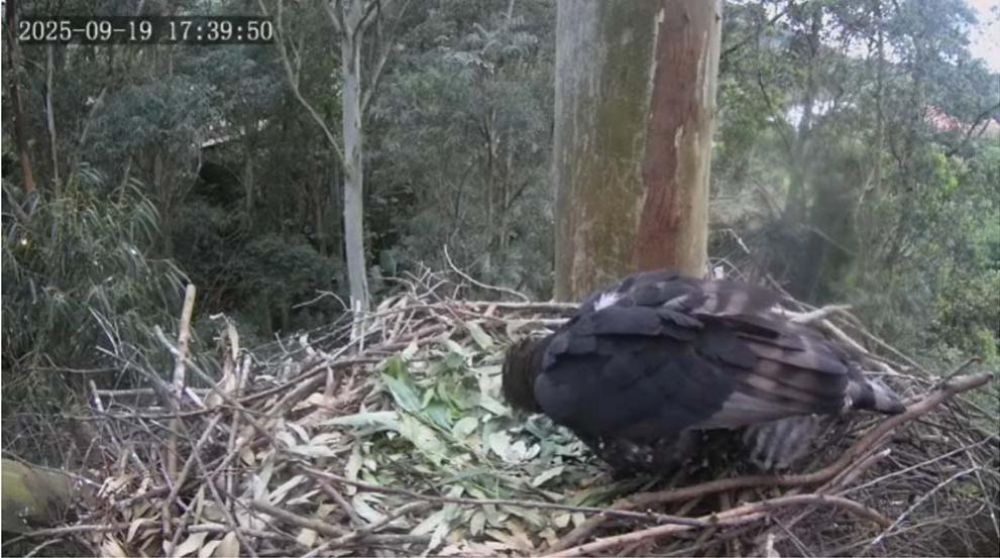
A team of researchers were observing nests via camera traps during the 2024 breeding season when they noticed an eagle with three eggs in its nest. Two were paler and smaller and looked to be the eggs of an Egyptian goose.
The camera footage revealed two geese had been visiting the nest but flying off when a pair of eagles returned. It seems the female goose laid eggs that were partially concealed by leaf litter, and when the female eagle returned, she not only began incubating the eggs but even laid her own.
The eagle continued to incubate all three eggs until they hatched. The goslings refused her offers of meaty food, and – as is the goose way – one of the chicks made the 30-meter (98-foot) leap of faith to the forest floor below.
While the gosling survived the drop, its parents were nowhere to be found. Unfortunately, that’s as happy an ending as you're getting.
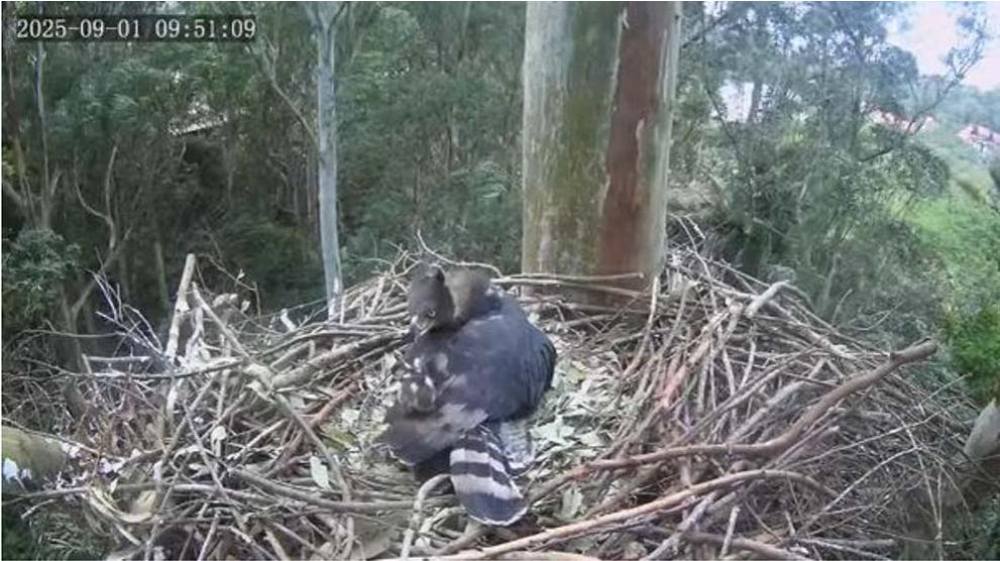
Chick number two remained in the nest. It became increasingly mobile, much to the displeasure of its adoptive eagle mom.
When the gosling climbed onto her back, as can happen with geese, the mother eagle had enough. With a swift change in demeanor, she seized the baby bird in her beak and started eating it, just as her mate returned to the nest with a rat for dinner.
With one fledged, one dead, and one still in egg, things weren’t going well for the prospective parents. The situation grew more dire still when the leftover baby eaglet failed to emerge from the egg. It eventually cracked with no sign of a chick inside.
A bad time had by all, then, but it’s an interaction that has broader implications for raptor conservation.
Egyptian geese, though perhaps not deserving of having their heads ripped off as babies, are known to overlap and compete with raptors for nesting sites.
Leave the Parent Traps to Lindsay Lohan, guys.
The study is published in the Journal of Raptor Research.