Nature
 PUBLISHED


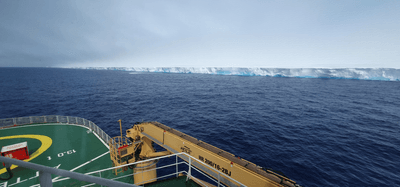


The world’s largest and oldest iceberg has “set sail” upon a new voyage across Antarctica's Southern Ocean.
Known as A23a, the megaberg weighs almost one trillion tonnes and measures 3,900 square kilometers (1,500 square miles) in size – that’s twice as big as Greater London. From top to bottom, it's around 400 meters (1,312 feet) thick, around the height of the Empire State Building observation deck.
The city-sized chunk of ice was broken off, or “calved,” from Antarctica's Filchner–Ronne Ice Shelf in 1986. It then became lodged on the seabed in the Weddell Sea for over 30 years before gently starting to move again in 2020. At the start of 2024, it entered its “spinning era” and began aimlessly rotating 15° every single day.
According to a new announcement from the British Antarctic Survey, A23a is back on the move across the Southern Ocean around Antarctica.

It is expected that the colossal iceberg will continue its journey following the Antarctic Circumpolar Current and end up near the sub-Antarctic island of South Georgia. Here, it will be introduced to warm waters, causing the iceberg to break up into smaller icebergs that will eventually melt away.
“It’s exciting to see A23a on the move again after periods of being stuck. We are interested to see if it will take the same route the other large icebergs that have calved off Antarctica have taken. And more importantly what impact this will have on the local ecosystem,” Dr Andrew Meijers, an oceanographer at British Antarctic Survey who co-leads the OCEAN:ICE project, said in a statement.
Scientists are already closely looking at how A23a is impacting the environment it’s drifting through. Late last year, the RRS Sir David Attenborough ship documented the iceberg and collected samples from the close encounter to understand its future trajectory and potential impact.
“We know that these giant icebergs can provide nutrients to the waters they pass through, creating thriving ecosystems in otherwise less productive areas. What we don’t know is what difference particular icebergs, their scale, and their origins can make to that process,” commented Laura Taylor, a biogeochemist who worked on the the BIOPOLE project onboard RRS Sir David Attenborough.
"We took samples of ocean surface waters behind, immediately adjacent to, and ahead of the iceberg’s route. They should help us determine what life could form around A23a and how it impacts carbon in the ocean and its balance with the atmosphere,” added Taylor.