Nature
 PUBLISHED
 6
6


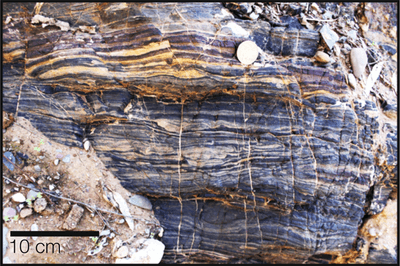


Parts of the ocean reached temperatures of -15°C (5°F) without freezing 717-660 million years ago, geologists and geochemists have concluded. These conditions explain some puzzling banded iron formations found at many spots on the planet, and help reveal one of Earth’s most mysterious eras.
The ice age that the Earth emerged from 12,000 years ago was a mild chill compared to Snowball Earth, the name given to at least two periods where most, if not all, of the planet froze over. Snowball Earth represents one of the most important, but least understood, geological periods. Nutrients released into the oceans by its end are thought to have kick-started the emergence of complex life, yet we don’t know how the simple organisms that existed beforehand even survived that deep freeze.
Along with then-tropical locations scraped by vast glaciers, one of the most distinctive legacies of Snowball Earth is the revival of banded iron formations (BIF). These deposits can only precipitate from water that has almost no dissolved oxygen, so most preceded the Great Oxygenation Event (GOE) when photosynthesizing algae changed the composition of the atmosphere and oceans. More recent banded iron is one of the hallmarks of Snowball Earth, when ice blocked atmospheric oxygen from reaching the oceans, allowing banded iron to form again.
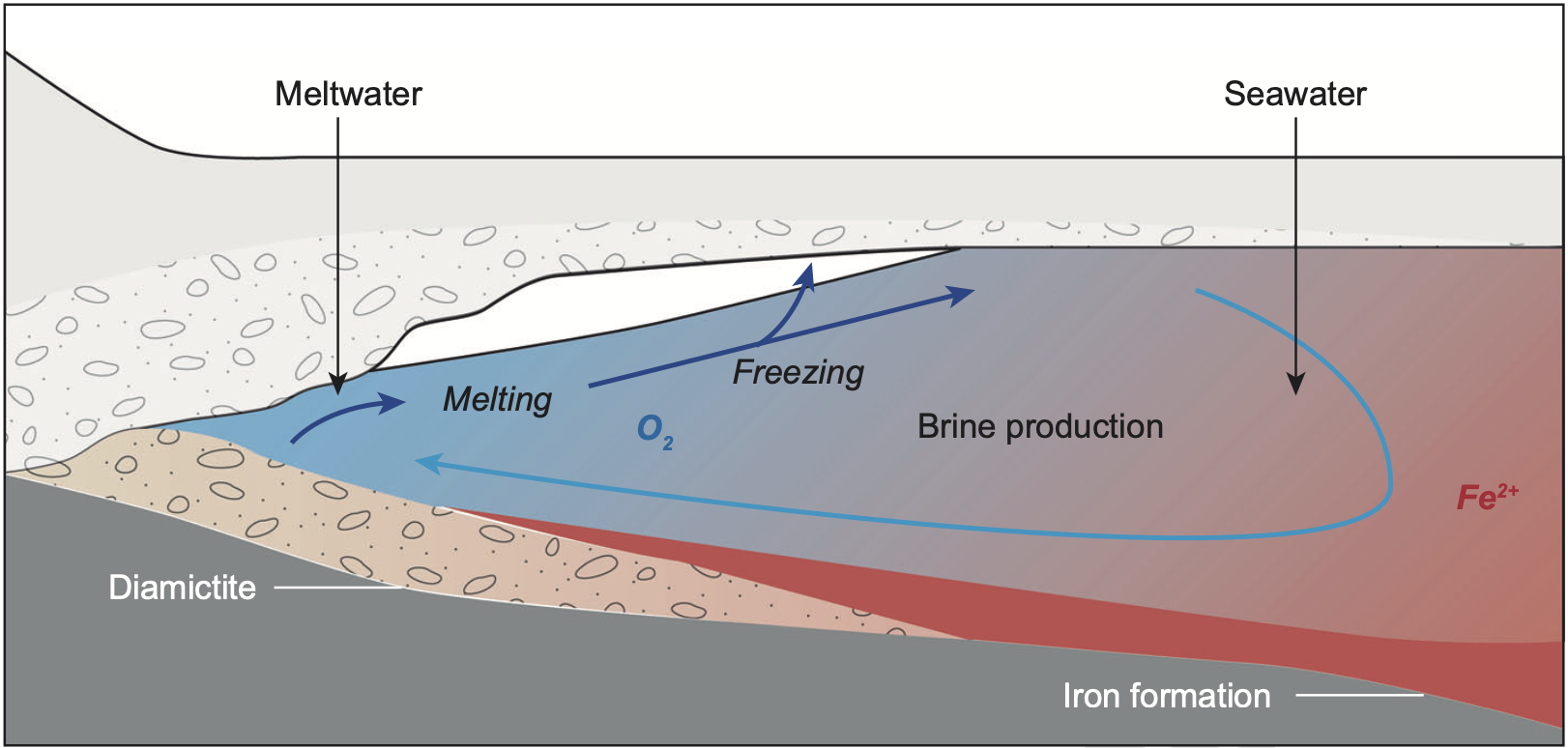
A recent study revealed that iron isotope ratios differed in banded iron deposited before the GOE and during Snowball Earth. When that work was presented at a conference, Professor Paul Hoffman of Harvard University, one of the original proposers of Snowball Earth, asked if this observed difference could be the product of temperature fractionation.
Temperature fractionation is a well-established phenomenon where unusual temperatures cause more of one isotope to be incorporated into deposits than usual. The authors of the previous study, who’d been focusing on oxygen abundance, had not considered this. Professor Ross Mitchell of the Chinese Academy of Sciences assembled a team, including Hoffman, to investigate the possibility.
After largely ruling out what Mitchell calls “more mundane” explanations for the ratios, the team concluded that temperature fractionation in an oxygen-depleted ocean would explain the measurements, but only if the water was -15°C. Since water famously freezes below 0°C, this might seem impossible, until you remember that salt is a sort of anti-freeze. Today, salty water under polar floating ice can reach temperatures below zero and stay liquid. It can’t get to -15°C, however.
“So we thought,” Mitchell said in an emailed statement, “what if these pools of water depositing BIF during Snowball [Earth] were very salty brines.” This could be the case for two reasons: either the deposits might come from unusually salty basins, disconnected from the wider ocean, or if three-quarters of the oceans had frozen, concentrating the remaining salt until salinity levels quadrupled.
The authors originally assumed they’d measured the era’s global salinity, but Mitchell told IFLScience that after peer review, they acknowledged that, even though the deposits were quite widely distributed, they might represent isolated areas where BIFs could form.
Staggering as the idea of three-quarters of the ocean freezing is, other things we know about Snowball Earth suggest this was the right ballpark. Ratios of barium to strontium in the relevant formations are also consistent with a similarly salty ocean.
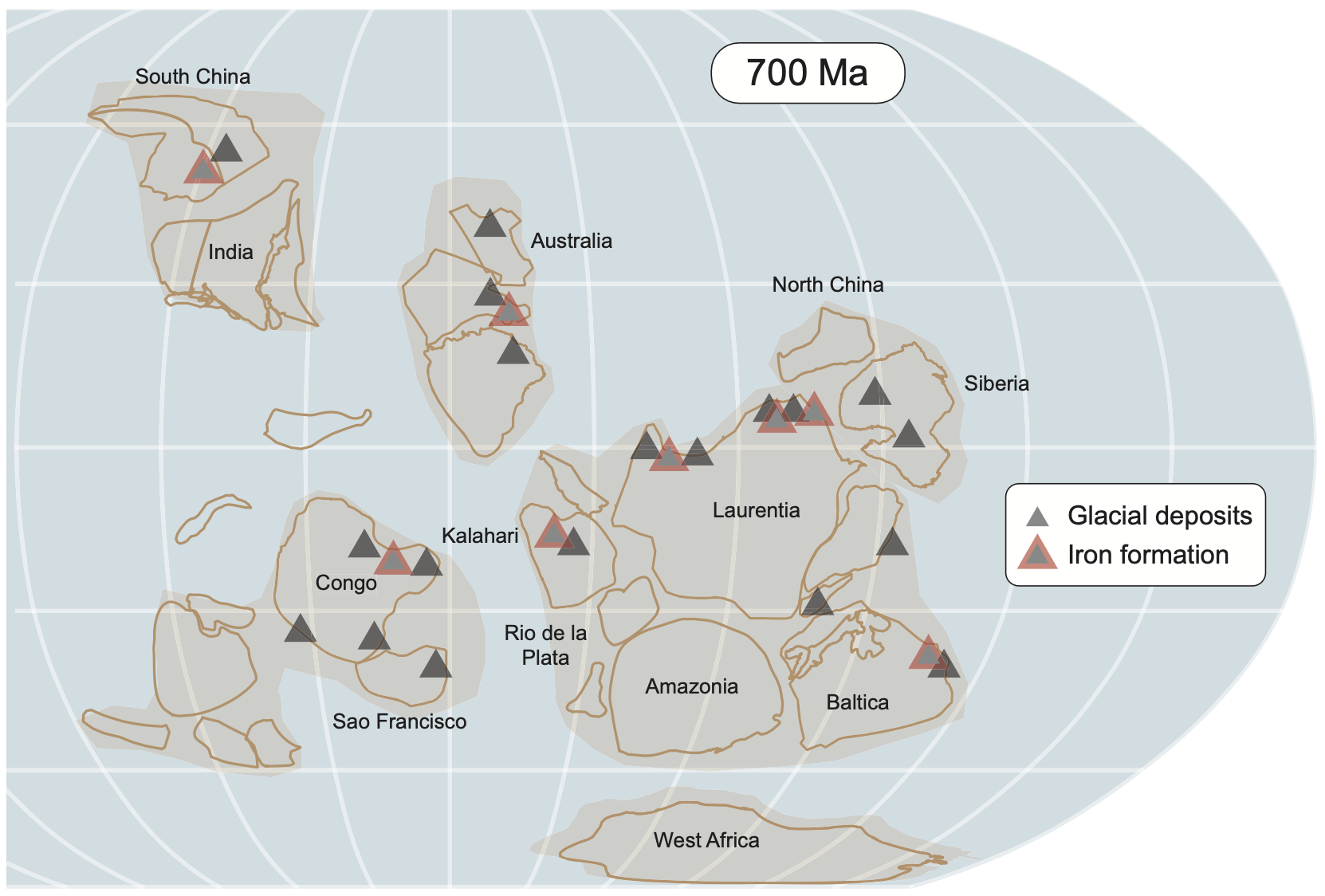
Although a few geologists still dispute the existence of Snowball Earth at all, today most debate about the era concerns whether there was a “hard” or “soft” snowball. The former refers to an entirely frozen-over planet, entirely enclosed in ice kilometers thick, like Europa today. In contrast, Mitchell told IFLScience, “A soft snowball allows for some pockets of open oceans – perhaps seasonally at tropical locations or somewhere else if the Earth’s tilt was different.”
Mitchell told IFLScience the team’s results stand up for either scenario, so the work does not directly resolve the question. However, others may find ways to apply the techniques used here to shed light on the question. A former hard snowballer, Mitchell now prefers to keep an open mind. “No one has found a fatal flaw [in hard Snowball models] but there has been death by a thousand cuts,” as more observations arise that appear to fit the soft snowball better.
The study is published in Nature Communications.