Nature
 PUBLISHED


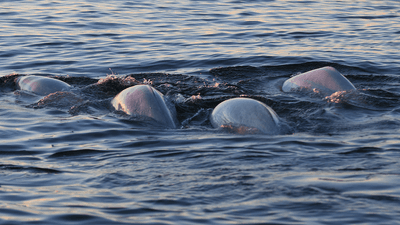


Whale species in Earth’s oceans are some of the most majestic and captivating animals the world has to offer. From the biggest blue whale to sperm whales and everything in between, few people get the chance to appreciate these marine mammals. However, almost 60,000 beluga whales are now on the move as part of their annual migration and Polar’s Bears International have set up a beluga whale live stream so we can join in on the action.
Today, July 15, is Arctic Sea Ice Day, a day created by Polar Bears International to bring attention to the rapidly melting Arctic ecosystem. The beluga whales (Delphinapterus leucas) swim from the wider Arctic Ocean into the Churchill River in Hudson Bay, Canada, to feed and give birth to their young. More than 57,000 belugas will make this journey so the odds of spotting them frolicking in the water via the live cam are pretty good.
“Beluga whales are so curious and many will swim right up to the underwater camera, as they play in the wake of the boat,” Alysa McCall, Polar Bears International Staff Scientist and Director of Conservation Outreach, told BBC Discover Wildlife.
Two live cams are mounted on the research boat Delphi: one that films the water's surface, while the other films under the water. A hydrophone is even used to pick up the voices of the belugas as they travel. These animals are known as the “canaries of the sea” because of their incredible range of vocalizations. As well as their vocalizations, studies have shown that the squishy melon on their heads can also change shape, aiding with visual communication.
Hudson Bay has plenty of food for the whales but remains inaccessible to them in the winter months. In the summer, however, the ice melts, making it the perfect place for the whales to journey to as it is also home to relatively few killer whales, their natural predators.
Part of the reason to return to these plentiful waters is that the adults must undergo the molt. According to the Alaska Department of Fish and Game, their skin grows about 100 times faster than normal during this time. According to research from the 1990s, the low salt and warmer temperatures of the waters in the Hudson Bay may help the skin grow faster, by stimulating blood flow to the skin.
In the fall, the ice will once again reform and the belugas will travel back out. They feed on salmon and other fish as well as shrimp, crabs, and moullusks, explains the WWF. Not only do the belugas rely on the sea ice, but species like polar bears and seals use it as a platform to hunt, rest, and reproduce.

 1
1