Nature
 PUBLISHED


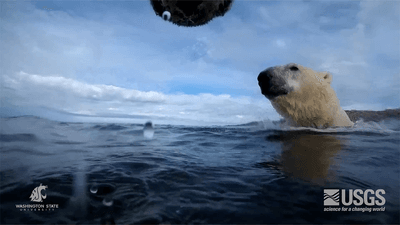


Studying large carnivorous mammals is not without its challenges, especially when they live in remote locations. While footprints have been used previously, using GPS collars combined with cameras has given researchers the opportunity to learn more about how polar bears (Ursus maritimus) are using land to hunt, and the impacts that this will have on their health and populations as the sea ice continues to decline.
Typically polar bears in this region of western Hudson Bay in Canada hunt ringed (Pusa hispida) and bearded seals (Erignathus barbatus) from the ice sheet, most often in the late spring and early summer when the seals are giving birth. As the sea ice declines, polar bears are forced to spend more time on land hunting for different prey. Researchers studied 20 individual polar bears for three weeks during August and September each year from 2019 to 2022.
The Arctic marine ecosystem is experiencing both loss of sea ice but also reduced extent and thickness, leading the bears to spend more time on land. Current research has shown that the ice-free period in Hudson Bay increased by three weeks in the period from 1979-2015, meaning the polar bears are on land for around 130 days.
Some predictions suggest that 24 percent of adult male polars would die of starvation if that period increased to 180 days.
“As polar bears are forced on land earlier, it cuts into the period that they normally acquire the majority of the energy they need to survive,” said lead author Anthony Pagano, research wildlife biologist with the U.S. Geological Survey Polar Bear Research Program and former Washington State University postdoctoral researcher, in a statement seen by IFLScience. “With increased land use, the expectation is that we'll likely see increases in starvation, particularly with adolescents and females with cubs.”
The team wanted to find out if the polar bears reduced their energy expenditure on land during this ice-free period. They measured the energy expenditure, diet, behavior, activity, movement rate, blood chemistry, and body composition of eight adult females, five adult males, four subadult females, and three subadult males.
The team found large variations across each of the polar bears. Adult and subadult females spent around 13 percent of their time eating, most often consuming berries. Three individual bears spent 10-16 percent of their time swimming, and while two of the three found carcasses to feed on during these swimming periods, they each spent minimal time feeding from them despite the high energetic demands of swimming.
This suggests that the bears struggle to feed while in the water, and one bear was observed via the camera footage trying to bring a seal carcass back to shore, but dropped it during the swim.
Recently, a polar bear died in Alaska after consuming a bird carcass infected with avian flu.

“Neither strategy will allow polar bears to exist on land beyond a certain amount of time. Even those bears that were foraging lost body weight at the same rate as those that laid down,” said Charles Robbins, director of the Washington State University Bear Center and co-author of the study.
Overall despite different strategies to foraging and resting, 19 of the 20 bears studied lost weight – between 8 and 36 kilograms (17-79 pounds) over the three-week period. On average, this indicated a weight loss of around 1 kilogram per day (2.2 pounds). Only one bear gained weight after finding a dead marine mammal carcass on land. This indicates that as sea ice further declines and the bears spend longer on land, they will be at increased risk of starvation.
This problem is not just present in Canada. In Norway, the image of a polar bear sleeping has won an award and brought light to the reduction of sea ice across the world.
The study is published in Nature Communications.