Nature
 PUBLISHED


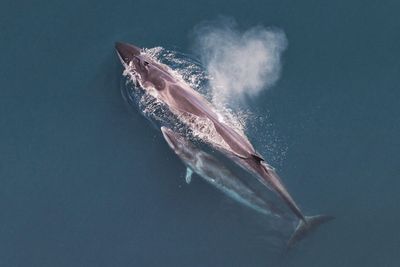


In the whale world, a few species get all the glory; the blue whale is the world's largest, and then there are humpbacks, leaping out of the ocean to the delight of film crews and tourists. Beluga whales might be famous for their unusual appearance and killer whales for sinking yachts (and not actually being whales at all), but what about some of the lesser-known species? Have you ever heard of the sei whale?
Appearance, population, and ecology
Sei whales (Balaenoptera borealis) weigh about 20 tons (18,144 kilograms) and measure 13.7 to 20 meters (45 to 66 feet) in total length, making them the third largest whale species after blue and fin whales. The name “sei” comes from the Norwegian word for pollock, "seje", as the two species are often found together.
The ecology of these whales is poorly understood and as a result, the species has been referred to as the “forgotten whale” due to this lack of information. However, it is thought to be found in most of the planet's oceans, bar polar and tropical regions. There are thought to be three “stocks” of sei whales, with separate populations in the North Atlantic, North Pacific, and Southern Oceans.
They also have a broad dietary range, eating plankton, krill, small fish, and squid. The whales feed on these creatures by skimming them from the water and filtering through their baleen plates.
Social behavior and migration
Typically, sei whales are found alone or in small groups of around five individuals, though larger aggregations of whales can be found in areas of high prey density.
Sei whales also have highly extensive seasonal migrations, spending summer at higher latitudes and while it is somewhat understudied, it is thought that the whales return to lower latitudes as the calves are born in the winter. Gestation is between 10 and 13 months, according to the Mammal Society.
Recently, 93 sei whale sightings were made off the coast of New England, thought to be the highest number of observations ever made in a single survey flight.
History
Sei whales are thought to have no natural predators, but were historically hunted for their meat and oil. As many as 300,000 are estimated to have been killed for this reason, with over 110,000 of these deaths thought to have occurred between 1960 and 1970. The hunt turned to sei whales after the blue and fin whale populations began to decline.
At the moment the IUCN lists sei whales as endangered and estimates a global population of 50,000. While hunting sei whales and other whale species is banned, Japan continues to hunt them in the North Pacific. Other modern-day threats include entanglement with fishing nets and disturbance from boat traffic.