Nature
 PUBLISHED


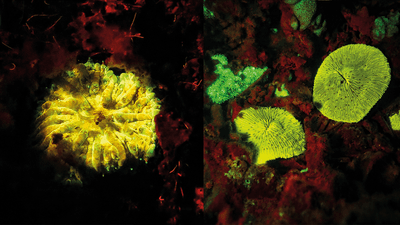


Many species in the natural world have a certain little something that goes beyond the striking patterns visible on their fur and feathers. From fungi to wombats, many species have been found to be fluorescent – and now a whole range of glowing sea creatures from the Banda Sea in Indonesia and the Red Sea in Egypt are joining the party.
The team behind the discovery have not been slacking by any means, and have described fluorescence in 27 species where it was not known to occur previously. These species include nudibranchs, sponges, fish and even octopuses across the phylums of Porifera, Mollusca, Arthropoda, Annelida, and Chordata.
The team dove in both the Banda Sea and in the Red Sea in between February 2019 and September 2022. The team took photographs of the species with Leica THUNDER microscopy, and the images were used to learn more about the presence of fluorescence within the different body parts of the animals.

Among the glowing species include Lybia tessellata, a smaller species of boxer crab; Corythoichthys intestinalis a species of snake pipefish; and six species of stony corals. Some species exhibited fluorescence in only certain body parts, such as the scarlet frogfish (Antennatus coccineus) which possessed green fluorescence all over its body, but orange fluorescence only in patches and in the lures. The team also described fluorescence in the order Octopoda for the first time in the species Abdopus aculeatus, and in the order Acifiacea, which are the sea squirts.
For the nudibranchs, previously thought to only acquire fluorescence because of ingesting a glowing food source, the team found cases where the little gastropods were glowing all on their own.
The team think that searching marine diversity hotspots with UV lights could even reveal more glowing species in the future.
The paper is published in the journal PLOS ONE