Health and Medicine
 PUBLISHED


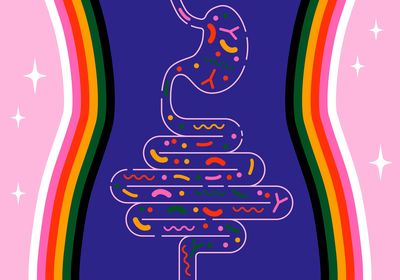


We share a lot with our roommates. Towels. Chore wheels. Oral and gut biomes. At least, that’s the finding of a new study out of Italy, which has found that people who live together – regardless of whether they’re family, romantic partners, or just plain old roomies trying to save on rent – share more microbes in their mouths and guts than other people in their community.
“Who we decide to share our homes with can have a huge influence on our microbiomes,” said Vitor Heidrich, a computational biologist at the University of Trento and first author of the new paper, in a statement this week. “[That] has potential consequences for our health.”
It’s not news that people who live together tend to share microbe strains more than those who live apart – that’s been shown in populations around the world, in various environments and cultures, and regardless of the actual microbes being found.
But exactly how that works, particularly past the very beginning of life, is something that’s previously been fairly mysterious – and that’s what the team aimed to find out.
“We know that diet and other lifestyle factors can change our microbiome, but these factors are acting on the microbes that are already within us,” explained Nicola Segata, a University of Trento computational biologist and senior author of the paper.
“It doesn’t solve the question about where the microbes are coming from.”
So, they set to work. And you can hardly argue the team didn’t get down and dirty with the data: they took oral and fecal samples from more than 400 people living in 200-plus households in Italy and Fiji, isolating microbe strains in each individual’s samples and comparing them to the ones found in their housemates’.
They found, as expected, that people who lived together shared significantly more of their oral and gut microbiomes than people who didn’t live together – but while that was true however the pairs were related, it wasn’t true to the same extent.
Romantic partners, for example, shared a whopping 44 percent of their oral microbiome, for a pretty obvious reason: “these observations point to saliva exchange due to intimate kissing habits as a key factor in shaping the healthy oral microbiome,” the authors write, “in addition to their notorious role as a mode of transmission of pathogens.”
While they may share the most oral microbes, though, romantic partners also share the lowest proportion of gut microbes – though in truth, all of the relationships had basically the same results here, with about one-fifth of your gut microbiome being shared with whomever you live with.
“It was surprising to see that the oral microbiome is not much more transmissible than the gut microbiome,” Segata said. “This speaks to the fact that most of our microbes are kind of everywhere, and the microbial exchange is very high, but our microbiomes are shaped more at the level of whether our body accepts the colonization of these bacteria.”
In other words: it seems it’s easy to get microbes into your mouth – but making the journey into your gut is more difficult. The only ones that seem to manage it are the ones you’d rather didn’t: those associated with colorectal cancer or poor cardiometabolic health, or opportunistic pathogens like Streptococcus bacteria.
“It’s difficult to speculate why this is, but it might be a reflection of their ability to withstand stress,” Heidrich mused. “The same traits that help them survive the journey between humans may also allow them to thrive in the inflammatory conditions associated with disease.”
Overall, it’s one new step on what looks to be a much longer journey of learning how human microbiomes work and spread through communities. Already, though, the team can see applications for future health and medical interventions: “Understanding natural microbiome transmission can inform more targeted artificial transmission solutions,” Heidrich explained.
“If we can identify the characteristics that makes some microbes more transmissible than others, and the constraints that make beneficial microbes less transmissible, we can apply that to make fecal microbiota transplants much more effective.”
The study is published in the journal Cell Press Blue.