Nature
 PUBLISHED


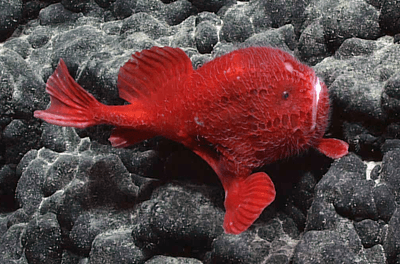


A new crowd of deep-sea weirdos and alien-like lifeforms have been captured on camera by scientists exploring the depths of the ocean around American Samoa.
The rest of this article is behind a paywall. Please sign in or subscribe to access the full content.The beautiful footage (below) comes from the E Mamana Ou Gataifale II expedition by the Ocean Exploration Trust, NOAA Ocean Exploration, the Bureau of Ocean Energy Management, and the Woods Hole Oceanographic Institution. As ever, the video comes with live commentary by the astounded researchers as they stumble across the discoveries.
As part of a 20-day trip onboard the EV Nautilus research ship, the team has been using robotic subs to document a portion of the seafloor in the South Pacific around American Samoa, some 3,700 kilometers (2,300 miles) southwest of Hawaiʻi and 2,414 kilometers (1,500 miles) northeast of New Zealand.
This particular video shows footage from two dives exploring Vailulu'u Seamount, the most active Samoan submarine volcano, between a depth of 600 and 1,500 meters (1,968 to 4,921 feet). It’s the first time the region has been seen by human eyes since 2005 – and it did not disappoint.
Much to the pleasure of the researchers, they came across a Chaunacops, a bright-red sea toad described as a “fan-favorite” due to its amazingly plump body and cutesy expression.
“This one looks extra round," one of the researchers comments.
“He's trying to look intimidating. It's not working,” another jokes.
At a depth of 892 meters (2,926 feet), the crew then spot a “chonky” (their words, not ours) batfish with a beautifully patterned body lined with spines.
First identified in 1975, the Vailulu'u Seamount rises 4,200 meters (13,779 feet) from the sea floor with a 2-kilometer (1.2 miles) wide crater, comparable to the size of Mount Rainier in the US or Mount Fuji in Japan. Seamounts like this are fascinating features that often become hives of biodiversity as they provide wildlife with a solid surface to live upon, supplying them with food and nutrients.
The world’s oceans are littered with seamounts, but they are most abundant in the Pacific. One particularly fiery hotspot is the "Ring of Fire", a horseshoe-shaped band of tectonic activity and violent volcanoes that runs around the Pacific Ocean.
Earlier this year, Schmidt Ocean Institute's research vessel Falkor (too) explored the seabed on the Pacific coast of South America and found four giant seamounts ranging in size from approximately 1,591 meters (5,220 feet) to 2,681 meters (8,796 feet).
Countless more seamounts are out there just waiting to be discovered, not to mention the abundance of weird and wonderful lifeforms they potentially host.