Nature
 PUBLISHED


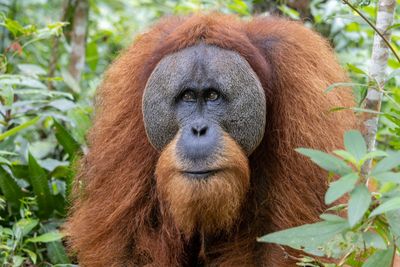


In late November 2025, Cyclone Senyar hit Sumatra, where it brought catastrophic flooding and landslides to the large Indonesian island and other parts of southeast Asia. Now scientists have shown that the storm’s extreme rainfall resulted in landslides that together killed 7 percent of the critically endangered Tapanuli orangutan population.
Cyclone Senyar brought extreme rainfall to Sumatra between November 23 and 28, 2025, ranging from 103 millimeters (4 inches) in Padang Lawas Utara, a landlocked regency in the north of the large island, to 1,003 mm (39 inches) in West Sumatra. This was an exceptional amount of rain, exceeding historical records.
However, such extremes are becoming more probable as climate change continues and severe weather events increase in both frequency and intensity.
By the time Senyar ended, it had caused billions of dollars in damages across Indonesia, Peninsular Malaysia, and Thailand and killed over a thousand people.
However, on Sumatra, Senyar also devastated the local natural environment. In particular, the steep, deeply weathered landscapes of island’s tropical mountain regions suffered landslides, debris flows, and the collapse of canopy structures. Given the geomorphology of these areas, once rainfall reaches a certain threshold, even deeply entrenched trees in ancient forests cannot prevent slope collapse.
Unfortunately, the heavy rains impacted the West Block of the Batang Toru Ecosystem, the core range of Sumatra’s Tapanuli orangutans. There are only 800 members of this species holotype living in the wild, making them the most endangered species of great ape.
Following Cyclone Senyar, scientists analyzed satellite evidence of landslide scars in the orangutan’s range. They then overlaid them with estimates of the animal’s density in that area. They concluded that an estimated 58 Tapanuli orangutans died during the landslides, equating to around 11 percent of the total living in the region. This also represents 7 percent of the entire wild population.
“This level of loss is substantial for a species with such a small total population. When combined with ongoing pressures such as habitat degradation and human–wildlife conflict, it further increases the urgency of implementing and adequately resourcing a coordinated species action plan,” Professor Erik Meijaard, Chief Scientist at Borneo Futures, said in a statement.
The landslides resulted in the destruction of around 8,300 hectares (20,510 acres) of forest, which is about 11.7 percent of the forest cover in the West Block of the Batan Toru region.
Using climate attribution methods, which allow scientists to determine how much human activity has influenced the likelihood or intensity of specific weather events, the researchers also found that rainfall intensity had increased by 50 percent. This, they concluded, is a result of human-induced climate change and underlines how worsening weather extremes are threatening endangered wildlife, not just human habitats.
"The loss of an estimated 58 Tapanuli orangutans to a single climate-induced landslide event is a devastating demographic shock to the world’s rarest great ape,” Professor Jatna Supriatna, Department of Biology, Universitas Indonesia, added
“To prevent the first modern extinction of a great ape species, Indonesia must permanently protect the Batang Toru ecosystem, but our international partners must also meet their global commitments by providing immediate biodiversity-recovery financing."
The Government of Indonesia has temporarily halted major developments in the Batang Toru landscape. This includes ceasing mining, oil palm, and hydropower expansion. Although this decision offers a rare opportunity for decision-makers to reassess ecological risks and reset their plans, the temporary halt will need to be turned into a more coherent program if it is going to help the orangutans.
This includes creating a structured review process that uses climate-risk assessments, landslide-susceptibility mapping, and habitat-carrying-capacity data to protect the animals’ habitat.
“These are high-velocity, shallow landslides triggered by intense rainfall. Because the debris flows are directly connected to the channel system, the failure is rapid and exceptionally destructive, leaving those in the path with little warning or chance of escape,” Professor Dave Petley, Landslide Researcher at Nottingham Trent University, explained.
Ultimately, the crisis facing the Tapanuli orangutans demonstrates a narrative that may become more common in the future. It represents the convergence of climate instability, biodiversity loss and vulnerability. However, Indonesia’s immediate response also shows that actions can be taken to mitigate future tragedy, but only if there is a shared commitment to the challenge.
The study is published in Current Biology.