Nature
 PUBLISHED




Fungi are cool. I don’t care what anyone says, they’re incredible, diverse and a little awe-inspiring. If you don’t feel the same then the results of this latest study may change your mind.
For the first time, scientists have produced a global map of the planet’s underground fungal network, which is so immense that, were it stretched out, it would be more than a billion times greater than the distance to the Sun from the Earth.
These subterranean fungal systems, known as arbuscular mycorrhizal fungi networks, have been known about for some time. They extend for vast distances and provide sustenance to plants by feeding them nitrogen, phosphorus, and water in exchange for their carbon. In fact, these fungi have a symbiotic trade relationship with around 70 percent of plant species on Earth.
This latter ability also makes them a valuable force for regulating the climate, as they help sequester carbon from the environment. One study found that arbuscular mycorrhizal fungi networks exchange nearly 4 billion tons of carbon dioxide equivalent every year, effectively offsetting about 11 percent of the world’s fossil fuel emissions from 2021.
In healthy soils, mycorrhizal networks can increase the foraging area of plant roots by up to 100 times, while offering up to 80 percent of a plant’s phosphorous intake. I told you they were cool.
But while we know these fungi serve a critical purpose as ecosystem engineers, we are less sure about their distribution.
In 2025, researchers published a global analysis of the fungi’s diversity patterns along with a new digital tool – the Underground Atlas – to help decision-makers locate potential underground biodiversity hotspots.
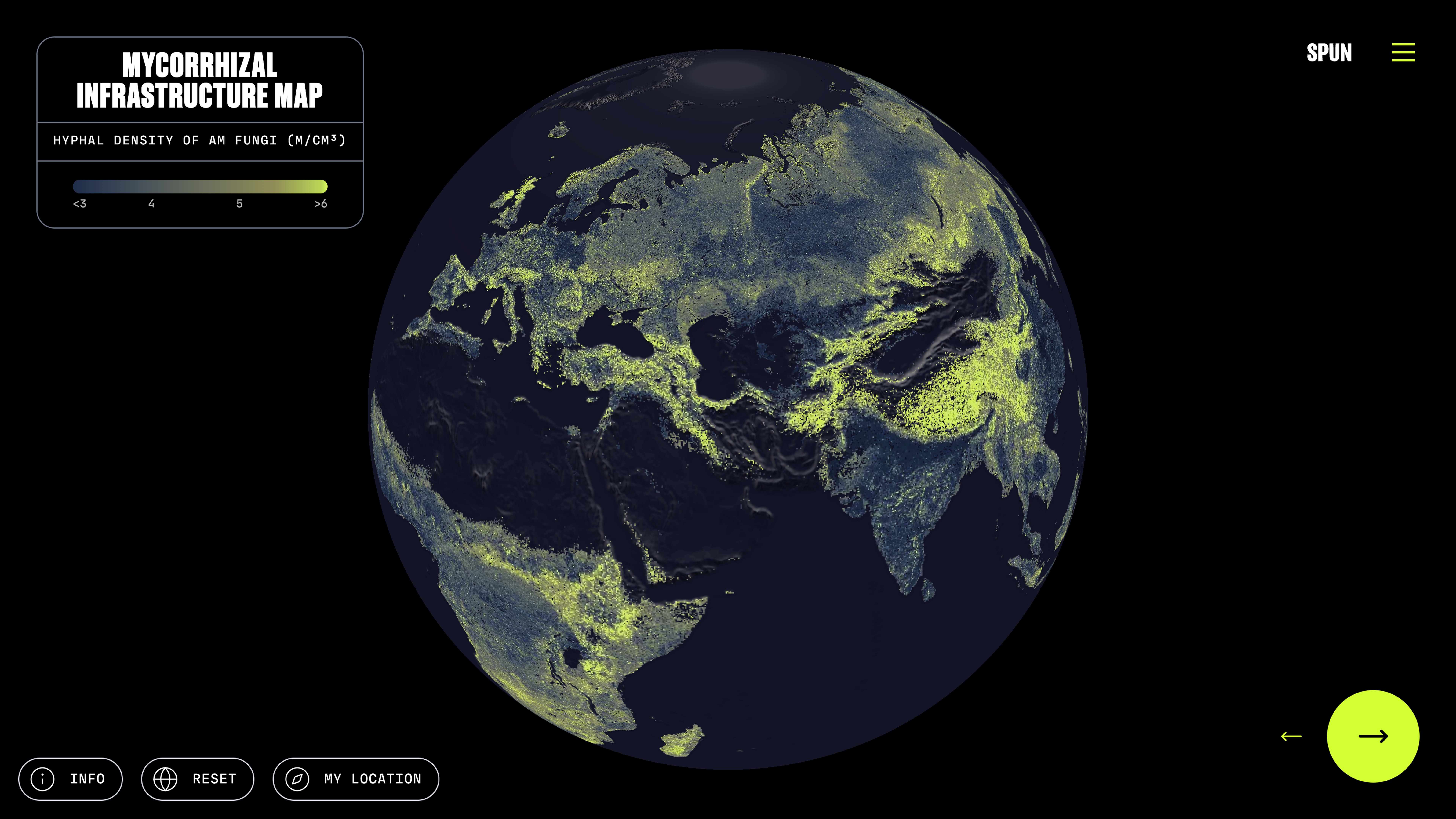
It’s a great tool for seeing just how widespread these quiet, crucial underground networks are – until now, no one has tried to predict and visualize the physical density and global distribution of arbuscular mycorrhizal fungi networks.
In this latest study, scientists compiled data on the density of these networks from over 16,000 soil-cores taken from across the planet. They developed special AI models that incorporated information from various ecosystems, including deserts, tundra, and forests, which they used to predict network density in unsampled areas.
Following this, the team worked with the Physics of Behavior group at AMOLF in the Netherlands – who try to understand biological movements through mathematics, statistical mechanics, and quantitative laws – calibrating their model with robotic imaging of over 300,000 living fungal hyphae grown in a lab.
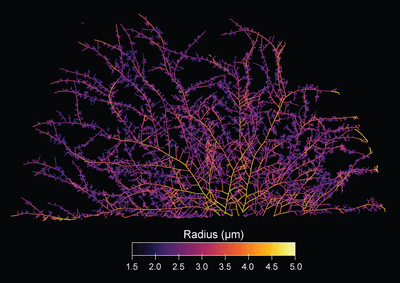
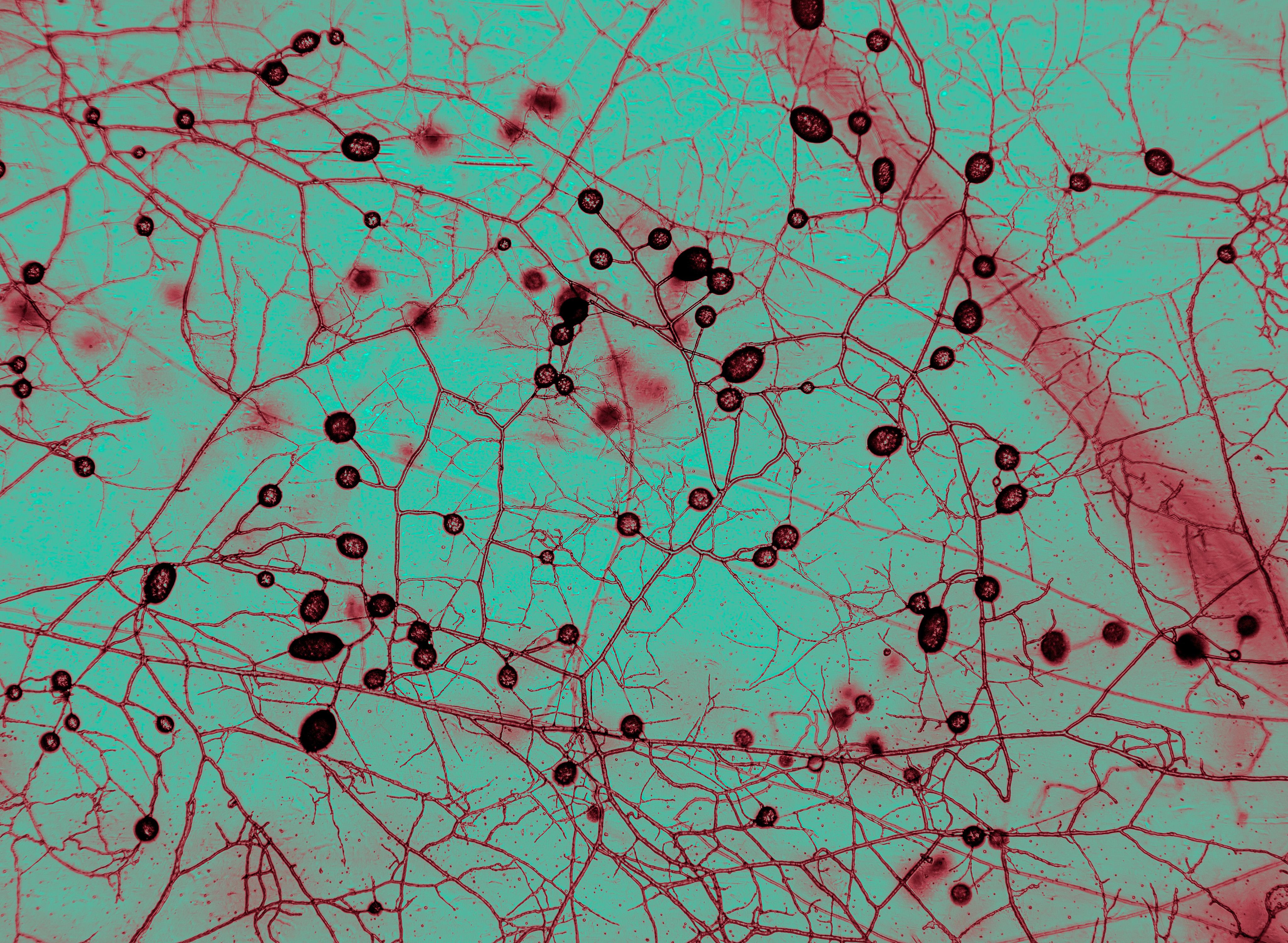
Hyphae are the tiny branching threads that make up the structure of most fungi, acting as their major mode for growth and nutrient exchange. Using these datasets, the team managed to estimate the total mass and length of arbuscular mycorrhizal fungi networks on Earth.
Brace yourself, it’s a lot: they calculated that the networks have a mass of around 300 megatons of carbon – that’s 4-6 times the mass of all living humans – and a total length of 110 quadrillion kilometers.
“It is hard to overstate the importance and enormity of these fungi,” Dr Justin Stewart, from the Society for the Protection of Underground Networks (SPUN), explained in a statement.
“There could be up to 10 meters (32 feet) of mycorrhizal network in just a teaspoon of soil.”
The estimates have been calculated for every square kilometer of terrestrial land. This is the first time that the world’s mycorrhizal networks have been visualized at this scale and resolution. The data that informed this picture are available for download by any governments or decision-makers who want to monitor the health of these critical underground communities.
Unfortunately, mycorrhizal networks are not invulnerable. Recent research shows that, across croplands, mycorrhizal density is around half that of wild ecosystems. Wild grassland ecosystems contain around 40 percent of the planet’s mycorrhizal biomass, but these are also among the least protected ecosystems and are being converted into farmland four times faster than forests are.
“Fungi have been ignored in climate and conservation for too long. Now is the time to change that trajectory,” Dr Toby Kiers, evolutionary biologist and the Executive Director of SPUN, added.
The study helps us understand just how extraordinary these fungal networks are while also indicating where further research is needed.
“Mycorrhizal fungi have shaped life on earth for hundreds of millions of years, but we still understand too little about how the infrastructure of these living transport systems is distributed across the planet,” biologist Dr Merlin Sheldrake explained.
“This study is an exciting step towards understanding how this planetary circulatory system operates and suggests ways that we can better work with fungi to help address many of the unfolding challenges of our times, from food security to climate change.”
The study is published in Science.