


 Nature
 PUBLISHED


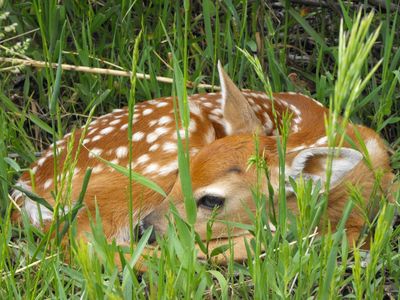


Be still our beating hearts, it's officially cute baby season and a whole plethora of cute, fuzzy, fluffy little critters are being born into the world. And while it might go against our good nature to see something small and adorable seemingly abandoned and all by itself, we’re begging you: don’t touch the baby animals.
It is not uncommon to see baby animals without their parents, but while many might think this is a sign of abandonment, it might be that the parents have left their precious offspring in the woods, tall grass, or trees while they themselves go off to forage or hunt.
Deer fawns and elk calves are particular examples of this, as they are frequently hidden in long grass by their mothers to shield them from predators. Their creamy-colored spotted coats are the perfect camouflage until the mother returns to feed them.
"Deer fawns are actually alone and isolated during their first weeks of life — and that's on purpose," Utah Division of Wildlife Resources Big Game Coordinator Covy Jones said. "The mother knows that leaving the fawn alone is the best way to protect it from predators."
Baby birds are another common issue; while chicks can fall out of the nest, they can still be provisioned for by the parent.
"If you find a baby bird, it likely does not need your help unless it is featherless or has its eyes closed. These birds are nestlings and aren’t ready to leave the nest yet," US Fish & Wildlife Service advises. "If you can locate the nest nearby, the best thing to do is simply place the nestling back in the nest. If you cannot locate the nest, leave the nestling where you found it or move it to a shaded area. The parents will come back. Don’t worry, your scent won’t deter the parents."
"If a bird's nest is disturbed by a potential predator during the nesting or egg-laying stage," he says, "there's a possibility that [it] will desert and re-nest. However, once the young are hatched and feeding, [their parents are] by and large pretty tenacious,” Frank B. Gill, former president of the American Ornithologists' Union, told Scientific American.
Bear cubs are another example of seeming but unlikely abandonment. Female bears often leave their cubs somewhere safe, like in a tree, while they go to find food, coming back for them later. You should never attempt to take a bear cub out of a tree. Touching or feeding a cub can cause it to be habituated to people and may cause the mother bear to abandon it. Plus, you're putting yourself in danger if the mother comes back while you are mid-inadvertent kidnap.
On the flip side, wild rabbits seem to be the most likely species to actually abandon their young. However, it is hard to tell as the mothers will usually only return to nurse their young around twice a day. The babies are generally safe left on their own as they have good camouflage and no scent to attract predators.
To check if a burrow has been abandoned, you can make a cross with a piece of string, place it across the entrance to the burrow, and monitor the area from a respectful distance to see if the cross has been disturbed, recommends the Humane Society.
"Keeping your distance and not touching wildlife are the keys to keeping young animals alive," Jones said. If you are still worried an animal has been abandoned or injured, look up your nearest wildlife rehabilitator and call them for advice before doing anything else.
In the UK, if you find a grey squirrel baby seemingly abandoned, the law actually prevents wildlife rehabilitators from taking in the babies and releasing them again because they are an invasive species in the UK. Likely, the mother will return to feed the kit anyway.
If you still want to get your fill of spring cuteness, we recommend this adorable endangered parrots live stream, where you can watch an incredibly rare and precious kākāpō chick and her mother 24/7 without disturbing them.

 1
1