Nature
 PUBLISHED


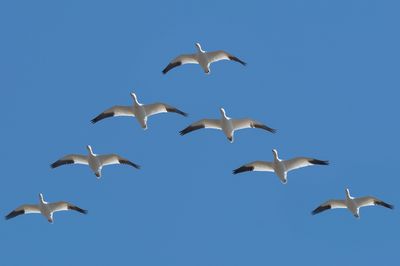


If you’ve ever glanced skywards and seen groups of birds flying in beautifully organized V formations have you ever stopped to wonder how and why they are doing that? While the V formation is famous for a number of reasons, it is actually the less common formation for birds to travel in and is largely used in geese, swans, pelicans, and wading species. So why do they do it?
The V formation is typically seen in large migratory birds that cover particularly huge distances, for example, pink-footed geese (Anser brachyrhynchus) spend the winter in the UK from their native home of Iceland and can be seen filling the skies with their long V formations. When traveling such a long way there are more than a few reasons to stick together.
If you thought one of the reasons was saving them energy then you’re already on the right track. It's thought birds can use 20 to 30 percent less energy when flying this way. A 2014 study into northern bald ibis (Geronticus eremita) fitted data loggers to captive-raised birds, revealing that flapping at the right time is vital. They found that birds diagonally behind each other in the V passed almost exactly through the same space with their wings. The timing of the wing beats between different birds was done to catch the eddies created by the wings of the bird in front, minimizing the effort needed. If an ibis ended up out of phase they beat their wings in the opposite way to minimize the effect of the downdraft created from the bird in front of them.
The team explained that long-winged birds are more effective at doing this which is why the V formation is so often seen with geese. However, scientists still don't know how the birds organize themselves in this way. It was assumed that older birds taught the younger birds the V formation, however, the ibis in the 2014 study were captive-bred as part of a reintroduction program and followed a microlight in the sky.
“It was always assumed that V-formation flight was learned from the adult birds,” lead author Steven Portugal told Nat Geo at the time. “But these guys are all the same age and they learned to fly from a human in a microlight. They learned [V-formation flying] from each other. It’s almost self-taught.”

The technical term of these formations is echelons. While a V might be the most famous, research has revealed that a J shape is actually the most widespread among bird species.