Nature
 PUBLISHED
 1
1


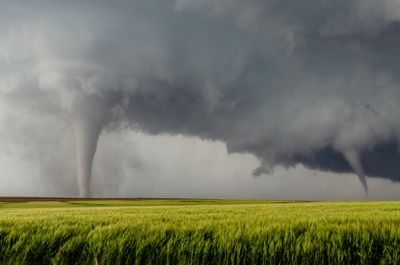


Tornadoes together with a hurricane sounds like something from a disaster movie, but it became reality this week as Hurricane Milton hit Florida and spawned a host of destructive twisters – but why did this happen?
During a White House press briefing on October 10, US Homeland Security Secretary Alejandro Mayorkas told reporters that at least 27 tornadoes were confirmed to have touched down in Florida just before and after Milton made landfall. The average number of tornadoes usually seen in the state during October is three.
How hurricanes spawn tornadoes
Tornadoes and hurricanes are two different phenomena: tornadoes form over land, are short-lived, smaller, and harder to predict, while hurricanes form over the tropical oceans, can last for days or even weeks, be absolutely massive, but are also easier to forecast.
However, when a hurricane hits land, its conditions can provide the perfect breeding ground for tornadoes to form.
When a hurricane is over the ocean, you won’t find a tornado because the wind shear – the change in windspeed and/or direction with height – simply isn’t high enough. There’s just not enough friction between the wind and the surface of the water.
Once a hurricane hits land, however, it’s a different story – one that involves a lot more surface friction and thus, much higher wind shear. Throw in the instability that’s caused by variation of temperature and humidity with altitude seen in hurricanes (and other storms), and you’ve got all the ingredients to make a tornado.
According to the National Weather Service (NWS), tornadoes that spawn during hurricanes typically form in bands of rain at the right front quadrant of the storm – this is the place with the most suitable wind shear and instability. These tornadoes are normally pretty weak and don’t last that long, although the NWS does note that they “still pose a significant threat”.
Milton's tornadoes were unusually strong
While it’s not unexpected to see some twisters during a hurricane, those spawned by Milton appear to have been stronger than such tornadoes typically are.
“It’s definitely out of the ordinary,” Northern Illinois University meteorology professor Victor Gensini told AP. “Hurricanes do produce tornadoes, but they’re usually weak. What we saw [with Milton] was much closer to what we see in the Great Plains in the spring.”
As for why that was the case, experts have pointed to the increasing strength of hurricanes amid climate change.
“There is a relationship between the intensity of the hurricane and the ability of the environment to facilitate tornado production,” Jana Houser, an associate professor at Ohio State University and tornado analyst, told The Hill.