Nature
 PUBLISHED
 2
2


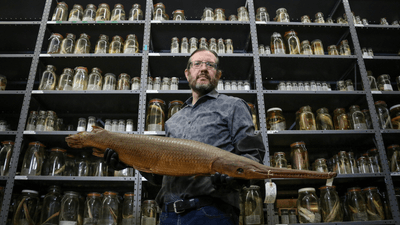


Time is a funny thing. If you’d visited a bunker in Louisiana in the early 1940s, you’d have found it stuffed full of World War II ammunitions. Visit it today and you’ll find over 8 million fish in jars. Why? Because it’s now known as the Tulane University Biodiversity Research Institute (or TUBRI, for short).
Everything that we know about this species is from one small specimen that's sitting in a jar out in Belle Chasse, Louisiana
Brian Sidlauskas
These aren’t just any fish. Among the rare specimens is the world’s only known Molisquama mississippiensis, commonly called the pocket shark. The only other known specimen from this genus belongs to a different species, Molisquama parini, which is housed at the Zoological Museum in St Petersburg, Russia.
Together, these two specimens represent the only known pocket sharks on the planet. While there are many other sharks in the same family (such as kitefin and cookiecutter sharks), only two species of pocket sharks are known to exist.
“It’s so rare,” TUBRI director Brian Sidlauskas told IFLScience as part of an interview for the February issue of CURIOUS. “I can tell you some things about it, but it's one specimen – everything that we know about this species is from one small specimen that's sitting in a jar out in Belle Chasse, Louisiana.”
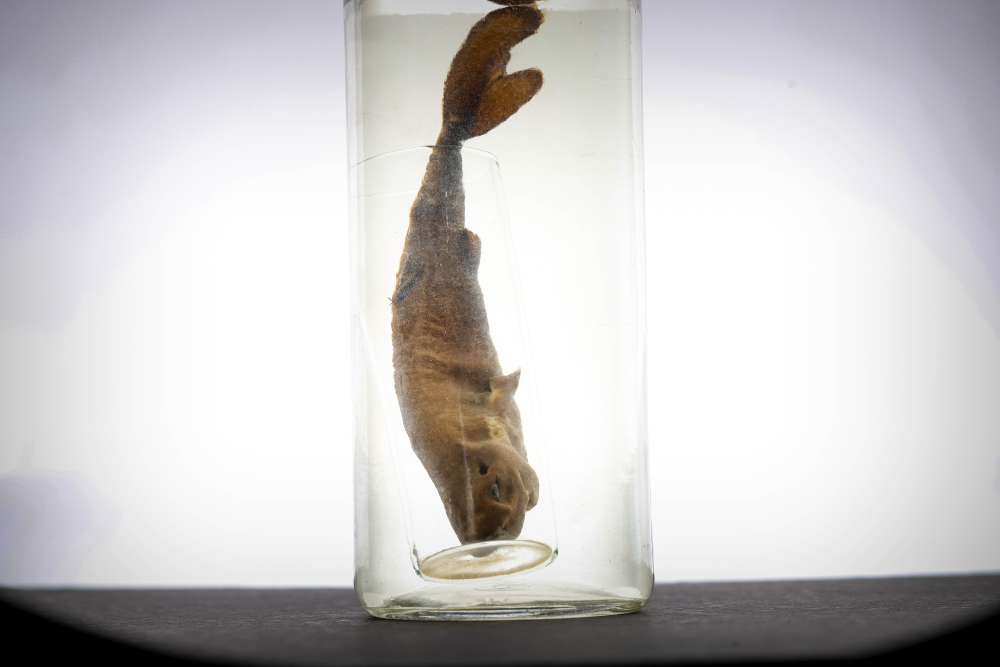
“It's called a pocket shark because it has weird little fleshy pockets in the axles of the pectoral fin, essentially like inside of its armpit. And there's been a synchrotron scan of the specimen to reconstruct the shape of what that little pocket looks like (it's called a pocket shark because of these little pockets, not because it fits in your pocket).”
It's probably one of these animals that's able to produce a bioluminescent emission, perhaps as an anti-predator defense.
Brian Sidlauskas
"Looking at the histology of what we think we can see in that little pocket, it's probably [to do with] bioluminescence. It's probably one of these animals that's able to produce a bioluminescent emission, perhaps as an anti-predator defense, but no one has ever seen this, of course. It's one preserved specimen."
As for how it and the other ~8 million fish washed up in a series of WWII-era bunkers, it began with the "collecting machine" known as Royal D Suttkus. He built what's now known as the Suttkus Collection, which was housed at Tulane University's Dinwiddie Hall until, as legend has it, the floor began to bow from the immense weight of so many pickled fish.
When it outgrew its home, it was moved to a series of bunkers out at Belle Chasse, where it's continued to grow ever since. Most recently, thanks to the DEEPEND Consortium.
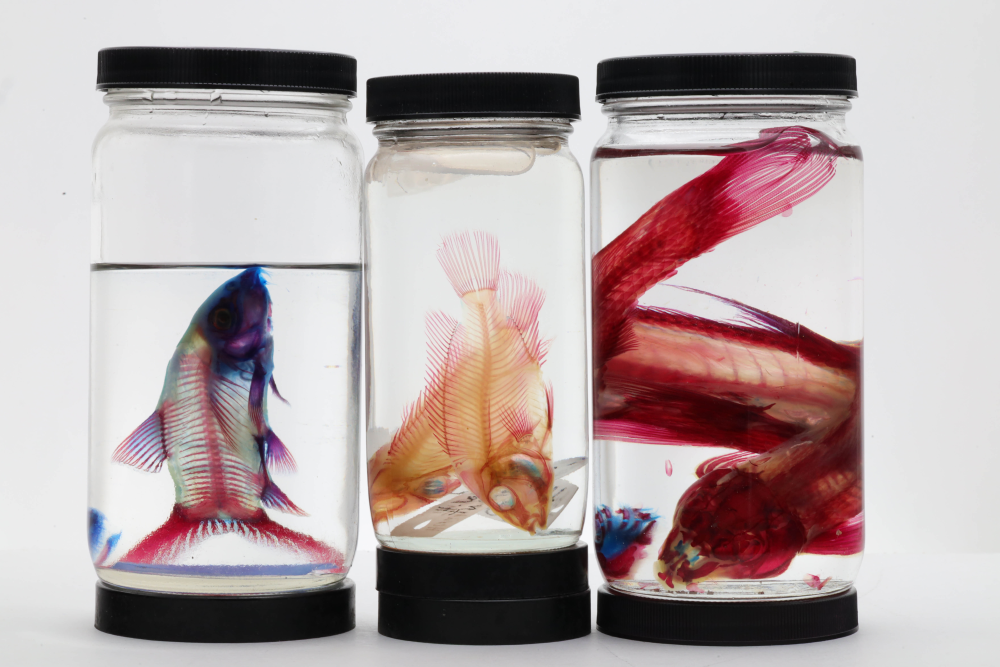
They’ve been collecting specimens aboard the research vessel Point Sur, contributing more than 1,000 new specimens, including 36 species that had never been archived at TUBRI before. The collection is now home to over 8 million specimens spanning nearly 180 years.
“DEEPEND’s incredibly thorough and accurate inventory has revealed how the biodiversity of the Gulf changes across time and depth, and in response to human-driven impacts,” said Sidlauskas, who is a professor of ecology and evolutionary biology in Tulane’s School of Science and Engineering, in a release.
“The specimens are exquisitely preserved and the DEEPEND team meticulously documented extensive metadata. By archiving these samples in perpetuity, TUBRI can ensure that scientists will be able to discover, access, and study this exceptional collection for decades to come.”
This most recent donation of specimens follows the genetic barcoding of around 550 species (many of which, for the first time). They join some of TUBRI’s oldest residents that date back to the 1840s. It’s a testament to how preservation techniques can make specimens last for several lifetimes, but building on collections like TUBRI is vital for providing taxonomists, ecologists, and fisheries biologists with precious data.
They’re not gatekeeping the goods, though. Oh no, the data from these latest specimens will be available to the public through TUBRI’s database, which you can find at www.fishnet2.net, as well as GenBank, which is an open-access repository that’s globally accessible.
“By combining traditional collection-based science with cutting-edge digital tools, we’re creating a bridge between centuries of natural history and the next generation of discovery,” Sidlauskas said. “These efforts will help ensure that the specimens we steward today continue to yield new insights for decades, centuries even, to come.”
Happy fishing!