


 Nature
 PUBLISHED




Plenty of big scientific discoveries have started with an accident. One such enlightening whoopsie unfolded in Iceland in 2009 while drilling in Iceland’s Krafla Geothermal Field.
The drill struck molten magma at around 2,100 meters (6,890 feet) – a relatively shallow depth. Drilling into magma was considered risky at the time because of the many unknowns. On the lower end of the peril scale we figured it might cause equipment damage, and at the higher end there were fears it might even be possible to trigger a volcanic eruption.
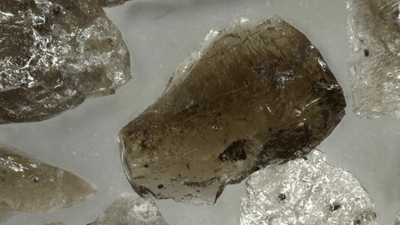
The reality? That 2009 drilling incident yielded drill cuttings that contained fresh volcanic glass. This formed as a result of the magma rapidly cooling when it came into contact with drilling fluids. The shards are quite beautiful, and represented a rare opportunity to get a good look at magma that had come directly from within the Earth’s crust.
Since then, that volcanic glass has inspired a number of studies. A body of work Professor Ben Kennedy, volcanologist from Te Whare Wānanga o Waitaha | University of Canterbury (UC), has been contributing to since 2014.
“These fragments act like time capsules,” he said in a release. “They help us determine the pressure, temperature and gas content of magma beneath active volcanic systems.”
Kennedy recently worked with Dr Janine Birnbaum and other researchers from Ludwig-Maximilian-University Munich on a study exploring how magma is stored and how it responds to drilling. The findings could inform more accurate modeling for volcanic eruptions, safer ways to develop on active volcanoes, and ways to drill into magma for monitoring and as a potential source of renewable energy.
The insights aren’t just critical to Iceland, but volcanic regions across the globe including Kennedy’s home of New Zealand.
“This data shows why it could be safe to drill into the Krafla magma chamber and build a research facility to support high-temperature drilling,” he says. “That’s highly relevant as New Zealand explores superhot geothermal drilling.”
“This is a great example of how international collaboration can deliver real benefits back home. What we learn in Iceland is directly helping us better understand New Zealand’s volcanic hazards and energy future.”
If drilling into volcanoes sounds a bit like that time Armageddon decided the best planetary defence was sending a bunch of drillers into space, you’re not the only one captured by the adventurous new approach to volcanology. Kennedy’s team have even made a game based on the Krafla drilling project that’s played by “magma drillers” in schools across New Zealand.
“This type of science is really exciting and can grab the imagination of kids,” said Kennedy. “In my mind, drilling into a magma chamber is like going to the Moon.”
The study is published in Nature.


 1
1