Space and Physics
 PUBLISHED



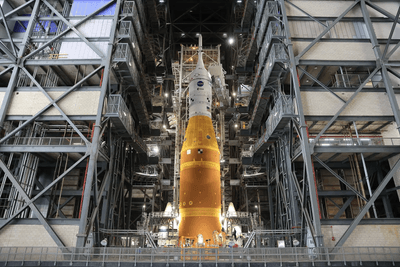


Things are looking up for Artemis II. After the rocket was brought back to the Vehicle Assembly Building (VAB) for repairs in February, it's now ready to roll back out to the launch pad. The goal is to launch during early April, and given that the crew is now in quarantine, NASA appears to be confident that will happen. Are we finally heading back to the Moon?
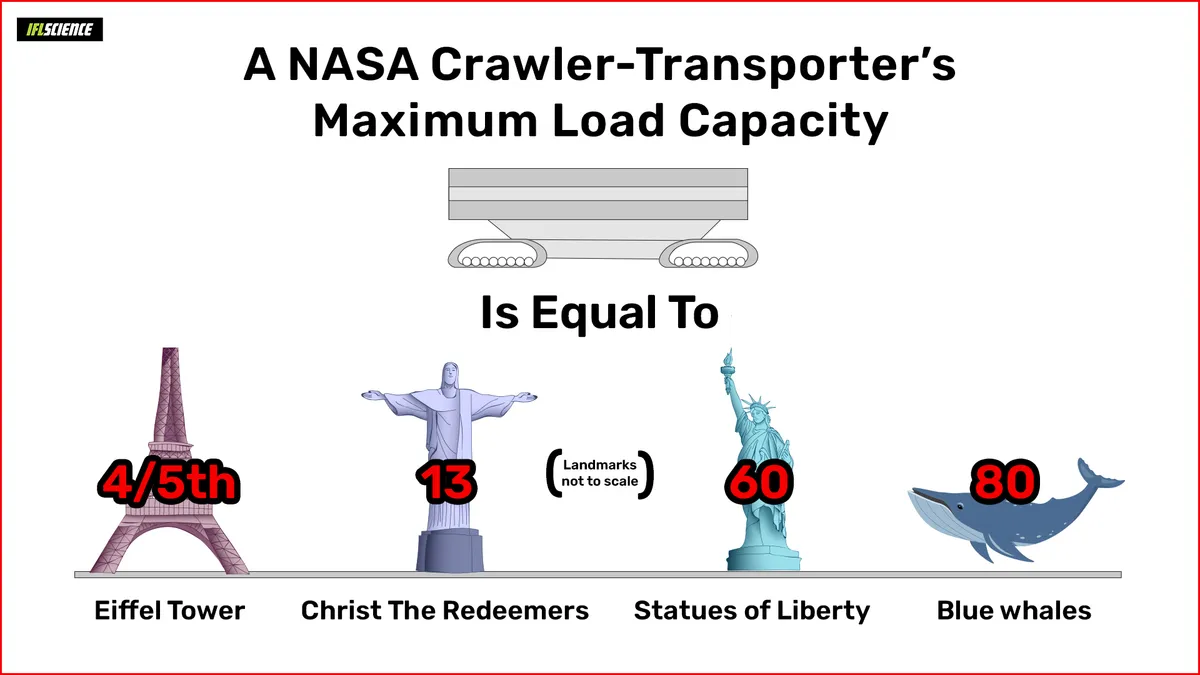
At 8 pm EDT on Thursday, March 19, the Space Launch System – the mission's giant rocket – and the Orion spacecraft will begin their 12-hour journey from the VAB to Launch Pad 39B at the agency’s Kennedy Space Center in Florida. Crucial to the trip is NASA’s crawler-transporter 2 which will, slowly but surely, carry the 5 million kilogram (11 million pound) rocket to where it will take to the sky.
The Artemis II mission is the first one in a decade that will take humans into deep space, going around the Moon and actually allowing astronauts to see regions of its surface that no other human has seen with their own eyes. The four crewmembers are NASA astronauts Reid Wiseman, Victor Glover, and Christina Koch, along with Canadian Space Agency astronaut Jeremy Hansen.
The crew entered quarantine at 6 pm EDT on Wednesday in Houston to ensure they remain healthy ahead of launch. This is a standard procedure. They will be flown to Kennedy Space Center five days before launch and continue quarantine there, in the astronaut quarters (but not in the Apollo astronauts' special Beach House).
“Once we get back out to the pad, we'll configure for launch pending completion of the work in the VAB. And at the pad, we are on track for a launch as early as April 1st. And we are working toward that date. I'll say the launch time on April 1st is at 6:24 pm,” Lori Glaze, NASA acting associate administrator, said during a press conference last week.
NASA has kept to that schedule so far. The agency has released a plan for the possible launch dates and launch windows for April. Each window is two hours long. After April 1, the next suitable date is on April 2 at 7:22 pm. On April 3, it is 8 pm on the dot. On April 4, it is at 8:53 pm and on April 5 it is at 9:50 pm. April 6 will be the last of that bunch, with a launch window opening at 10:36 pm.
Artemis II was originally scheduled to launch in early February, but a few hiccups during the wet dress rehearsal postponed it. A second wet dress rehearsal, a month ago exactly, showed a bigger issue, and NASA decided to bring the whole vehicle back to the VAB for repairs. With that issue sorted, April is looking very promising.