Nature
 PUBLISHED
 36
36


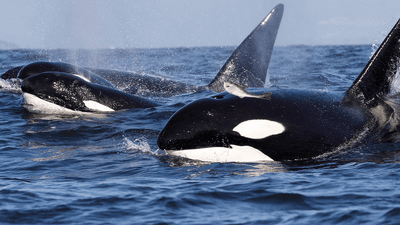


As anyone who follows fashion knows, certain trends like indie sleaze and cargo pants can come back around after a long and quite deserved break. Orcas, it seems, are not immune. After a 37-year break, killer whales have once again been spotted wearing dead salmon on their head.
Orcas are intelligent and social animals, known for playful behavior as well as passing on certain cultural traditions. These can be relatively wholesome, but sometimes a little destructive, as the recent trend of "attacking" boat rudders has shown.
"Different populations often have distinct dietary specializations that are maintained by cultural transmission, and these ‘ecotypes’ typically have a variety of persistent behavioral traditions that are related to their divergent foraging," a report into the recent trend of rudder-breaking behavior explains. "Some populations may also develop unusual and temporary behavioral ‘fads’ and other idiosyncrasies that do not appear to serve any obvious adaptive purpose. Understanding the recent boat interactions by Iberian killer whales may benefit from an examination of such ephemeral traditions in other well-studied killer whale populations."
One obvious example of these fads is the dead salmon hat trend of 1987. In the Puget Sound area of the northeast Pacific, one female orca from k-pod began carrying a dead salmon around on her nose. Over the next five to six weeks, the behavior spread, and by the end of it, orcas from her own and two other pods were wearing dead salmon hats.
Then all of a sudden, the fad was over. Bar a few times the following summer – latecomers, like humans just now deciding to wear Uggs – the trend had never been seen again. That is, until it emerged again quite recently.
Orcas belonging to "J pod" were spotted in Puget Sound on the northwest coast of the US state of Washington in October.
"Observations indicate they are likely finding plenty of salmon during their stay and may be why they have remained inland so long," the whale sighting network reports, adding, "check out this photo of J27 Blackberry sporting a salmon hat."
As yet, we still don't know why orca perform this behavior. It could be that some of the orca were around during the last salmon hat phase, and are bringing it back while salmon supplies are plentiful. One idea, highlighted by New Scientist, is that they are simply using their head as storage space, saving excess salmon caught during salmon abundance for later consumption. Maybe it's less of a salmon hat trend, and more a case of using their head as a lunchbox.
Less adorable (well, from the perspective of non-salmon) cultural behaviors seen in killer whales in the Salish Sea include harassing porpoises and sometimes killing them.
“They do not eat the porpoise," science and research director at Wild Orca, Deborah Giles, told Atlas Obscura, "they just kind of play with them to death."
Just off the west coast of the USA, juvenile orcas have been seen playing with fishing equipment, moving crab and prawn traps, and wrapping themselves up in lines, perhaps as a game.
“Killer whales do have fads that come and go, and they're often most prevalent among certain sex and age classes in the population. Then, over time, they tend to disappear,” director of Bay Cetology, Jared Towers, told Discover. “I'm certainly hoping that's what happens with this behavior. But it's been going on for a few years now. So, we're not quite sure what to expect.”