Nature
 PUBLISHED



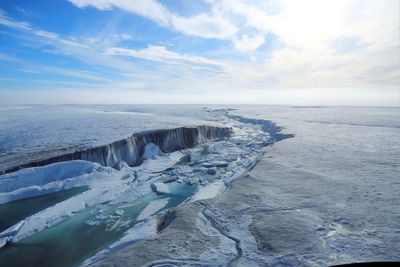


The Milne Fiord was considered to be the last large epishelf lake still standing in the Canadian Arctic. But like many of the great glaciers and coral reefs of the planet, it is no more.
Epishelf lakes are bodies of freshwater formed at the mouths of fjords, by floating ice shelves that act as a dam against chilled seawater on the other side. As freshwater runs off the land and glaciers into what would usually be the sea, it instead collects in these freshwater epishelf lakes.
They can host their own ecosystems of life and provide glaciologists with a trove of information about our ever-changing world.
Milne Fiord: the last of its kind
The Milne Fiord epishelf lake was an especially interesting example. Located on northern Ellesmere Island, Canada's northernmost island, in Nunavut, it was considered to be the last large epishelf lake still standing in the Canadian Arctic.
In the local Inuktitut language, the region’s name means "the place where the ice never melts". It sits within the Last Ice Area, a chunk of Canada and Greenland territories that’s forecasted to hold on it sea ice longer than anywhere else in the Northern Hemisphere.
However, cracks are literally starting to show in this unique system.
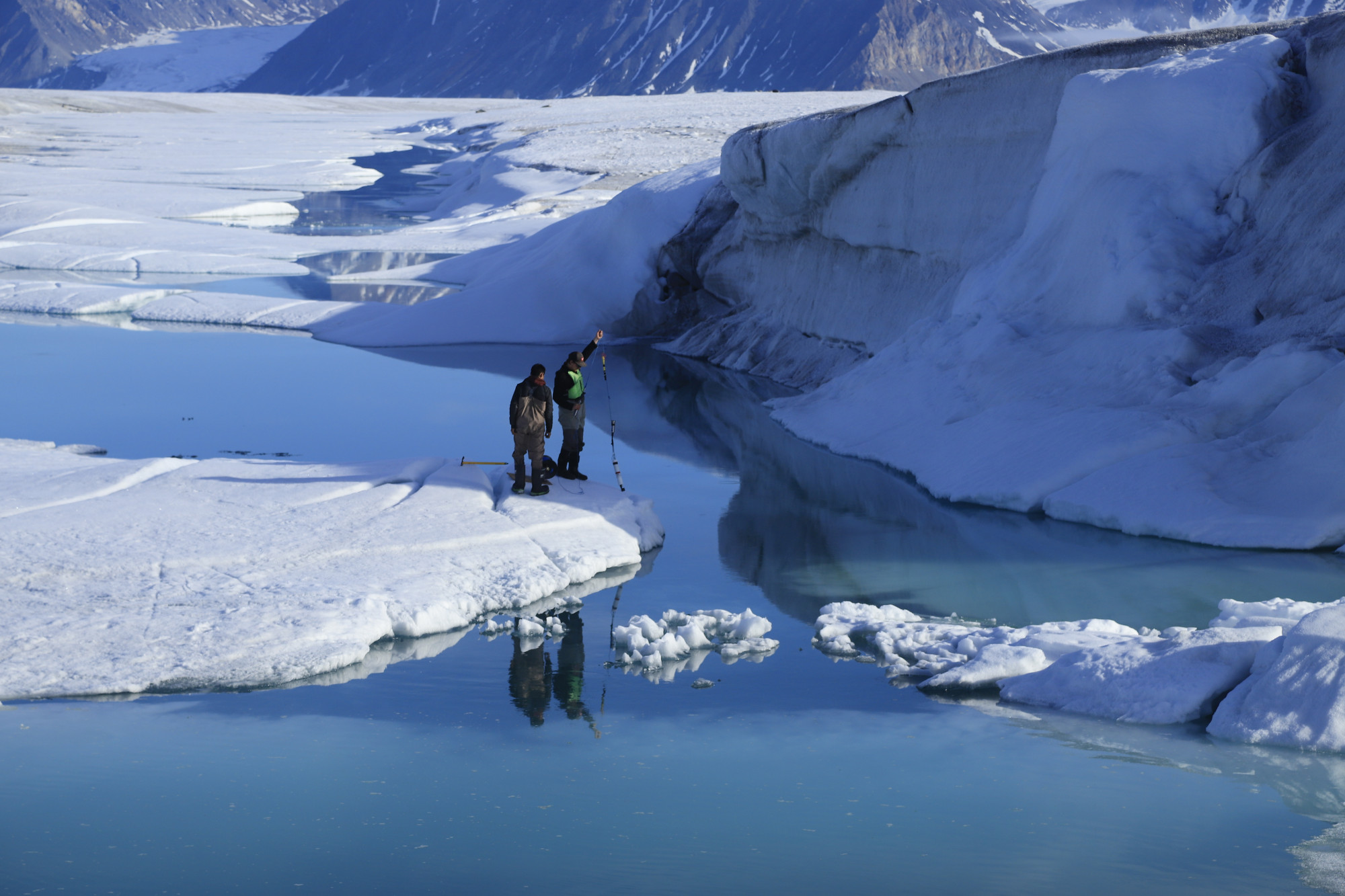
For decades, this part of the planet has been subjected to warming temperatures, which have continually thinned the giant Milne Ice Shelf that kept the epishelf lake at bay.
In July 2020, things reached a breaking point and the ice shelf collapsed, losing 45 percent of its area. Within a matter of months, the Milne Fiord had drained away into the surrounding Arctic Ocean.
Watching the demise
In a new study, Canadian scientists have chronicled the death of the Arctic lake using a combination of annual water profiles, satellite imagery, and field observations.
Many of the most insightful observations came from after the 2020 season, when the instruments were left in the region during the COVID-19 pandemic and couldn’t be retrieved until two years later.
When the researchers eventually returned, the instruments showed that by July 2022 brackish water – saltier than freshwater, but not as saline as seawater – had fully replaced the lake's distinct freshwater.
“Epishelf lakes are remarkable because a freshwater ecosystem sits directly above a marine one, separated only by a thin boundary between fresh water and salt water,” Dr. Andrew Hamilton, co-author and a research scientist at the University of Alberta who completed his PhD research at Milne Fiord, said in a statement.
“When the ice shelf broke apart, that unique ecological structure disappeared,” he explained.
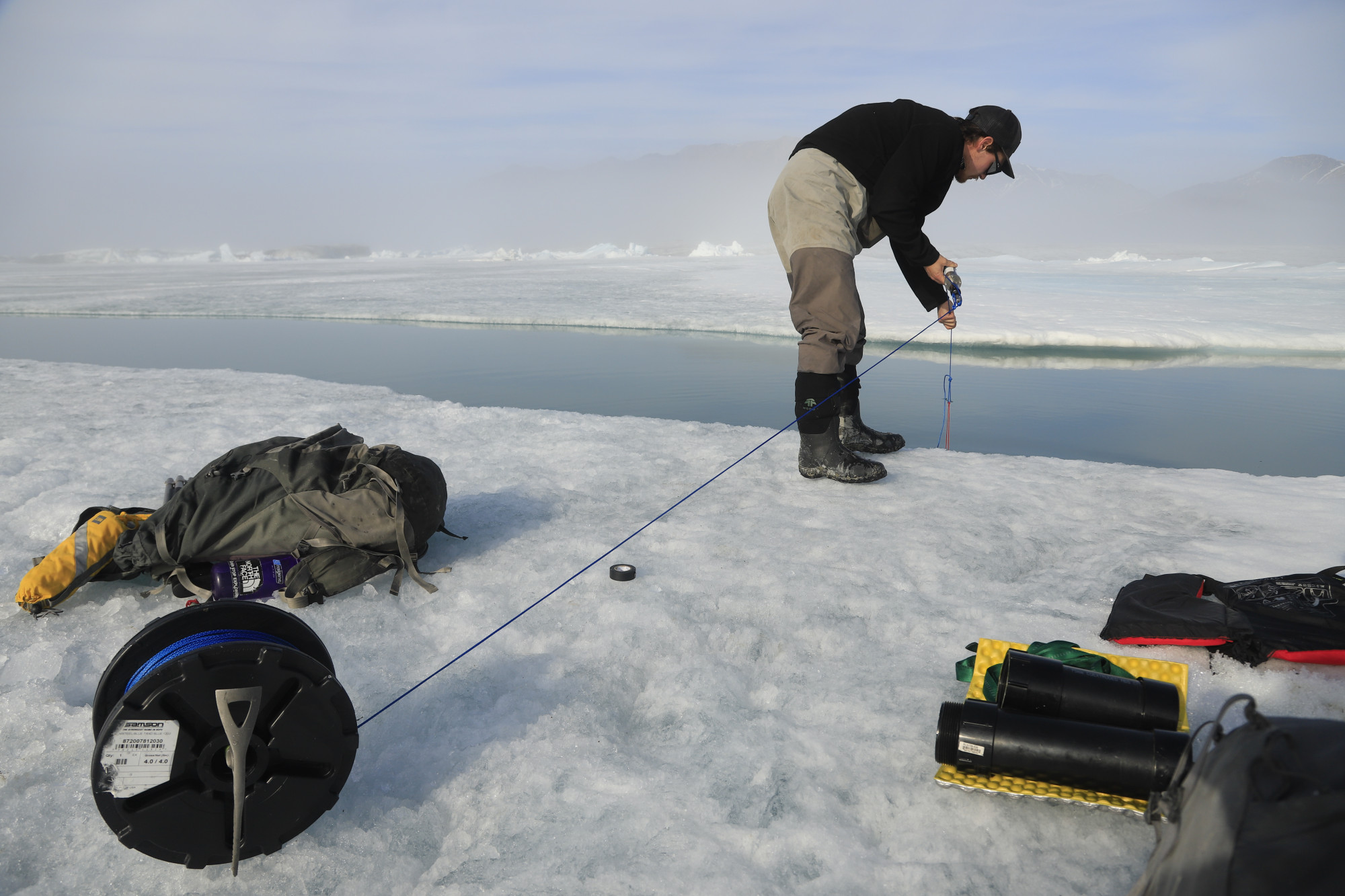
Subsequent data suggested there was little hope of any recovery, as the freshwater entering Milne Fiord was directly connected to the Arctic Ocean. Unless the ice shelf returns, which is extremely unlikely anytime soon, the Milne Fiord is done and dusted.
"Epishelf lakes can signal when an ice shelf is under stress, and that's what we saw here," said Dr. Bernard Laval, study co-author and a professor of civil engineering at the University of British Columbia.
"The data showed the ice shelf was failing. Once the ice is gone, the ecosystem goes with it. There's no coming back," he added.
Are there other epishelf lakes in the world?
While increasingly scarce in the Northern Hemisphere, there are populations of epishelf lakes on the other side of the planet in the Antarctic. Here, the ice is thicker and even more ancient, while conditions are more stable and less susceptible to warming.
However, even this once-reliable stronghold isn't immune to climate change. Antarctic ice sheets are becoming increasingly fragile and breaking apart. Most of their dammed epishelf lakes are still intact, but the things on the southernmost continent are changing at an uncharacteristically rapid rate.
The new study is published in the journal Scientific Reports.