Nature
 PUBLISHED


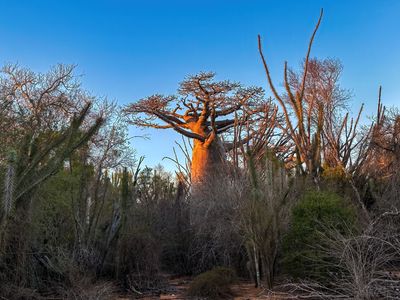


Baobabs look like trees from another world, or perhaps our planet from another time entirely. They come in a handful of forms, and in a new study, scientists have found yet another one hiding in plain sight.
Baobab trees are known for their gigantic, barrel-like trunks used to store thousands of gallons of water to make it through tough times, allowing some to survive for thousands of years.
Given their majestic qualities, it's no surprise the trees have become the subject of myths for many different cultures. Some call it the “Tree of Life”, while others say they were planted upside down by the gods because their bare branches look like roots reaching to the sky.
The trees are literal pillars of the community, providing food and shelter for a wealth of birds, bugs, and other animals.
One of the most important relationships is with bats and moths, which drink sweet nectar from their flowers at night, pollinating them in the process. This process of fertilization allows the baobabs to produce the tree to produce a nutrient-rich plant that’s eaten by both people and wildlife.
Baobabs are native to just three places in the world: six species are found on the island of Madagascar, but two species managed to island-hop and venture further, one to mainland Africa, and another all the way to northwestern Australia.
At least, that was the story until recently.
A new species emerges from the grove
In a new study, scientists at the University of Wisconsin-Madison headed to the baobab motherland of Madagascar to study the genus, and their attention fell on the Malagasy baobab (Adansonia za).
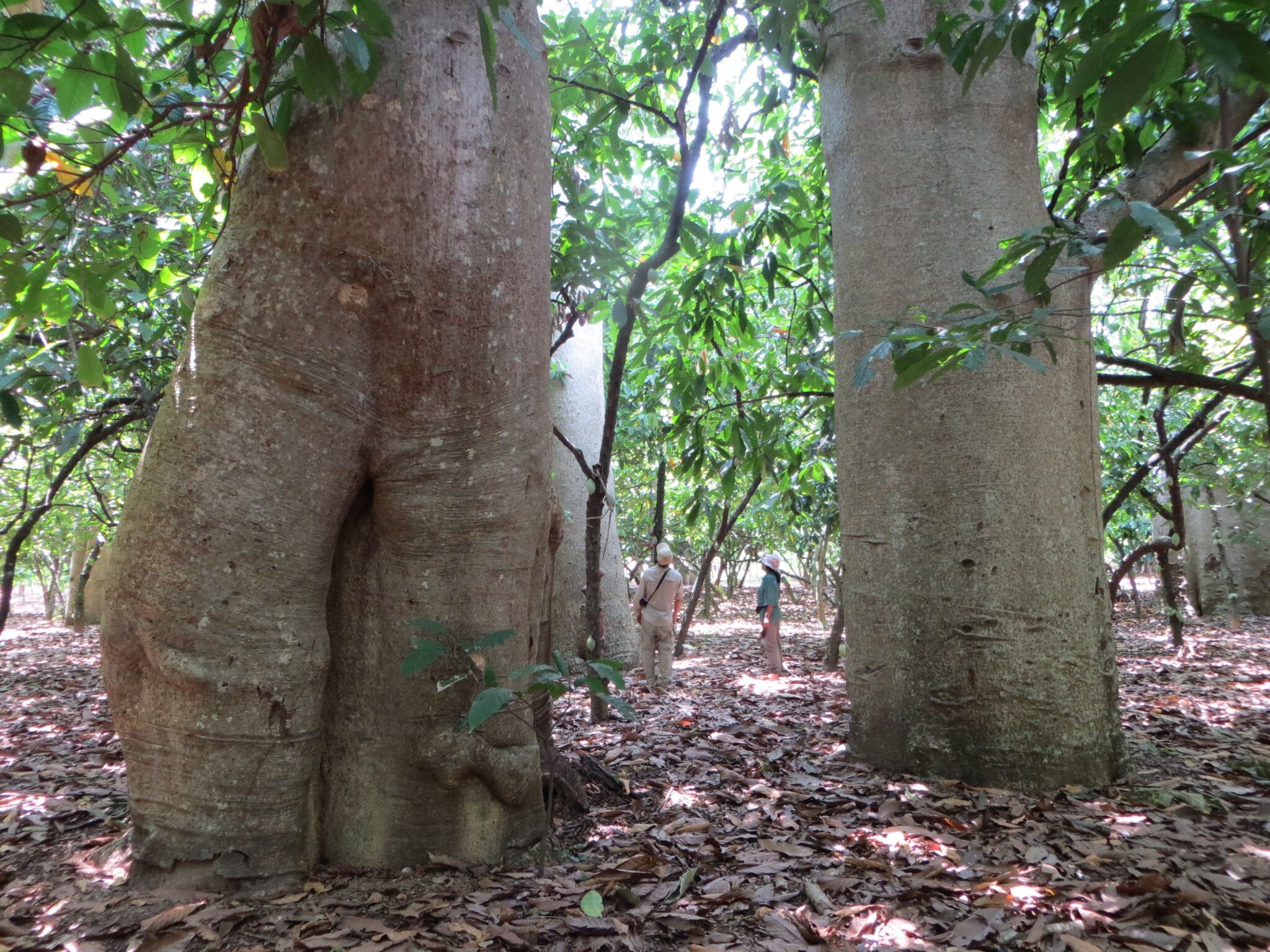
After gathering genetic samples in the northwest of the island, the researchers learned that two very similar-looking trees were, in fact, distinct species. They named the newly identified species Adansonia bozy.
“It’s surprising that we're still answering basic biological questions about baobabs, in terms of how many species actually exist on the landscape,” Nisa Karimi, lead author of the study who worked on the project for her PhD in the former Department of Botany, said in a statement.
“Despite it sharing morphologies to the species that it was later classified with, [Adansonia bozy] is actually more closely related to two other groups in northern Madagascar than the species it was synonymized with,” Karimi explained.
Conservation conundrums
Very little is known about the newly identified species since it’s only just been “discovered” by science, but the researchers suspect it might be an endangered species.
This could cause a thorny problem for the conservation of the new species and other baobab trees. It suggests the population of Adansonia za is actually much smaller than previously thought, plus there’s currently no framework for the newly identified Adansonia bozy to receive the funding and attention it needs.
“You can't conserve anything if you don't know how to describe and name them and understand how they're related to other things on the landscape,” noted Karimi.
The new study is published in the journal Taxon.