Nature
 PUBLISHED
 5
5


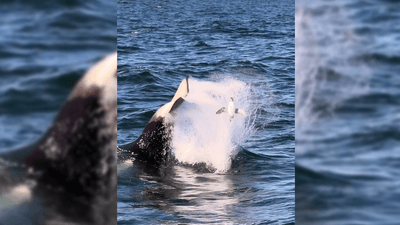


Growing up in the animal world is no easy feat. Not only do you have to survive in harsh climatic conditions, hide from predators, or even learn to fly, but sometimes you need to learn to hunt as well. Fortunately for the orca calves of Monterey Bay, California, they had some adults on hand to show them the ropes.
A video filmed by Evan Brodsky, who was onboard a boat run by Monterey Bay Whale Watch, captured footage of the playful cetaceans doing all kinds of behaviors – they can be observed tail-slapping, breaching and even flipping some seabirds out of the water.
According to the whale-watching team, the whales are Bigg's killer whales, a species that was only recently recognized as separate to the resident killer whales. Bigg's killer whales roam in smaller groups and do not breed with the other ecotype. They also typically prey on marine mammals, while the resident group usually go for a salmon dinner.
Bigg’s killer whales are transient, meaning they travel up and down the coast a lot more frequently. It is also reported that they are a lot less vocal than the resident ecotype, which allows them more stealth when hunting larger prey.
“They’re the most different killer whales in the world, and they live right next to each other and see each other all the time,” said Barbara Taylor, a former NOAA Fisheries marine mammal biologist who was part of the science panel that assessed the status of Southern Residents, in a statement earlier this year. “They just do not mix.”
According to the Instagram account of Monterey Bay Whale Watch, the birds in the video being thrown around by the killer whales are common murres (Uria aalge) a species that nests in large colonies on sea cliffs and spends much of its life on the open sea.
While their antics may look playful, learning to hunt is an important life skill for these young killer whales that could go on to have a lifespan as long as 90 years.