Nature
 PUBLISHED


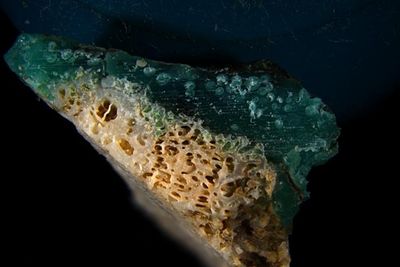


When researchers were surveying the beaches of the subtropical island of Okinawa, Japan, some brightly colored fragments of coral caught their eye.
Taking these samples back to the lab to study them in detail, they found something shocking: the specks of bright colour turned out to be plastic that had melted inseparably into the very skeleton of the coral fragments themselves.
Calling the resulting plastic-coral material “plasticorals”, the researchers suspect that they might be having an impact on the local environment by leaching chemicals into the seawater.
This work adds to the growing field of “plastiglomerates”, which are simply mixtures of sedimentary grains mixed with other natural materials bound together by plastics. They can be formed in a number of different ways, and have been proposed as a marker for the (contested) Anthropocene Epoch.
In this case, the plasticorals are thought to have originated from people burning plastic on the beaches, and the subsequent melted polymers merging with the dead coral.
“As an emerging research area of marine litter pollution studies and geology, these plastic-rock formations present fresh ecotoxicological risks to marine ecosystems and could become potential stratigraphic markers of the Plasticene, especially in critical ecosystems such as coral reefs,” write the authors.
The formation of plastic rocks
This isn’t the first time that plastics have been found fusing with natural formations.
In 2023, researchers from the Federal University of Paraná found “plastic rocks” on a remote volcanic island off the coast of Brazil. In this case, they suspect that the plastiglomerates formed as volcanic activity melted the plastic into the porous sedimentary rocks.
"This is new and terrifying at the same time because pollution has reached geology," geologist Fernanda Avelar Santos is reported as saying at the time.
The authors suspect that in this case the plastic came from discarded fishing nets, known as ghost nets when they float through the oceans, that have washed up onto the shoreline due to the surrounding currents.
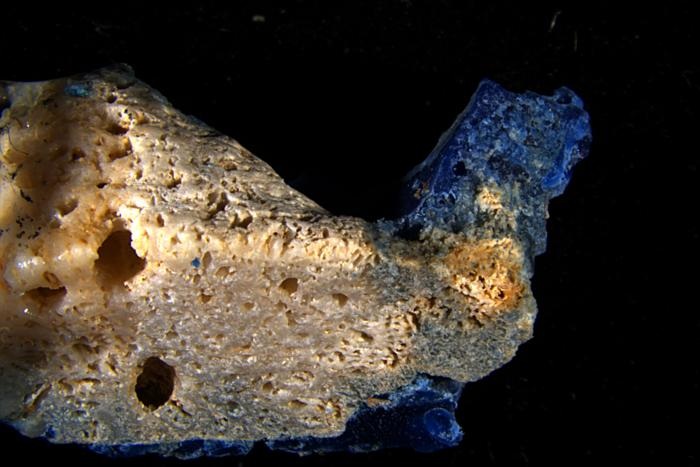
In the same year, another team of researchers on a remote Indonesian island in the Java Sea found plastiglomerates of a variety of different types. These included one known as a plasticrust, in which plastics encrust marine rocks, plastitars where plastic gets trapped by tars in intertidal zones, and pyroplastics, similar to those found on the Japanese beaches.
Plastic rocks forming plastic reefs
While the plasticorals documented in this study were found on the beaches, the authors note that it probably won’t stay this way for long.
Fragments of coral that are washed up often get deposited back into the sea, where it then plays an important role in the reef ecosystem. The coral rubble littering the seafloor often forms the base substrate on which new corals can grow, while the broken pieces provide shelter for young and juvenile fish to hide in.
How the plasticoral is then likely to impact these environments is still one of the big unknowns. Plastic debris has been shown to leach chemicals into seawater, which can then disrupt coral propagation, while they can also accumulate harmful molecules and pathogens.
Despite its ubiquity, long-term studies on the harm of plastic in the oceans are devastatingly rare, and with the amount of plastic entering our waterways showing no sign of slowing, the issue is only likely to get worse.
The study is published in the journal Marine Pollution Bulletin.