Nature
 PUBLISHED
 1
1


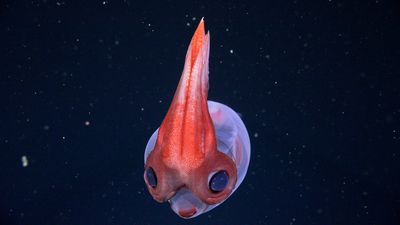


The Schmidt Ocean Institute’s R/V Falkor (too) has been at it again, with ROV SuBastian diving along the coast of Argentina and bringing us back some incredible research and images of life along the country’s continental shelf.
The team traveled along the entire length of the coastline and found the largest known Bathelia candida coral reef anywhere in the ocean. But they didn't stop there. The research also uncovered 28 suspected new species, which feature worms, corals, sea snails and more.
However, their main objective was to find cold seeps, where gases and chemicals are released from the seafloor. This can help fuel microbes, in turn feeding clams, mussels, and tube worms. Fortunately, the team found one such area, measuring over 1 square kilometer (0.4 square miles), more than double the size of the Bathelia coral reef.
“We were not expecting to see this level of biodiversity in the Argentine deep sea, and are so excited to see it teeming with life,” said the expedition’s chief scientist, Dr María Emilia Bravo of the University of Buenos Aires and CONICET, in a statement. “Seeing all the biodiversity, ecosystem functions, and connectivity unfolding together was incredible. We opened a window into our country’s biodiversity only to find there are so many more windows left to be opened.”
The Bathelia coral reef covers an area of 0.4 square kilometers (0.2 square miles), roughly the same footprint as the Pope’s home of Vatican City inside Rome. The team also found reefs of Bathelia much further south than ever previously recorded. This species is an indicator species for the health of the area and is known as a Vulnerable Marine Ecosystem indicator. This is because the stony coral provides a safe habitat for lots of other species including octopuses, fish, and crustaceans.
The fun did not stop there, as the team were also able to witness Argentina’s first deep-water whale fall at a depth of 3,890 meters (12,762 feet). Whale falls create a temporary ecosystem as many different species come to feed on the carcass, including octopuses, sharks, and crabs.
The team also witnessed a ghostly apparition in the form of a phantom jellyfish. These creatures can grow to 10 meters long (33 feet), or roughly the same length as a school bus.
“We collected an unprecedented number of chemical, physical, and biological samples that will be used to understand connections in our waters for years to come,” said Dr Melisa Fernández Severini of Instituto Argentino de Oceanografía and CONICET. “These samples represent a unique opportunity to understand not only how extraordinary these extreme ecosystems are, but also how vulnerable they can be.”
It wasn’t all good news though. The team also found garbage and plastic fishing nets. Remarkably, they even found a VHS tape with a Korean sticker on the side, which raises questions about how it ended up in Argentinian waters.
“With every expedition to the deep sea, we find the ocean is full of life – as much as we see on land, and perhaps more because the ocean contains 98 percent of the living space on this planet,” said Schmidt Ocean Institute’s executive director, Dr Jyotika Virmani.
“We have been privileged to work with outstanding scientists across three expeditions in Argentinian waters, and look forward to seeing their research continue to unfold, unlocking new understanding and inspiration.”