Nature
 PUBLISHED
 2
2



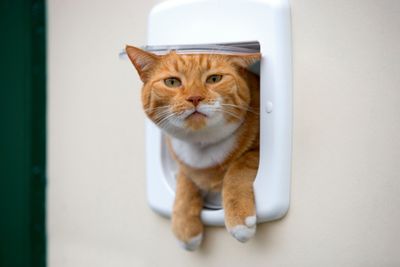


Do you have an outdoor cat? Do you worry about their safety, their health, or how on Earth they ended up on the neighbor’s roof again?
Well, a new survey from Australia and New Zealand suggests transitioning your fearless feline explorer to a cushy couch cat might be easier than you think.
"Many people worry that keeping a cat indoors will be stressful for their cat, but our findings suggest that the transition was often easier than expected," said lead author Dr. Julia Henning, from Adelaide University's School of Animal and Veterinary Sciences, in a statement.
Indoor vs. outdoor
Attitudes to outdoor cats vs. indoor cats are hotly debated.
Chief among the concerns are the impact on native wildlife, the risk of cat deaths from predators or vehicles, and even the spread of disease. But could you transition your outdoor cat to a potentially safer indoor life? Pet owners in Australia and New Zealand attempted just that.
The online survey was sent to 87 cat owners who attempted to transition their pets from free-roaming moggies to indoor pets.
Over 40 percent of the participants reported that their cat had adjusted to a solely indoor life within days, 25 percent said the transition occurred within weeks, and 12.6 percent said their pet had still not adjusted.
"Owners certainly faced some challenges during the transition, particularly in the first few weeks, but most found these were temporary and that the long-term benefits far outweighed the difficulties,” said Henning.
The team says that most owners reported very little change in their cats' behavior following the transition, but that the cats wanted more attention, played more, and were more vocal.
However, it wasn’t all plain sailing.
In a previous study, “participants cited issues with escape attempts, difficulty ensuring household and visitor compliance with keeping cats inside, feelings of guilt over cat restriction, and trouble balancing their own thermal comfort with the need to keep doors and windows closed,” explain the authors.
The impact of outdoor cat
Various studies have tried to quantify the impact that outdoor roaming cats have on local wildlife.
In the USA, for example, one study found that cats are responsible for killing billions of birds and mammals each year. In Australia, around 200 species of animals are directly threatened with extinction primarily due to feral cats, while in Europe one study found that in Poland alone cats could be killing up to 500 million vertebrates annually.
But it's not just the local wildlife that can suffer. A study from 2022 in Washington DC found that letting cats outside in areas where raccoons were prevalent was “significantly jeopardizing their health” due to the risk of catching rabies.
They were also likely to come into contact with red foxes and Virginia opossums, both of which could also pose significant risks to your furry companion.
Making the transition
Overall, the Australian and New Zealand study found that the participants said transiting was “easier than expected”.
Over 75 percent of the owners said the main reason for moving the cats indoors was cat safety, including those with a previous injury or health condition.
A third of the owners mentioned the impact of cat predation on wildlife as a motivating reason to switch their cats to indoor living, though this may differ depending on region and the perceived predation risk of each individual cat.
One unexpected concern could be the potential of pet cats to hybridize with native cat species. This is a particular worry with the Scottish wildcats.
But problems arose in houses with young children, in terms of door maintenance when keeping the cats inside. Study members also reported an increase in financial costs when keeping cats indoors, although vet bills were lower.
Overall, most of the study participants perceived their cats as happy after the transition and said they would keep future pets inside.
So what do you think? Could you convert Tiddles to be an indoor cat? Or will he be prowling round the neighborhood for years to come? And if you want more cat news, then check out the toe-tally adorable Toby.
The paper is published in Applied Animal Behaviour Science.