Health and Medicine
 PUBLISHED


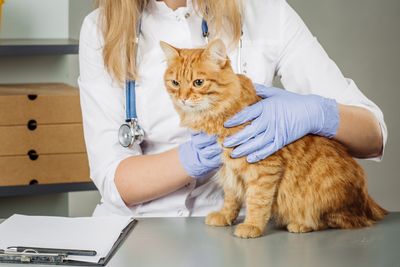


A case report published by the US Centers for Disease Control and Prevention (CDC) this week has confirmed something experts have suspected for a while now: that the H5N1 strain of avian influenza can jump from cats to humans. It’s not exactly welcome news – although, to be fair, neither is it as scary as various tabloids might make you think. Here’s why.
How the H5N1 spread from pet cat to human
The H5N1 strain of bird flu has come a long way since it was first discovered back in 1959. That’s true both literally – it’s been reported on every continent on Earth now save Australia, and no we’re not just forgetting about Antarctica when we say that – and figuratively, with the virus evolving well past its original limitations as it sweeps the globe.
Indeed, at this point, “bird flu” is almost a misnomer. The disease is now basically established as a cow disease in the US; it’s been found in wild mammals from opossums to otters to even the odd polar bear; it’s infected dogs and cats and captive tigers. It’s even been contracted by more than 1,000 humans since 1997, with an overall reported death rate of roughly one in two. The situation is, you might say, not great.
This week’s story starts back in early December of 2024, with a Los Angeles County kitty made sick by a fashionable diet. The pet had been given a commercial raw pet food, and quickly come down with a range of gnarly symptoms: breathing problems; lung lesions; limb weakness; loss of muscle coordination; and even a progressive loss of vision. Over a week and a half, its owners took it to four different vet clinics, evidently desperate to find out what was wrong with the poor cat.
A thorough work-up eventually found that it was suffering from H5N1 – bird flu. And as it turned out, this was one case in a small-ish local outbreak: “During November 2024–January 2025, the Los Angeles County Department of Public Health (LACDPH) received reports of 19 domestic cats from five households in Los Angeles County, California that became ill with severe respiratory, hepatic, or neurologic signs,” the report notes, with all having been fed raw meat, raw pet food, or raw milk. “Fourteen died or were euthanized.”
Now, that’s bad news for the cats, but how worrying was it for their owners, or the vets that treated them? As bird flu traditionally hangs out in, well, birds, there isn’t a lot of solid data on how well it can be transmitted from cats to humans – so an investigation was in order.
Through interviewing the pet owners and reviewing lists of staff at the 10 vet clinics that had seen the cats, LACDPH identified 139 people who had potentially been exposed to the virus. Follow-up interviews found that a fair chunk of them had indeed experienced flu-like symptoms after exposure – one person even reported two separate instances of this kind of illness, each after exposure to a different infected cat. So is it time to freak out?
Well, perhaps not yet. None of the humans tested positive for acute H5N1 infection – just normal seasonal flu, the common cold, or a random coronavirus. If they had contracted H5N1 from the cats, then it seemed their immune systems had already dealt with it.
Here’s the thing though: if that was the case, there should be some evidence. So, in April of last year, investigators asked those exposed to take part in a serosurvey, analyzing the serum in their blood for H5N1 antibodies. If those were found, it would be a sure sign that their bodies had at some point faced down the virus, even if it was no longer present. Out of the 25 people who agreed to the study, only one came back positive: a single veterinary professional who had examined the original cat 120 days earlier.
How worried should we be?
We can now say with near certainty that H5N1 can jump from cat to human. The vet who contracted the virus had no known exposure to any other infected animal; they’d not been exposed to poultry or wild birds, or even cattle, which are also a reservoir for H5N1. They had not eaten any raw meat or drank any raw milk. They had no underlying health conditions. It was, basically without doubt, the cat.
Before you go locking your pet moggie in a specialized isolation chamber, though, there are some things we need to make clear. The vet who got infected wasn’t just an incidental bystander – rather, their job meant that they ticked off just about every risk factor it’s possible to have without straight-up French-kissing your feline.
“This person routinely engaged in multiple clinical duties,” points out the case report, “including restraining animals; assisting with veterinary surgery; administration of inhalation anesthesia; performing cardiopulmonary resuscitation; collection of nasopharyngeal, blood, fecal, rectal, saliva, and urine samples; performing endotracheal intubation or other airway procedures; and cleaning examination rooms.” They didn’t wear PPE during examinations; they received neither the seasonal flu vaccine nor post-exposure antiviral prophylaxis. They had such a bombardment of possible infection vectors that pinpointing when the H5N1 virus made it from cat to human was simply not possible.
And even despite all that, the vet never even knew they were sick. Without the serosurvey, their infection would never even have been found – they were totally asymptomatic, and tested negative for the virus just a week after exposure. And this points to a separate, and far more puzzling fact about the H5N1 bird flu virus: that even as it gallops into every corner of the world and species who’ve never flapped a day in their life, it may be getting… dare we say it? Less deadly.
Staying safe
For a disease whose nominal mortality rate is the same as flipping a coin, the H5N1 bird flu been remarkably mild in recent years, at least in the US. Since February 2024, there have been 71 cases reported, per the CDC – and only two deaths. That’s either an incredible streak of luck, or else something strange is happening in the epidemiology.
But what, exactly, is to blame for this unexpectedly low death count is so far completely unknown – hypotheses range from “preexisting immunity from other flu strains” to “the virus itself has mutated to be less deadly” to literally “maybe it’s just not as deadly if you drink it”. It could be as simple as better detection in people with few or very mild symptoms. We just don’t know.
So for now, let’s not just cross our fingers and hope. The disease is still rampant in both wild and domestic bird populations around the world; the amount of the virus present in US cows’ milk is in the billions of infectious units per milliliter, which is, take our word for it, scary high even to the experts who work with these viruses every day.
The good news is, there is an easy fix. H5N1 virus particles can be deactivated by heat – so the CDC’s advice for pet owners is to put down the raw milk and raw pet food.
“The cats described in this report were all reported to have consumed raw meat, raw pet food, or raw milk, products that have been documented to be sources of H5N1 infection in pets,” the authors write. “Feeding these products to pets could increase their risk for infection with influenza viruses.”
“Given the close contact that is common between cats and humans, continued vigilance is warranted,” they advise. “Veterinarians should consider influenza A(H5N1) in cats with acute respiratory or neurologic illness and follow appropriate infection prevention practices, including using PPE, to reduce exposure risk.”
The report is published in Morbidity and Mortality Weekly Report.


 2
2