Nature
 PUBLISHED
 1
1


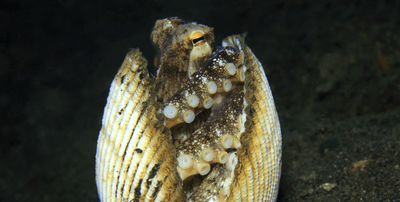


Octopuses are masters of disguise and deception, and none more so than the veined octopus, which hijacks coconut shells and other sea-strewn objects from its environment to create a portable hideout and personal disguise.
This species (Amphioctopus marginatus) uses seashells and coconuts as both shelter and camouflage. It will slip inside a hollow object, shut the opening with its flexible tentacles, and settle in. When unsuspecting prey wanders too close, the octopus springs into action, springing out of its fortress to strike before retreating back into safety.
It’s likely that this behaviour first evolved using the empty shells of sea creatures. Today, however, they often use empty coconut shells that have been tossed into the ocean by nearby coastal communities. There’s also emerging evidence that veined octopuses are starting to use human trash, including glass bottles, ceramic pots, metal pipes, rusty cans, and plastic containers.
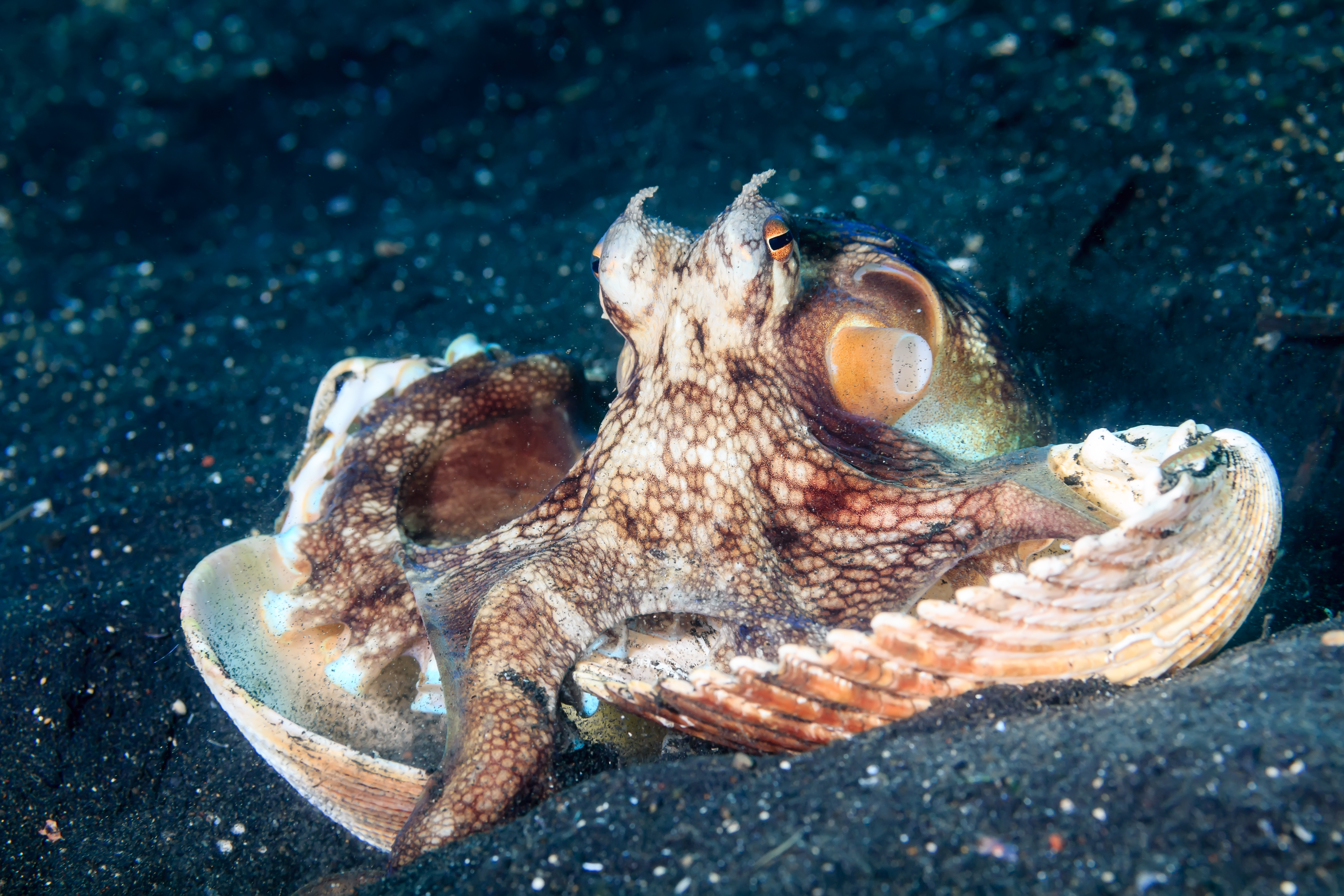
Incredibly, this isn’t a simple act of opportunistic hiding, like a bug scuttling under a rock. Researchers have documented veined octopuses deliberately collecting coconut shells and carrying them across the seafloor for use in the future. This suggests it's an example of complex tool-use, an exceptional feat for an invertebrate.
“The fact that the shell is carried for future use rather than as part of a specific task differentiates this behaviour from other examples of object manipulation by octopuses, such as rocks being used to barricade lair entrances,” a 2009 paper reads.
“The discovery of this octopus tiptoeing across the sea floor with its prized coconut shells suggests that even marine invertebrates engage in behaviours that we once thought the preserve of humans."
Also known as the coconut octopus, the veined octopus is found in the western Pacific Ocean and the Indian Ocean, from Australia up to Indonesia. Here, in shallow tropical waters, they can be seen scuttling across the seafloor looking for shrimp, crabs, clams, and other prey.
Weirdly enough, they often travel across the seabed by “walking” with their two back arms, making it the only known example of underwater bipedal locomotion. They will even tiptoe like this while still holding onto their prized shell.
As if their shell-snatching behaviour wasn't enough, veined octopus also possess chromatophores, pigment-containing cells that allow the animal to change color and pattern, just like many other cephalopods. Octopuses will shift color to camouflage themselves, but there’s strong evidence that these color changes are also used for communication, adding yet another layer to their impressively complex behavior.