Nature
 PUBLISHED


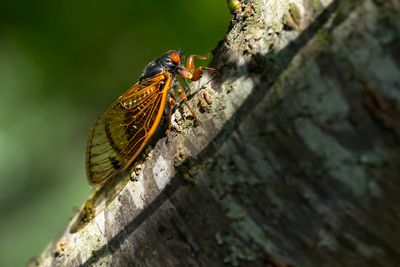


The cicadapocalypse is now upon us, with potentially up to a trillion insects set to rise up, make a whole bunch of noise and cicada babies, and then die – all within the space of about a month. But why so noisy? That’s called seduction in Cicadaville, and it turns out we can mimic it.
The incessant buzzing that comes with emergence comes from male cicadas in search of a mate. In order to seduce the ladies, they have a specialized organ called a tymbal, which when they flex their muscles, produces a clicking noise. This happens so rapidly that it sounds like buzzing.
It might be annoying to us, but it’s basically Barry White to female cicadas. They respond with their own clicking sounds made using their wings, which in turn attracts the males towards them.
If you’re curious about nature and don’t value peace and quiet – or fancy an unusual snack, as long as you’re not allergic to shellfish – it’s mimicking the sound of the females that might allow you to get a closer look at one of these peculiar insects.
And who better to show you how than the legend that is Sir David Attenborough, who demonstrates the technique in a clip from the 2005 BBC series Life in the Undergrowth.
“I can imitate the female’s wing flip with a snap of my fingers,” Attenborough explains, “and that causes them to follow me anywhere, because they’re so determined to find a female.”
Unfortunately for Attenborough, the male cicada ends up landing, still loudly calling, right by his ear. Fair play, considering it just spent 17 years underground and emerged to get laid for the first time, only to get trolled on camera.
For those wanting to make use of the trick – though maybe take some protection for your ears – the US Department of Agriculture has a handy map that shows where the insects are most likely to pop up.
The two broods currently beginning to emerge are set to be seen across 18 different states and should be sticking around until late June, leaving plenty of opportunity to test out your cicada-seducing skills.
This noisy event is also something of a rare one, and not just because periodical cicadas like these only come out to play every 13 or 17 years. It’s the first time in 221 years that these two specific broods, Brood XIII and Brood XIX, are set to emerge at the same time.