Nature
 PUBLISHED
 1
1


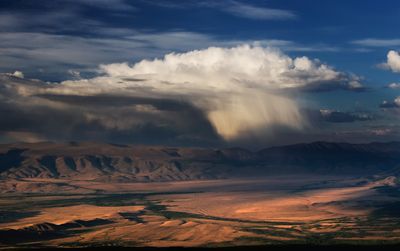


Have you ever driven through what appeared from a distance to be an active patch of rainfall coming from dense cloud cover, just to find the land underneath dry as a bone? That’s virga, baby!
Virga, from the Latin word meaning "rod" or "branch", refers to the wisps attached to the underside of rain clouds that give the appearance of heavy rainfall. Unlike regular rain, however, virga trails will never reach the ground.
Sometimes referred to as jellyfish clouds, these rain clouds function in the same way as ones producing regular rain, they only become virga when the droplets meet a layer of dry or warm air on their journey to the ground. This low patch of dry, warm air causes the raindrops to evaporate as they pass through, halting the formation of regular rainfall.
The streaks commonly descend vertically beneath the cloud but can hook almost horizontally at their ends. This can be a result of strong winds, but ordinarily occurs as the droplets begin to vaporize closer to the Earth’s surface, causing the terminal fall velocity of the particles to decrease as they travel.
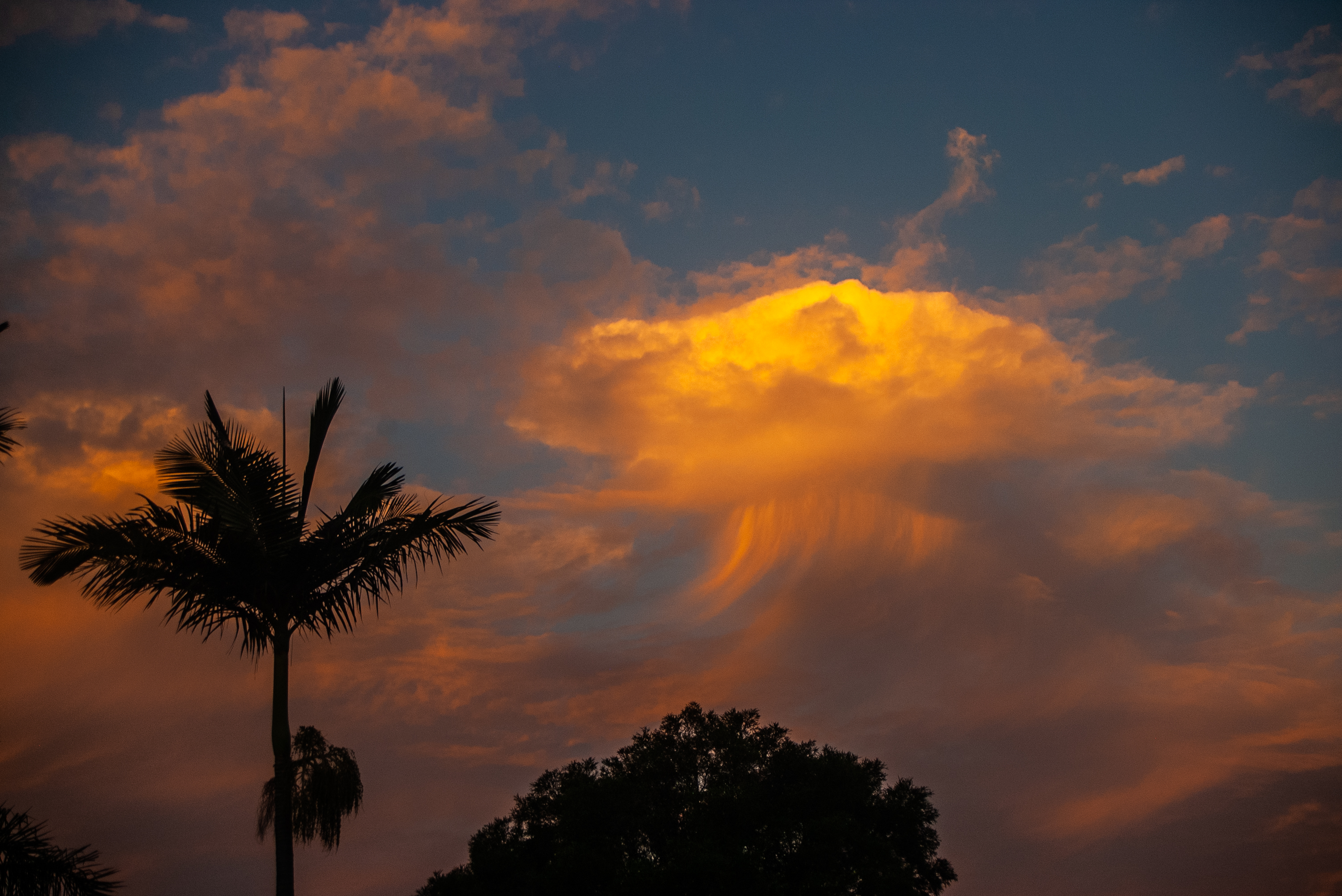
When virga occurs in mid or high-level clouds, the droplets consist of ice crystals and appear pale, while low-level virga is made up of water droplets and can appear grey in color. Fallstreak holes are a distinct formation of virga that can form as a result of aircraft passing through mid-level cloud cover.
Virga formations can be quite problematic for nearby aircraft due to the formation of microbursts. As the droplets evaporate nearer Earth’s surface, they cool the air around them, causing the cold air above to suddenly sink. These microbursts can cause moderate to severe turbulence for aircraft traveling through the weather system.
Commonly forming in deserts or at high altitudes, virga can occur in cirrocumulus, altocumulus, altostratus, nimbostratus, cumulonimbus, cumulus, and stratocumulus clouds. And, while it is not a rare phenomenon, caught under the right lighting it can look particularly dazzling.
All “explainer” articles are confirmed by fact checkers to be correct at time of publishing. Text, images, and links may be edited, removed, or added to at a later date to keep information current.